Album: Crash Artist: Dave Matthews Band Year: 1996
1. So Much To Say
2. Two Step
3. Crash Into Me
4. Too Much
5. #41
6. Say Goodbye
7. Drive In, Drive Out
8. Let You Down
9. Lie in Our Graves
10. Cry Freedom
11. Tripping Billies
12. Proudest Monkey
Is it just me or is naming a band after the lead singer pretentious? It sounds like a one-man band and is a bit dismissive of all the talent around you. Especially since if it weren’t for his band, Dave Matthews would be nothing. Dave’s singing is passable at best, his only real talent is being able to hit those high notes. But his band is awesome. The best songs tend to have extended jams with the violin, saxophone, flute, and horns.
Crash (like most of their albums) was not laden with hits, mostly because there are few pop hooks and riffs to be heard. However, Crash Into Me is still their second biggest song to date and received a ton of radio play despite being blatantly about voyeurism. The rest of the album, with the exception of So Much To Say, is all about the jamming, even on the ballads. Drive In, Drive Out, despite some pretty banal lyrics and Dave’s attempt at guttural singing, has some seriously kick-ass rhythms and endangers me while driving as I keep wanting to pound on the steering wheel with the beat.
The album gets weaker as it moves along, especially lyrically, but the songs are generally saved by the band. But nothing can save Proudest Monkey. Dave’s singing is truly horrendous, and the last several minutes of this nine minute track consist of him singing “yeah yeah yeah” while the band plays some repetitive, uninspired music. So, like the entirety of Everyday.
Album: New Favorite Artist: Alison Krauss & Union Station Year: 2001
1. Let Me Touch You For A While
2. The Boy Who Wouldn’t Hoe Corn (US)
3. The Lucky One
4. Choctaw Hayride (US)
5. Crazy Faith
6. Momma Cried (US)
7. I’m Gone
8. Daylight
9. Bright Sunny South (US)
10. Stars
11. It All Comes Down To You (US)
12. Take Me For Longing
13. New Favorite
Alison Krauss has been a Grammy darling, but her album with Robert Plant notwithstanding, has gotten virtually no love on the charts. Perhaps it’s because bluegrass really doesn’t have a home on the radio, as it straddles both country and adult contemporary. What I do know is that her stuff is better than most of the crap currently on country radio.
New Favorite starts out with an incredible song in Let Me Touch You For A While, probably my favorite by her. We then start the yo-yo between Alison and Dan Tyminski, the lead singer for Union Station. He’s a decent singer, best known for Man of Constant Sorrow, but it’s awkward constantly switching leads on this album. Part of it is that their voices are different, but the general tone of each song swings as well. Alison’s songs, with the exception of Take Me for Longing, feel like pure solos and sound more like contemporary country than bluegrass. Union Station’s songs are pure bluegrass, backed by mandolins, banjos, dobros, and lap steels. It’s jarring, for sure. Especially since the album’s second song is…well, I just don’t care about this boy who wouldn’t hoe corn.
It rebounds quickly with The Lucky One, and the rest of the album remains solid, if unspectacular. Choctaw Hayride is pure instrumental, Union Station at their best. Crazy Faith and New Favorite are also highlights, helping this album round out into one of my favorites.
Album: Bringing Down the Horse Artist: The Wallflowers Year: 1996
1. One Headlight
2. 6th Avenue Heartache
3. Bleeders
4. Three Marlenas
5. The Difference
6. Invisible City
7. Laughing Out Loud
8. Josephine
9. God Don’t Make Lonely Girls
10. Angel on My Bike
11. I Wish I Felt Nothing
I originally had Slippery When Wet by Bon Jovi in this spot, but then I listened to it a couple of days ago and was bored out of my mind. For an album that is very polished and has no really bad songs, it does surprisingly little for me these days. So I looked at the albums that just missed the cut and decided that Bringing Down the Horse, while flawed, doesn’t bore me and still enjoys an occasional playthrough.
The album is quite top-heavy, starting with its best song, One Headlight and continuing with probably its second best song, 6th Avenue Heartache. The passion in Jake Dylan’s voice really comes through in these two songs. Though, while he’s got a better voice than his father, he does very little with it for the rest of the album. The melodies are generally catchy, but the songs don’t really distinguish themselves from each other with Jake sounding the same on every one. Their second biggest hit, The Difference, has good verses but an awful chorus where Jake holds down the notes way longer than he’s capable of. The slowly worsening album is saved just a bit right at the end with I Wish I Felt Nothing, an understated angsty ballad.
I don’t think I’ve listened to one second of anything else by this band, and from looking at the charts, it doesn’t look like anyone else has either. If you have, please throw down your critique in the comments.
Album: Waitin’ on Sundown Artist: Brooks & Dunn Year: 1994
1. Little Miss Honky Tonk (D)
2. She’s Not the Cheatin’ Kind (D)
3. Silver and Gold (B)
4. I’ll Never Forgive My Heart (D)
5. You’re Gonna Miss Me When I’m Gone (B)
6. My Kind of Crazy (B)
7. Whiskey Under the Bridge (D)
8. If That’s the Way You Want It (D)
9. She’s the Kind of Trouble (B)
10. A Few Good Rides Away (B)
Brooks & Dunn’s career spanned from 1990 to 2010. During that time, they released ten albums and fifty singles. Twenty of those singles reached #1 on the country charts. They were definitely stronger during the first half of their career together. What’s unique about this duo is that they almost never sing together on a song, with the possible exception of the chorus. They almost never wrote songs together either. Dunn would write a song, sing it, and Brooks would rock out the guitar. Or Brooks would write a song, sing it, and Dunn would do the same. I put their initials after each song so you can see the breakdown.
Waitin’ on Sundown is their third album. It isn’t their strongest, but what it does do avoid some of the faults prevalent on their later albums, mainly boring power ballads by Dunn and awful singing by Brooks as his voice went to hell during the last decade.
For the third album in a row, they start out with a loud, rockin’ number in Little Miss Honky Tonk that’s great to sing and dance to (not that I dance). Another hit follows right after that showcases Dunn’s spectacular voice. Silver and Gold is the underrated gem of the album, similar in theme to She’s Not the Cheatin’ Kind, but more original. You’re Gonna Miss Me When I’m Gone is one of Brooks’s best and most popular songs. In fact, only six of his songs were ever released as singles (despite him contributing about 50% to each album), and this was the only number one. There’s nothing special about it lyrically, but it’s wrought with sadness that comes through in his voice.
The last half of the album is a bit weaker. My Kind of Crazy is inoffensive enough that I usually don’t skip it, but there’s no reason to listen to it. The next two songs sound fine, but are really, really boring thematically (but not as boring as Dunn gets on later albums, trust me). Brooks ends with two songs, both of them above average. She’s the Kind of Trouble is goofy fun, and A Few Good Rides Away is a sappy but pleasant story about a Texas waitress going through rough times.
All in all, nothing really stands out, either good or bad, making it just good enough to make the countdown.
1. Welcome
2. Have You Ever
3. Staring at the Sun
4. Pretty Fly (For a White Guy)
5. The Kids Aren’t Alright
6. Feelings
7. She’s Got Issues
8. Walla Walla
9. The End of the Line
10. No Brakes
11. Why Don’t You Get a Job?
12. Americana
13. Pay the Man
I don’t get angry or bitter all that often, but when I do, this has always been a good album to crank up loud and scream to for an hour. The pace is frenetic right from the start, and up through the end of Staring at the Sun, the mood is perfect. Then we get to the band’s highest ranked song on the pop charts, Pretty Fly. It’s…fine, silly, but grinds the album to a halt. Thankfully, it picks right back up with the The Kids Aren’t Alright, a pretty poignant song (about the broken dreams of children) considering how hurried it is.
The middle of the album consists of a string of really bitter songs, the best place on the album for them. Walla Walla has a nice sound, but it’s hard to ignore the silly theme (Ha ha, you’re going to prison cuz yer dumb). The End of the Line and No Brakes somehow speed up the pace of the album, and by the end you’re wondering where the album has yet to go. And then Why Don’t You Get a Job? happens. Like Walla Walla, it’s a preachy song while also killing the pace of the album. Not to mention the rhythm (and the rhyme scheme) is horrendous.
The album redeems itself, with a predictable but fun criticism of consumerism. The final song, Pay the Man, really slows things down (while still being loud) to a snail’s pace, the perfect descrescendo to the previous frenzied pace.
I haven’t tested out much else the band has had to offer. I’m obviously familiar with the song Come Out and Play, but would love other suggestions.
As opposed to the previous countdowns on this site, I don’t consider myself particularly passionate or all that knowledgeable about music. I neither listen to nor seek out music like I did when I was an angsty teenager, and I find myself to be incredibly picky in my old age when it comes to new stuff. However, when compiling this list, I did find some gems so not all hope is lost.
What makes an album worthy of being on this list for me? While most have a song or two that are amazing, the common thread among the albums on this list is consistency. If I can listen to the whole album without cringing or having to skip a song or two, I am impressed. And while I have many soundtracks, greatest hits and live albums that I adore, this list is intended to honor those artists who can create a whole bunch of amazing material all at once. Many artists can string together ten hits over ten years and put them together, but there’s something special about a single great album.
Like I said, I am not a music critic. My reviews will likely sound pretty uneducated. Hopefully, you’ll find a gem or two yourself while reading the list. Several genres are represented, including rock, folk, bluegrass, country, grunge, punk, R&B, hip hop, pop, and one band that’s kind of bluesy. Five decades are represented. To help guide you with any new music you might be interested in, I’ll specify key songs on each album.
Red: 5-star songs. These are in my top 100. Orange: 4-star songs. Top 500 or so. Blue: Garbage. I most likely skip past this song if I’m listening.
To illustrate, here’s an album that is not making the countdown.
1. Pagan Baby
2. Sailor’s Lament
3. Chameleon
4. Have You Ever Seen the Rain?
5. (Wish I Could) Hideaway
6. Born to Move
7. Hey Tonight
8. It’s Just A Thought
9. Molina
10. Rude Awakening #2
Pendulum is probably the most frustrating album I own. Two of my top 100 songs are here, the fourth and fifth tracks. Have You Ever Seen The Rain? is stunning in it’s catchiness considering what a mournful song it is. Pagan Baby and Born to Move are pretty decent rockers. And It’s Just a Thought is a great melancholic tune about John Fogerty’s resentment towards his brother (as is Hideaway, actually).
But as you can see there are four songs on here that I just cannot listen to. Sailor’s Lament sounds off-key, Chameleon is dull, and Molina has an awkward rhythm with banal lyrics. But what really takes the cake is Rude Awakening #2, CCR’s only avant-garde offering. The first ninety seconds is actually a pretty good instrumental, and then it devolves into random noise for five minutes. It’s truly horrifying.
Monday we’ll kick this off the list. I hope you can enjoy it with me.
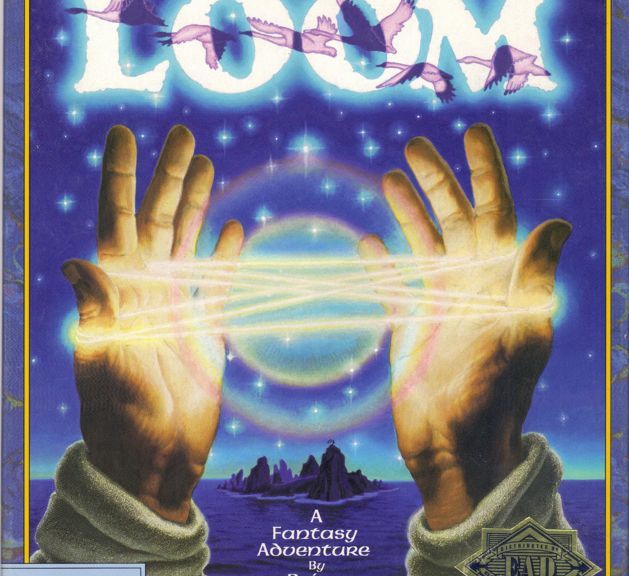
Review: One of the most original adventures ever conceived, Loom largely succeeds at just this, while failing to engage the player in a captivating story or with interesting characters.
As a 17 year-old member of the guild of Weavers, you must guide Bobbin Threadbare through a mystery, trying to learn why you’ve been outcast from the guild, and why the rest of your guild have been transformed into swans. There is no inventory. Progress through the game entails casting spells with your staff by weaving musical notes, with more powerful spells available as things move along. For example, you may learn that the spell for Open is the note sequence C-D-E-D; play this sequence on a particular object and see if it works. On easy difficulty level, you are shown the correct notes for each spell. On medium, you see the notes played on your staff without the letters. On the expert level, you only hear the notes. Unless you are tone deaf, even the expert level is not too difficult.
While many of the spells are interesting, it is usually obvious which spells are needed where. And with no other types of puzzles available, progress is incredibly easy. I finished the game in a mere four hours, even on expert level. Unfortunately, the characters (of other guilds) you meet are classic stereotypes with rather banal dialogue. Even Bobbin rarely acts consistently, vacillating between an appropriate meek teenager and a highly philosophical elder. Moreover, there are few surprises in the plot until the ending, which is confusing, alluding to a sequel that never happened.
Thankfully, the music is gorgeous, heavily borrowing from Tchaikovsky. There is a CD-ROM version with 256 color graphics and voice acting. Sadly, to fit the game on the CD, much dialogue was cut (though the acting is generally below average), as were additional scenes that rewarded the player for playing on expert level.
It is easy to see why Loom has a cult following, as therein is a unique experience in gaming. And while I would recommend this to anyone looking for something different, it is too short and underdeveloped to be considered a great game.
Sierra’s total looks impressive until you remember how many adventure games they actually made (sixty-two, if you’re wondering). Still, that’s over 25% that made the list. But then you look at LucasArts, who had 9 games make the list, which is exactly 60% of their catalog. I am guessing that if I played Telltale’s entire catalog, it would rival LucasArts’ percentage.
So here’s a poll for you all. Check out the list of games here and write in the comments how many games you’ve actually played. Then, if you can, recommend an adventure game I haven’t reviewed (even if it’s not for the PC). And The Walking Dead doesn’t count, because I already own it and just haven’t gotten around to it yet. And, just for fun, if you recommend a game that makes my worst list, I’ll post that review tomorrow.
Publisher: Sierra Developer: Sierra Year: 1988 Platform: DOS; Amiga; Atari-ST; PC-98
Rating: 10
While our family would often play adventure games together when I was young, we would generally pair off given the tight squeeze around the IBM. Police Quest 2 was the exception, with my brother, father, and me huddled around the tiny screen for weeks because we were so invested that we wanted to experience it at the same time. And while that memory no doubt elevates this game for me, I still think it’s damn near a perfect game.
Sonny Bonds is back…with a vengeance! Actually, Jesse Bains, the perp he testified against last game and put in prison, is back with a vengeance. Not only does he escape prison, he also kidnaps your girlfriend Marie to exact revenge upon you. I’d feel bad spoiling the kidnapping–which takes place about halfway into the game–if it wasn’t described on the box with a picture of Bains literally holding Marie hostage. Sierra definitely didn’t want you to realize plots could be uncovered!
The Lytton P.D. has received a major overhaul since the first game, not only of the building but of the staff as well. Lest you worry that you’ll get bored with nobody familiar around, Jim Walls has created several more characters with wonderful personalities. First is Keith Robinson, your partner. Other than taking smoke breaks and making snide remarks, he offers little help, but he provides the comic relief that every cop game needs. In one instance, while on the way to a scene, Keith wagers with you on whether the witness is a dude or a chick. There is no reason for this little scene to be in the game, but given how many intense moments there are, the levity is appreciated.
Then you have Captain Hall, who has a very short temper but a keen taste for pistachio ice cream and is a master at working the telephone. If you dink around too much, he’ll literally suspend you. But he’s also got your back when shit starts hitting the fan. And, as with Police Quest 1, the supporting cast (such as the guys in Narcotics, the street cops, and the gun range supervisor) usually have something funny and interesting to say.
The production values have also taken a leap forward. The pixel-art graphics are generally well-detailed and colorful, and there’s little in the way of pixel-hunting. The sound is a consistent delight, with the music carrying an energetic Miami Vice vibe. Even the sound that tells you that you’ve been awarded points is addictive.
The plot takes a more linear route this time around as Sonny usually knows his next destination. Yet you’re not hand-fed what to do, and the puzzles remain fair and moderately difficult. The day-to-day busywork is toned down considerably (no more checking for flat tires!), but important police procedure still must be followed (such as collecting evidence) in order for Sonny to have a clue as to what’s going on (in addition to nabbing more points!). The design team also made a smart move in eliminating manual driving. Since Sonny drives an unmarked car and never needs to patrol the streets, driving would have become pointless and quite tedious.
The Vengeance has the best story in the series, thanks in large part to its cohesiveness. Your focus is unwaveringly on Bains and saving your girlfriend, giving each decision a gravity that was lacking before. You’ll race around town to follow Bains’s trail, coordinating with airport staff, a scuba diving team, hotel staff, and other police departments. You’ll even explore a sewer system! There is one highly contrived scene in the airplane that has no relation to the main plot, but it can be forgiven considering its entertainment value. And the endgame, which requires you to think quickly to rescue Marie and stay alive, is pitch-perfect.
As close to flawless as an adventure game can get, Police Quest 2remains my favorite game of all time.
Contemporary Rating: Medium. Good parser, but going to the shooting range multiple times to adjust the sights on your gun would annoy many.
Cruelty Rating: Tough. If your only saved game is a split second before you’re going to die, then yes, you can make the game unwinnable. Otherwise, you should be fine. You can miss a ton of things through your investigation, and this will make the game more difficult (and less enjoyable), but it won’t lock you out.
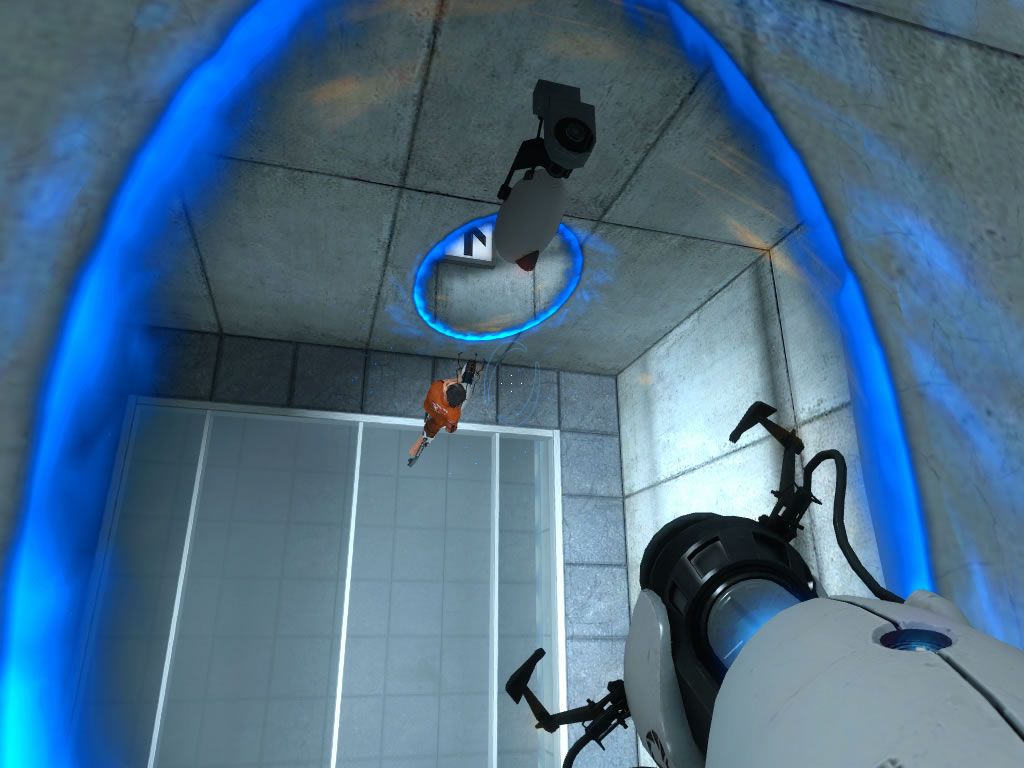
Review: When I first played Portal, I had never played Half-Life, nor been particularly fond of first-person shooters. Basically, I’m more interested in engaging my mind than I am my reflexes. Portal manages to do both at the same time, striking the perfect balance of action and strategy. While using a similar environment as in Half-Life, you control a subject who is trying to advance through test chambers in a research laboratory. What is being tested is a device that fires beams of light that create portals in walls for easy transport or escape. For example, say you need to traverse a pit and you can’t jump across; create a portal on the wall across the pit and one on your side. Walk through and—voila!—you’re on the other side. Valve fleshes this idea out considerably, with several chambers testing your mind, and in some cases, your agility.
Yes, that’s you you’re looking at
An excellent learning curve is aided by the computer, who explains things to you along the way and gives you some tips early on. Eventually, a plot of sorts develops that is aided by superb voice acting and a chilling atmosphere. At no point did the sounds or colors feel superfluous, the designers proving themselves a model of efficiency.
Speaking of efficiency, the game can be won in a cool four to six hours. For the low price, this is certainly acceptable. And as always, too short trumps too long (at least in gaming). But if you finish and are still thirsting for more as I was, you can play challenge missions or download user-created missions, some of which rival the quality of the original. Or you can go ahead and get the sequel. Despite how one feels about this genre, there is no denying that Portal is one of the best developed games of all-time. This one is definitely staying on the desktop.
Are you still there?
Contemporary Rating: High.
Cruelty Rating: Merciful. There are regular checkpoints that the game sends you back to if you kick the bucket.
You must be logged in to post a comment.