Publisher: Galactic Cafe
Developer: Galactic Cafe
Year: 2013
Platform: Windows, Mac, Linux
Rating: 6
All of his coworkers were gone.
So says the narrator about Stanley, an everyday corporate button-pusher, who has left his office after confusingly not receiving any projects for the past hour. What follows is less of a commentary on being a worker drone (though there’s some of that) and more of an exploration on what it means to be playing a video game. And for the most part the game succeeds thanks to some imaginative twists and fantastic narration.
Originally a Half-Life 2 mod, The Stanley Parable was eventually released as its own game, and the mood is quite similar to Portal. As Stanley, you move around the office in first-person perspective, looking for your coworkers while going where the narrator tells you to go. Or not. If you do everything he tells you, the game will be over in about five to ten minutes. And you win! Good job, Stanley.
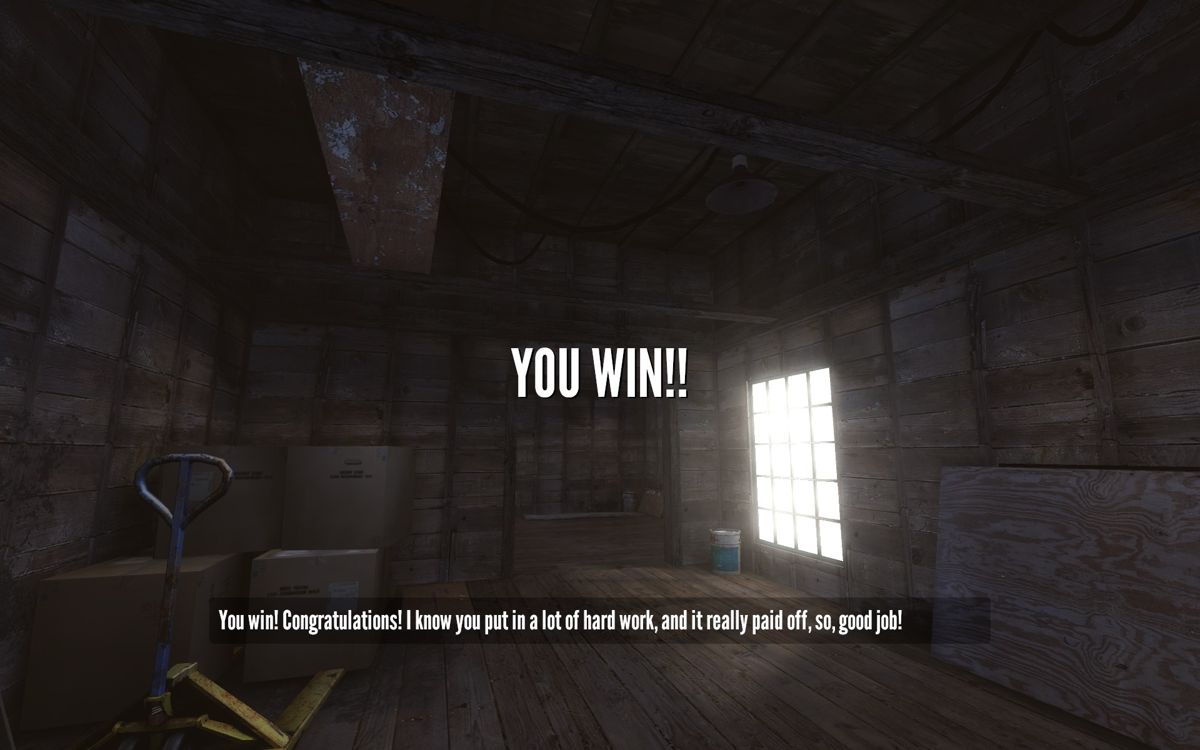
And then comes the fun, doing everything you can to upend the narrator. I’ve always enjoyed stories with an unreliable narrator, and this game takes it a step further by also having an unreliable protagonist. And given that you cannot speak (or jump for that matter) and your only choices are to move and push buttons, the back and forth relationship between you and the narrator is marvelously constructed. Most run-throughs of the game will take no longer than ten minutes and players will see most of the permutations and endings within a couple of hours.
All of the creativity would be naught without good narration. Kevan Brighting is pitch-perfect whether he’s playing it straight, bemused, curious, annoyed, or apoplectic. Most restarts of the game will yield the same familiar opening narration and rather than getting tiresome it becomes quite comfortable. It’s easy to see why Brighting has had regular work ever since.

The basic graphics serve their purpose, yielding a drab, cookie-cutter office building, with flourishes of color and detail when the narrative calls for it. I appreciated the attention to detail as there’s a decent amount to look at on desks, on whiteboards, and through windows, even if it isn’t relevant to the story. The sound is minimalist to reflect the monotony of office life, with the narrator deploying hilarious sounds effects or jingles when feeling punchy.
Ultimately, The Stanley Parable is not a satisfying game in the typical sense, as there’s no cohesive story or specific goal to accomplish. It’s the perfect length, however, for what it is: an exploration of gamers’ motivations while throwing in a bunch of gags.
 Death By Troggles