
Publisher: Playstack
Developer: Color Gray
Year: 2022
Platform: Windows, Switch
Rating: 7
2018 saw Return of the Obra Dinn become a cult classic thanks to a grisly murder mystery logic puzzle. The Case of the Golden Idol continues in that spirit though in a more whimsical–but also more complex–manner.
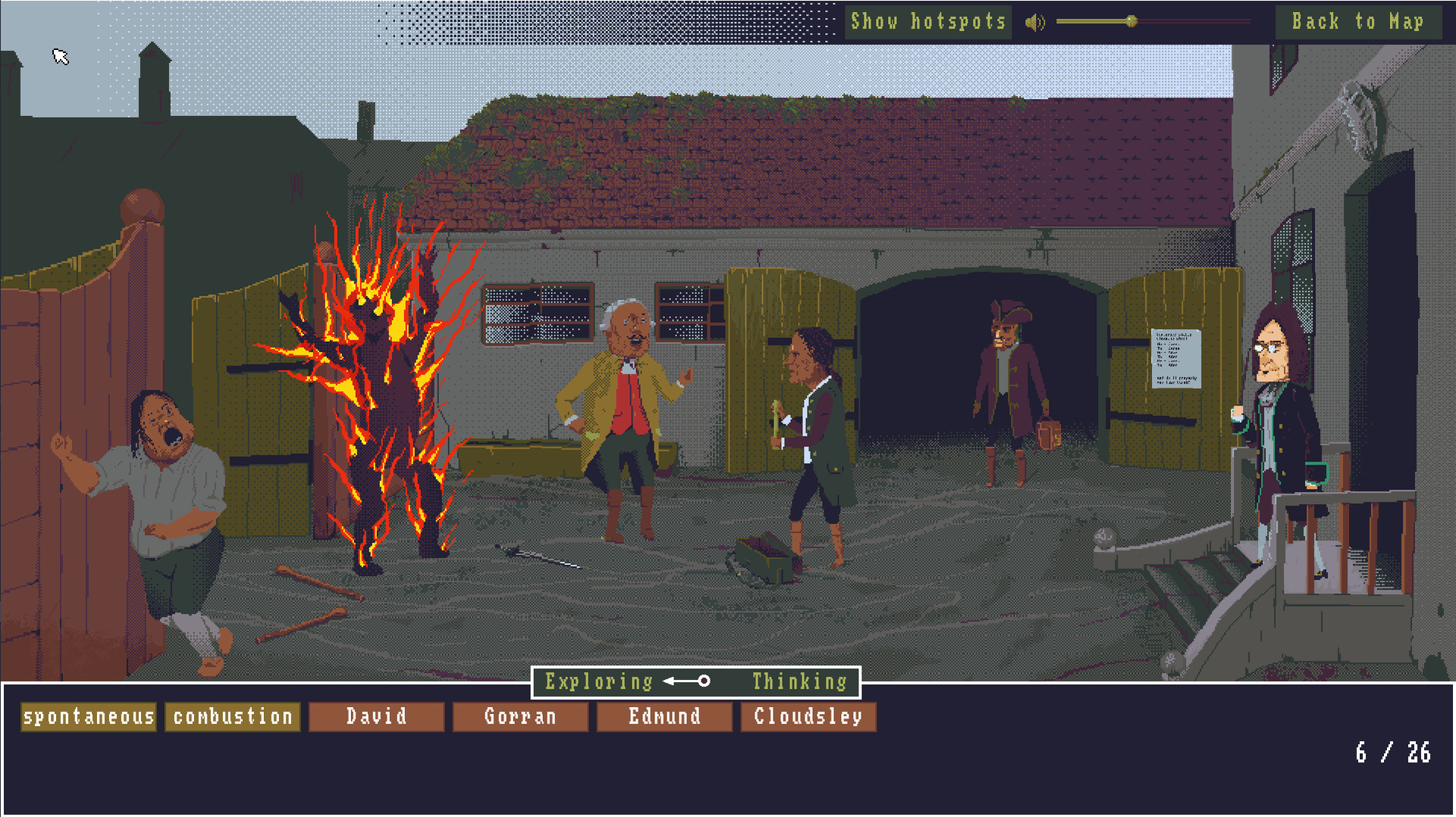
The game begins with a static moment in time (in the 18th century), that of one Englishman pushing another off the edge of a cliff. Investigation is done simply by clicking on characters and evidence to gather key words. For example, one of them has a letter on their person describing who gets what percentage of the valuables they discovered on their expedition. You can pull the names Albert Cloudsley and Oberon Geller into a word bank. Looking through their pockets and belonging lying about, you can also pull other words such as ‘finger’ ‘thumb’ and ‘ruins.’ While some of these words can be difficult to find, you can turn on a hotspot highlighter that will remedy the problem. Once you’ve collected all the words for the bank (in this case 11 of them), you must fill out a report describing the whos, wheres, whys, and hows of the murder. In some cases, sentences will be partially written Mad Libs style and you simply need to drag the right word into the blank space.
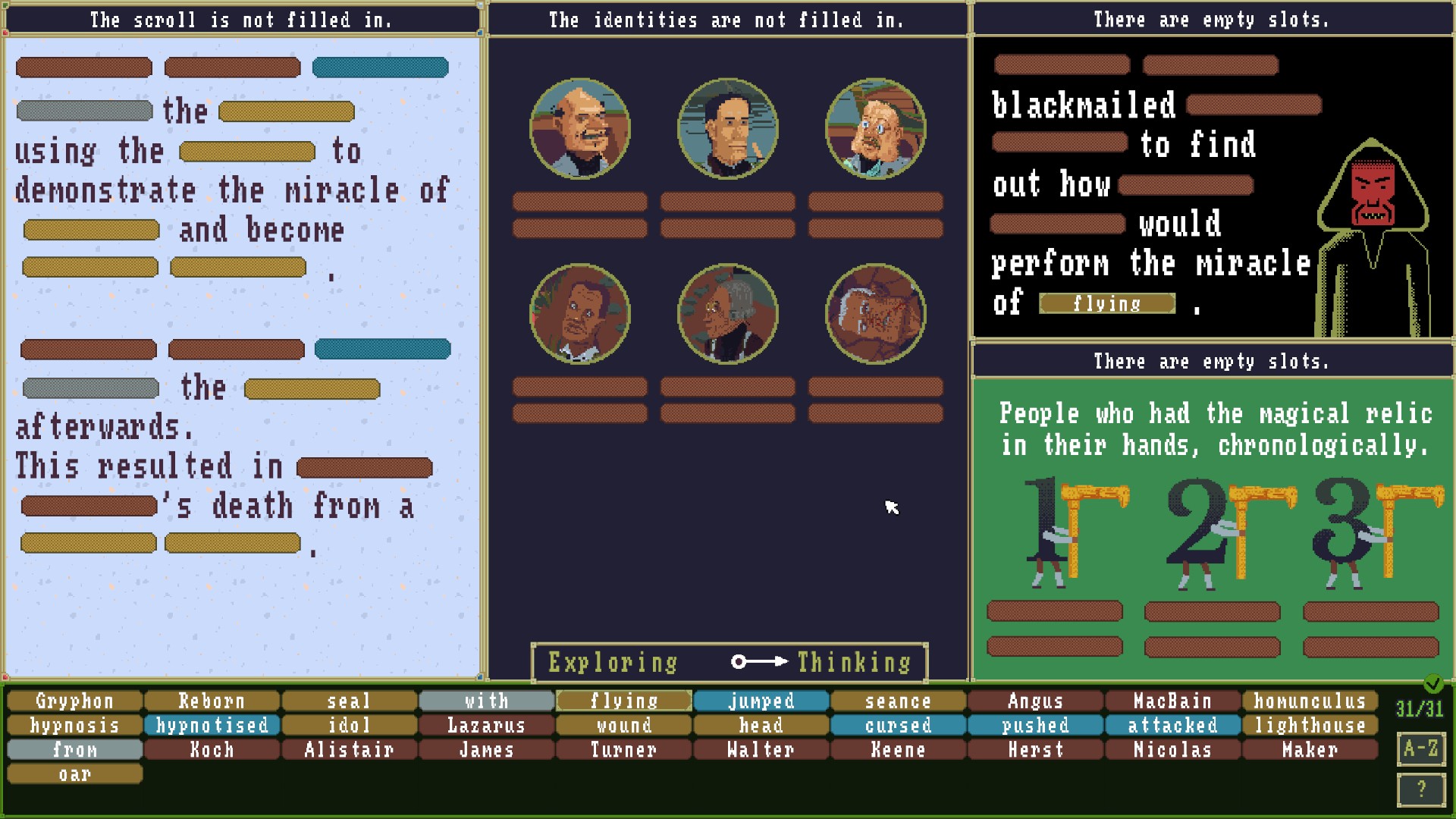
Each report you fill out will be divided into sections. One often is pictures of each character with spots to identify their first and last names. Another might be a paragraph outlining the motive. And another might be describing how the murder occurred. In each section, you will be notified if you have two or fewer spaces completed incorrectly, a blessing if you’re on the right track but are just confused on one detail. Some words from the bank can be used multiple times, and some may be just red herrings.
There are eleven mysteries to solve chronologically over the course of the game (and in game time, over the course of many years) and they’re all tied into the mystery of the powerful and dangerous golden idol. Multiple families are involved, including members of British and Lemurian (a mythical people) royalty who are trying to get their hands on the idol to harness its power. You will investigate deaths at dinner parties, seedy inns, and cult hideouts. In each scene, at least one murder has occurred, and the story slowly builds to an epic climax with an incredibly tangled web of deceit and power plays.
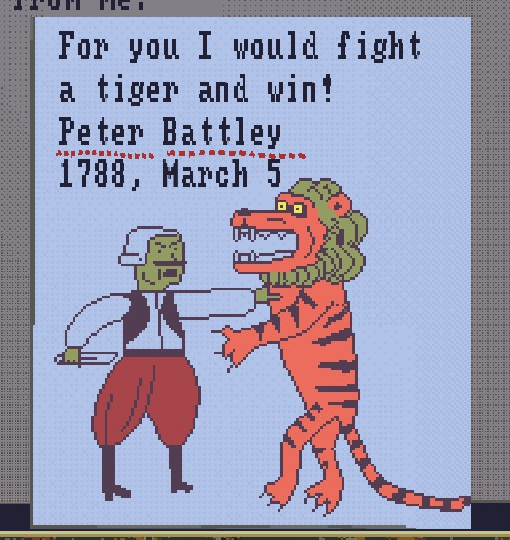
Hints are available if you get stuck, though the game strongly discourages them and requires you to complete an easy but lengthy exercise to access them in hopes you change your mind. And even then, you are not given any answers, but gentle nudges in the right direction. Thankfully, I never required a hint, though some cases required I take the night off to reset my brain and come at it again later. Given the extraordinary amount of clever red herrings, I found most of the cases quite satisfying to solve. In a few cases, I felt the clues were perhaps too obtuse, leading to what I thought could me more than one reasonable explanation; however, in every case the real answer was definitely the most plausible course of events. The only puzzles that I found less than appealing were ones where decoding symbols or a secret language were required, though this is simply a personal preference than any problem with the puzzles themselves.
My primary critique of the game lies with its presentation. To be frank, the artwork is incredibly ugly. No doubt this was intentional given how consistently unpleasant everything is to look at. Characters not only look like caricatures, they are frozen in time, and often during an unpleasant facial contortion. The color palette is also drab, with sickly browns, gray, and yellows bleeding together. While it didn’t exactly make the logic puzzles less satisfying to solve, it accentuated how gross all of these humans were and I found myself rooting for nobody. Rather than solving crimes to an end, I found myself disconnected from the story and not caring how it played out. Most scenes do have characters shown with simple animations (e.g. talking, recoiling, murdering); while they’re amusing, you can’t shut them off, and they become more distracting than helpful after a while.
I also found the music to be quite uninspired and repetitive, though many disagree. Either way, I kept the volume low so I could focus on the puzzles at hand. At least the jingle that plays when you’ve solved the puzzle is satisfying.
I also admit I found myself tiring of the exercise by game’s end. While each scene has a unique setting and unique puzzles to solve, there’s still a sense of repetition that can make solving more than a couple of cases in one sitting feel like a chore. Eleven cases was the right amount; had the game been longer I suspect I would have become increasingly frustrated. Which, essentially, is what happened when I played the DLCs, The Spider of Lanka, and The Lemurian Vampire. Each DLC is just three cases each, but with one exception, they’re all much more complex and much more difficult than any one scene in the original game. Both stories take place just before the first scene described above and are satisfying extensions of the story. But unless you’re looking for a more intense challenge, you can safely skip them. I wound up using several hints to get through them and felt no remorse in doing so.
Despite its faults, The Case of the Golden Idol is a must play for lovers of logic puzzles. While its presentation make it a much less visceral experience than your average murder mystery, the complex narrative is impressive and fun to deconstruct, even if you only have the patience to do so one puzzle at a time.
 Death By Troggles