Publisher: D’Avekki Studios
Developer: D’Avekki Studios
Year: 2017
Platform: Windows, Mac, PS4, Xbox One, Switch
Rating: 5
Just a couple of years after Her Story, another full-motion video murder mystery with a typing interface was released. The Infectious Madness of Doctor Dekker, the first game from D’Avekki Studios, is a murder investigation under the guide of providing psychotherapy. While I wasn’t overly satisfied with the structure of the mystery, I still found it to be engrossing and a worthy play for fans of the genre.
You play an unnamed psychiatrist who has taken over Doctor Dekker’s practice after his murder, presumably by one of his patients or employees. The entirety of the game consists of first-person sessions with Doctor Dekker’s patients (and his primary assistant) where you gather information in hopes of being able to identify which one is the killer.

During each session, you begin by saying hello or asking them how they’re doing. Then you need to respond to their concerns with additional questions, often using keywords that they have already said. For example, if one patient begins by stating things are rough at work, you should ask about that. Most of the time, simply typing “work” will do the trick, though full sentences are encouraged such as, “What is happening at work?” or “Why is work rough right now?” If you trigger a response, you will then use the information to ask further questions.
The game keeps track of the questions you’ve asked, and will indicate whether or not any follow up is possible. If there’s one asterisk, the game suggests following up on the topic, and if there’s two the game definitely wants you to dig deeper. With few exceptions, the game will not allow you to advance to the next day without following up on the double asterisk topics. Thankfully, there’s a hint system of sorts. Notes will occasionally be written by your character such as, “She talked about this, perhaps I should ask her more about it?” And if you’re really stuck you can simply click a drop down menu to get some questions provided for you; the only penalty for utilizing these more explicit hints is being locked out of getting an achievement.
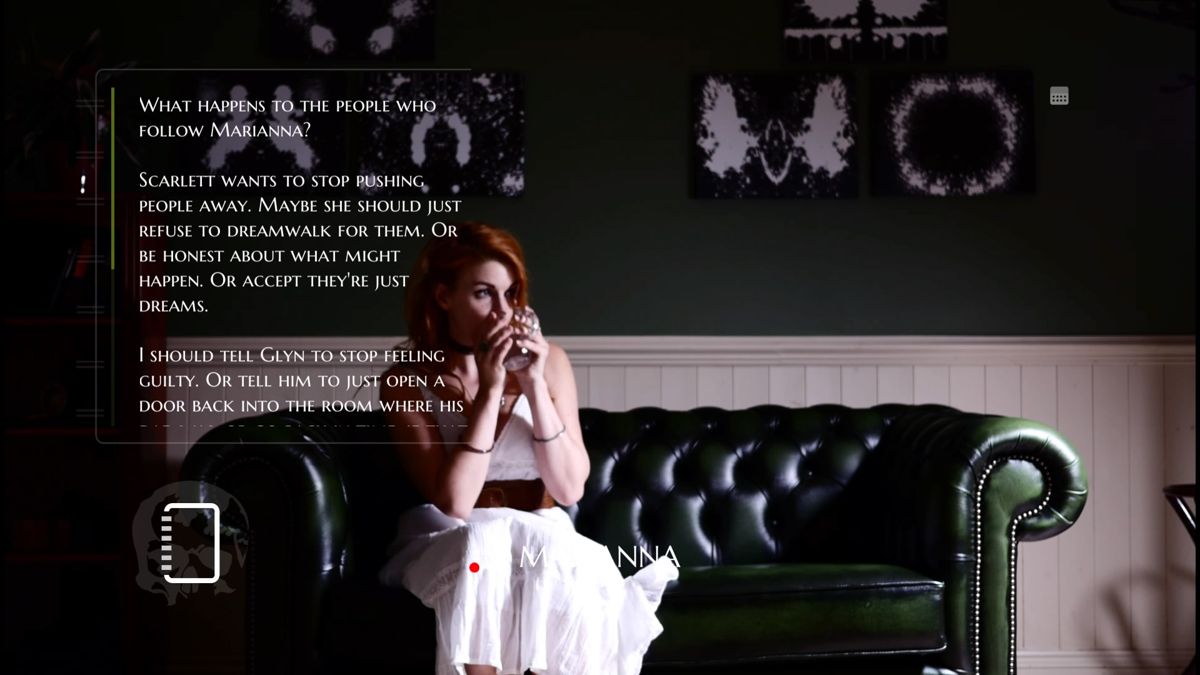
Unfortunately, but also understandably, the only thing you can do is ask questions. Unlike a real psychiatrist/therapist (at least good ones), you don’t get to empathize or do any therapeutic work really. Other than the occasional catharsis your patients can feel from opening up about their problems, you wind up feeling more like an investigator than a doctor. One of the patients even point this out over the course of play, accusing you of caring more about solving the murder than helping them with their problems. Perhaps my favorite part of the investigation however is when you get to point out discrepancies your characters make (which a good therapist would do as well come to think of it), by naming the contradiction. None of these instances are required, so when you find them they are quite satisfying and lead to generally fun results.
Speaking of the patients, they all have something in common in that they all have mental illnesses that include a belief that have some sort of special power which they reveal during the first session. For your five primary patients (i.e. suspects), they are as follows: believing that time stops for them at midnight every night for one hour; believing they are a siren who unwittingly brings men to their watery grave; believing they help their dying patients move on to the next life by transforming into their loved ones who can’t be present; believing their days are repeating; and finally, believing they can bring back the dead (in this case, her husband that she murdered). Apparently, that last patient has been released on her own recognizance, sent to see you (and Doctor Dekker before you) to see if she can plead insanity. This is one of several plot holes you’ll come across; thankfully, each character is interesting enough that it can be forgiven. Your assistant, who does not present with a mental illness, is also an odd duck and in the list of suspects. Over the course of the game you also have the option to meet with a few of Doctor Dekker’s other patients, who while not suspects, will reveal clues to the case if you ask them the right questions.

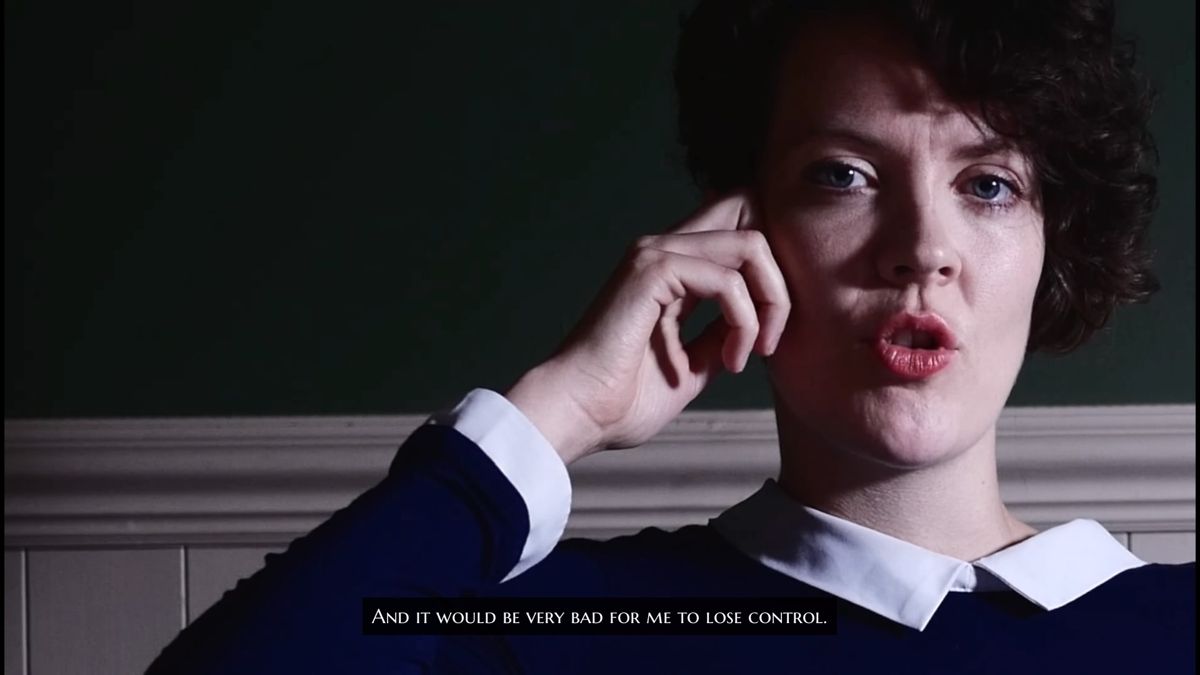
The acting is surprisingly good. With these characters’ histories and the unrealistic plot–not to mention that the actors are only speaking at the camera–I anticipated awkward, cheesy deliveries. Yet other than your assistant who overacts at most every opportunity, everyone else gives a believable and captivating performance. At times I used hints, not necessarily to help my investigation but to just to be able to see more of the acting.
As for the main goal of the game–deducing the murderer–I felt less than satisfied. I chalk up a great deal of this to the fact that when your game starts, it chooses at random one of the six prime suspects to be the murderer. Knowing that over eighty percent of the patient responses are the same no matter who is the suspect gives the game little replay value while also giving me less motivation to analyze every comment. That said, I did eliminate two suspects early on. It took me three tries though to identify the murderer at the end; I’m not sure if I misinterpreted some clues or if I just never found the clues themselves. As the game will let you advance without necessarily finding them all, it’s hard to know at the end what mistakes you made. On a positive note, every patient response is catalogued so you can rewatch them as often as you like (within each day; once you progress, you lose access to all the old videos), only this time with a sepia tint as your sessions are technically being recorded.

Beyond fingering the culprit, the game also keeps track of your patients’ mental health and your personal sanity. Based on both questions you ask and also questions you answer, both can improve or decline, though it’s not easy to gauge in the moment. During the denouement, you will get cutscenes of each patient’s outcome as well as your own (as other characters discuss your mental health). While these separate paths are all interesting, I still had no interest in replaying to find them all given the repetitive nature a replay would take, especially since you can find them on Youtube.
While I don’t give this game a high score, I would still enthusiastically recommend it to fans of the genre for its unique presentation and engaging performances. Thankfully, The Infectious Madness of Doctor Dekker was just the beginning for D’Avekki, who have continued with several more games of this nature.
 Death By Troggles