
Publisher: Klabater SA
Developer: Warsaw Film School
Year: 2022
Platform: Windows, XBox One, Xbox Series, Switch, PS4
Rating: 1
Best Month Ever!, a product of the Warsaw Film School in Poland, tells the story of a single white mom in the 1960s USA who, after discovering she has a terminal diagnosis, decides to quit her job at the diner for a road trip to help reunite her eight-year-old black son with family who will take care of him after she’s gone. This utterly gorgeous game has some fun mechanics that work well enough in delivering a narrative; sadly, this specific narrative could have been a poignant tale about trauma and love, but instead approaches its adult themes with the subtlety of a sledgehammer and makes several missteps in its handling of racism.
Upon learning she has only a short time left to live, Louise finds herself lamenting how she’s raised her son, Mitch, a young boy who’s had to grow up too fast but is sweet, curious, and strongly bonded to his mother. The game starts as she goes to the diner to retrieve the money she’s owed from her sexually aggressive boss; all the while Mitch watches his mother’s every move. Right away the game makes clear that Mitch’s personality is going to be shaped by the next month of his life. He will gain or lose points in the categories of ‘justice,’ ‘righteousness’ and ‘relations’ based on actions either he or his mother takes. You will regularly alternate controlling both characters as you’re forced into making one heavy choice after another.

It’s pretty easy to determine what actions are going to improve Mitch’s relational skills, but it is quite puzzling what the game considers will impact Mitch’s feelings of justice and righteousness, especially since those two terms are never defined and many would consider to be somewhat synonymous. For example, lying to someone can increase righteousness while not affecting justice at all. While receiving immediate feedback on how your actions affect your personality could otherwise be considered intrusive to some players, it’s welcome here given how difficult it is to predict the outcome of each decision.
After leaving the diner, Louise takes Mitch to see her estranged mother and sister, where Mitch will experience additional trauma before going on a country-wide road trip where he’s exposed to rape, a gentleman’s club, gun violence, dead bodies, and the Ku Klux Klan. It’s a rare moment when Louise and Mitch are allowed to enjoy each other’s company and strengthen their bond. Most of the game is spent watching Mitch get traumatized over and over again.
Perhaps this could have worked if the characters had felt authentic, but at no point while playing did I feel like I was watching real human beings. The voice acting is so poorly done that the game would be significantly improved with its absence (which at least you can do by turning the dialogue volume down to zero). Old characters sound like they’re being voiced by young people trying to sound old. Children sound like they’re being voiced by old people trying to sound young. Dialogue is often painfully slow, stilted, and flat. And many black characters, including young Mitch, are disappointingly voiced by white actors. The one exception is adult Mitch, who narrates throughout the game and is voiced beautifully by Maurice Williams, a professional black actor. Louise is also voiced by a professional, Jennipher Foster, who does the best she can with the script. If only as much care had been put into the rest of the casting.
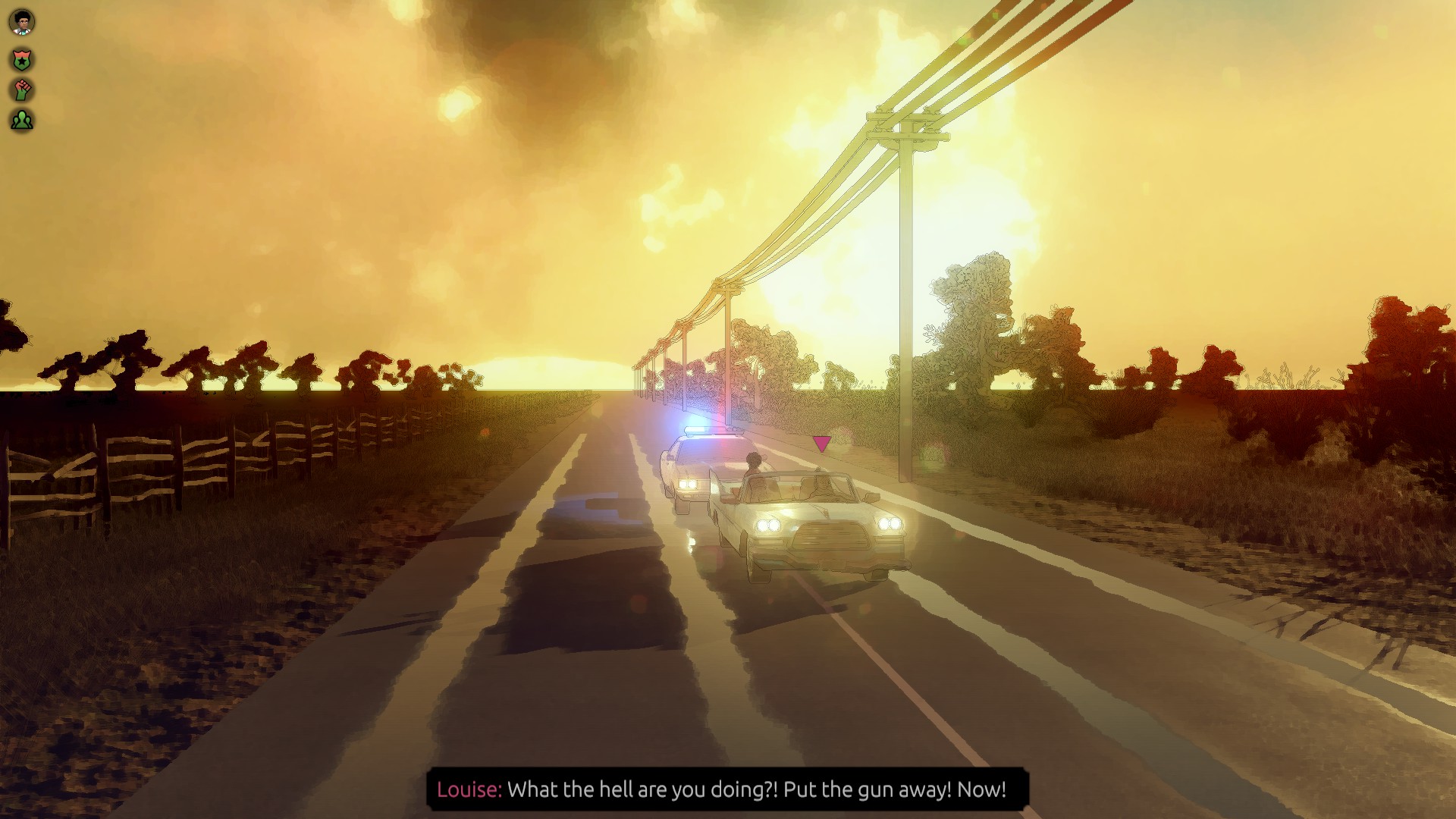
Compounding the problem with the voices, the dialogue is not believable either. Conversations around sexual assault feel rushed and inauthentic. Characters underreact to almost every trauma in front of them. Even adult Mitch, literally seconds after young Mitch witnesses a life-changing horror, narrates in that moment that he was very happy and excited for the journey with his mom, and genuinely declares it will be the “best month ever.” It was at this moment I gave up on ever being moved by this story.
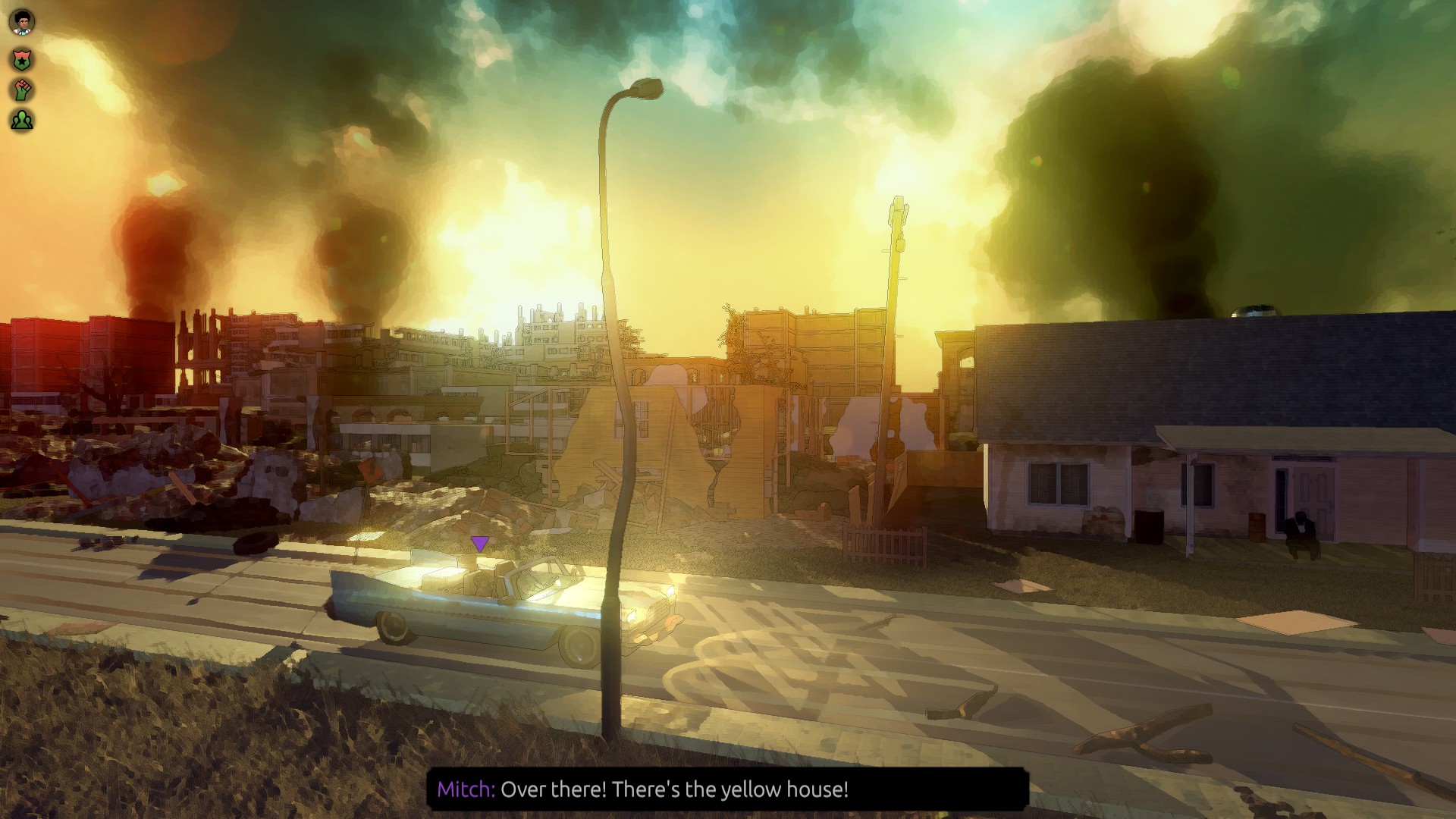
It’s a shame, too, since the graphics are simply stunning. In their travels, Mitch and Louise get lost in the Sonora desert, brave a tornado in a remote Texas town, and visit family on an alligator farm in Lousiana. And it all feels culturally authentic; whether at the diner, the club, or a highway gas station, one always feels immersed in sixties Americana. Each scene looks like a meticulously drawn watercolor painting, and I enjoyed myself the most when I had the opportunity to wander around and explore each scene. The accompanying folk, country, and jazz-inspired score by Jędrzej Bączyk is quite pleasant as well, with several moving trumpet solos being the highlight.
Most of the time you will control young Mitch, though you will briefly take control of Louise a few times. The game is fairly easy to play with either mouse/keyboard or gamepad, with the third-person gameplay mostly involving navigating conversation choices. Puzzles mostly amount to short fetch quests that are appropriate for an eight-year-old and make sense within context, encouraging exploration and providing some pacing to the narrative. There is nothing that could be considered remotely difficult, which is ideal given the nature of the story. One skippable driving scene is easier on the gamepad, but the overall experience is basically identical either way.
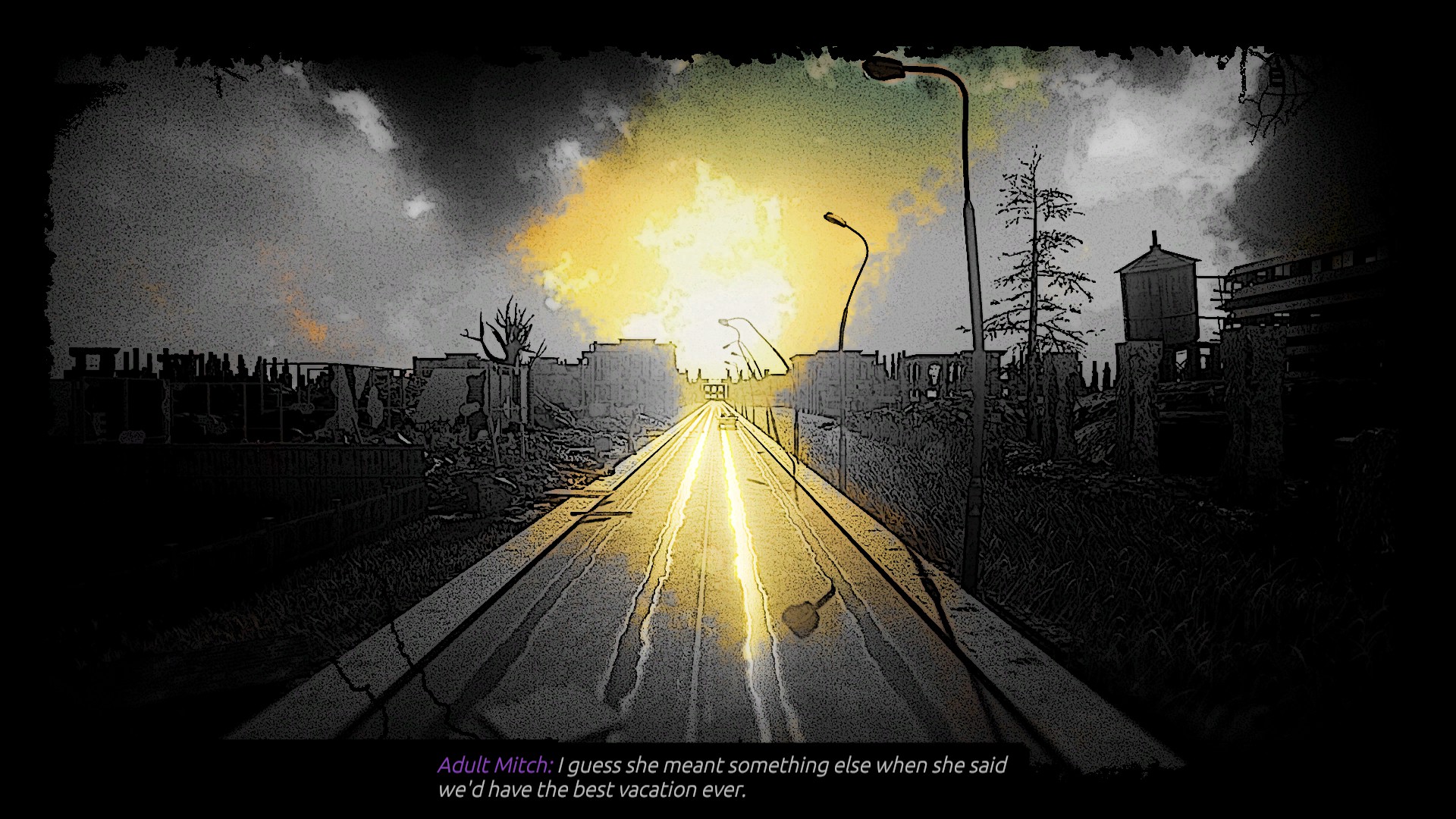
Even with all my reservations, I was holding out hope for a rewarding, emotional ending. But the story ends with a whimper, with old Mitch narrating how his life changed after his adventure. All the choices you’ve made up to that point can lead to nine distinct outcomes, though the only difference between them all is one picture and one sentence, which is certainly not worth replaying the entire game to see, given that each playthrough takes about three hours with few variations. You can, however, continue the game from any individual chapter if you just want to see how different choices play out.
Worse than that, the multiple endings are both simplistic and problematic. While no doubt the events that happen during this game would irrevocably change anyone’s life, that Mitch’s future would vary so wildly based on only this one month is a laughable view of human development. And sadly, six of the nine possible endings have Mitch winding up violent, morally corrupt, heavily addicted to drugs, or an absent father (with the other endings being far more positive). For the game’s entirety, we see Mitch having a very close bond with his mother, and at the end Mitch is surrounded by more kind people who care about him, regardless of the choices made. That two-thirds of the endings then reinforce every negative stereotype about black men is unfortunate at best, and irresponsible at worst.
Best Month Ever! is the first game from these students and teachers at the Warsaw Film School, and it demonstrates their creativity and some budding talent for video game design. The graphics are top-notch, it’s easy and intuitive to play, and the premise seemed poised to raise thought-provoking questions about how children cope with grief and loss. But perhaps the two most important facets of a narrative adventure are dialogue and story, and in both cases this adventure fails hard. None of the characters except adult Mitch felt at all believable to me, and most of the game forsakes the issue of Louise’s impending death entirely in favor of subjecting its young protagonist to so much trauma that the experience starts to feel overwhelming. Shining a light on racism is a commendable goal, and if it had been handled with more nuance and balanced better with scenes of mother/son bonding, I’d have probably felt the poignancy the developers surely intended. As it is, if you’re trying to have your best month ever, you’d be best advised to pass this one by.
 Death By Troggles