Publisher: Square Enix
Developer: Deck Nine
Year: 2017
Platform: Windows, Mac, Linux, PS4, Xbox One
Rating: 7
Coming out two years after the hit smash Life is Strange, Before the Storm attempts to recapture the magic with a prequel detailing the beginning of Chloe Price’s relationship with Rachel Amber, her dear friend who is missing at the beginning of the original game. While essentially (and disappointingly) puzzleless with an unfortunate number of plot holes, I still very much enjoyed my time hanging out with Chloe for a few more days in this emotional roller coaster of a game.
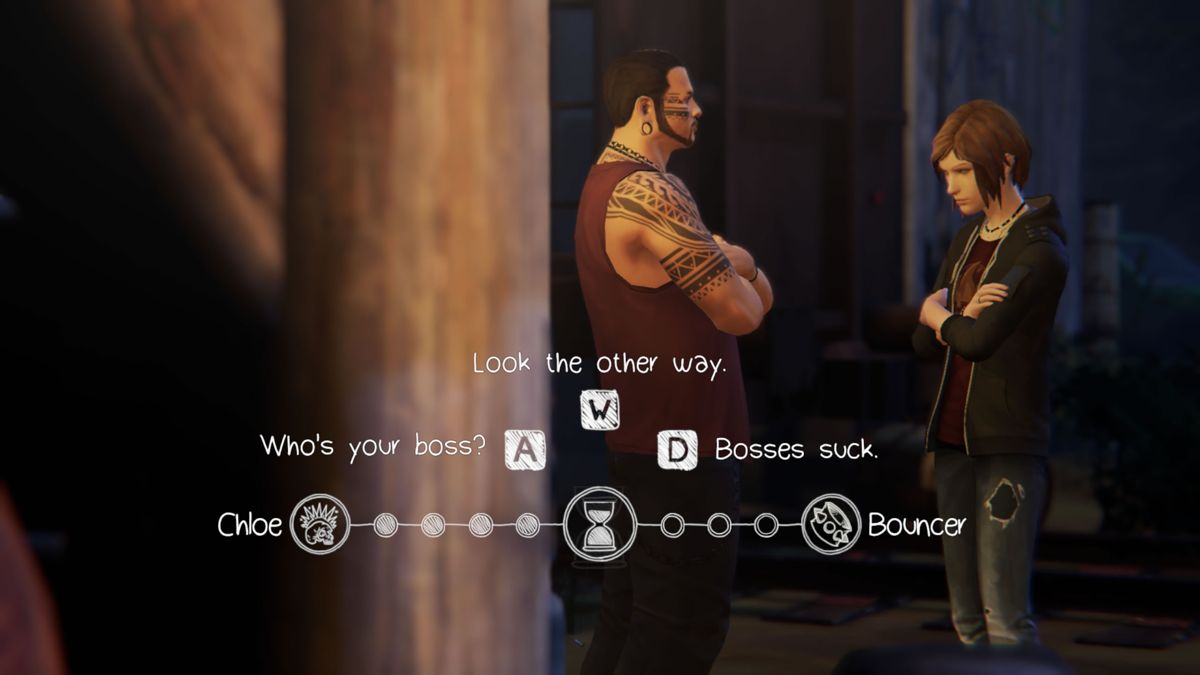
Controlling Chloe, the game begins as you are trying to get into a remote punk club because your favorite band is headlining. A friendly but persistent bouncer blocks your way and you are immediately introduced to the game’s signature mechanic. Max Caulfield’s power in the original was manipulating time; of course, Chloe didn’t have a power before so she can’t have one now. Instead, she has the natural ability to “backtalk,” which is essentially manipulating conversations to her advantage by using the other person’s words against them. In this case, you must make the bouncer feel not so intimidating by knocking him down a few pegs. Once he finishes a line, Chloe will be given one of three options to respond with; one option is usually pretty weak and lame, while two are snarky, with one in particular being especially pointed. During this conversation, you must get four jabs in before the bouncer does in order to get past him. If you fail, there is an alternate way of getting into the club, but winning backtalks generally make Chloe appear badass. While this mechanic is not terribly interesting, there are a few creative uses of it late in the game.
Winning a backtalk is never required in the game and they’re generally inconsequential as far as storytelling goes. Unfortunately, that’s much like every other decision you’ll make in the game. Decisions can affect the course for minor characters, and in that sense they are meaningful; I was often torn on the game’s major decisions. The first one is in the aforementioned club, when a couple of the partygoers target Chloe, presumably because she’s a girl who dares have opinions. Rachel Amber shows up to distract them, giving you the choice of attacking or fleeing. While you escape either way, if you fight you come away with a black eye, which everyone negatively comments on throughout the first day. On the other hand, it impresses the hell out of Rachel. Most decisions have similar outcomes, with pluses and minuses.
As noted heavily in the previous game, Rachel is the most popular girl at Blackwell Academy. She gets perfect grades, is the school’s best actress, and is super kind to everyone. Chloe is surprised to see her at the punk club, and after being saved and then running away with her into the night, is instantly twitterpated. Rachel, bursting from the immense pressure of being the perfect kid, is happy to hang out with the school delinquent.
The next morning, Chloe’s mom admonishes her for being out late without texting and also for not being super chummy with David, mom’s new boyfriend. The interactions here are easily the most pointless of the game. David’s character arc here (being a controlling dipshit before realizing the error of his ways) is the exact same arc he has in the original game, which is both uninteresting and confusing from a continuity perspective. Mom’s character is also not developed further.
The other relationships Chloe has are also a bit confusing. Victoria is back again, which she shouldn’t be because she only transferred after Blackwell Academy becomes an art school (which it isn’t yet here). Several other students have large roles but are suspiciously absent when Max arrives, despite being the same age. That said, some of these interactions are cool. Her friends Steph and Mikey are super into tabletop RPGs, and you get a chance to play with them in a charming interlude. Interminably rich loser Nathan Prescott is also here, but more sympathetic at this point in his life. Chloe’s weed dealer Frank also has a heavy role and is likewise a much more likeable guy here.
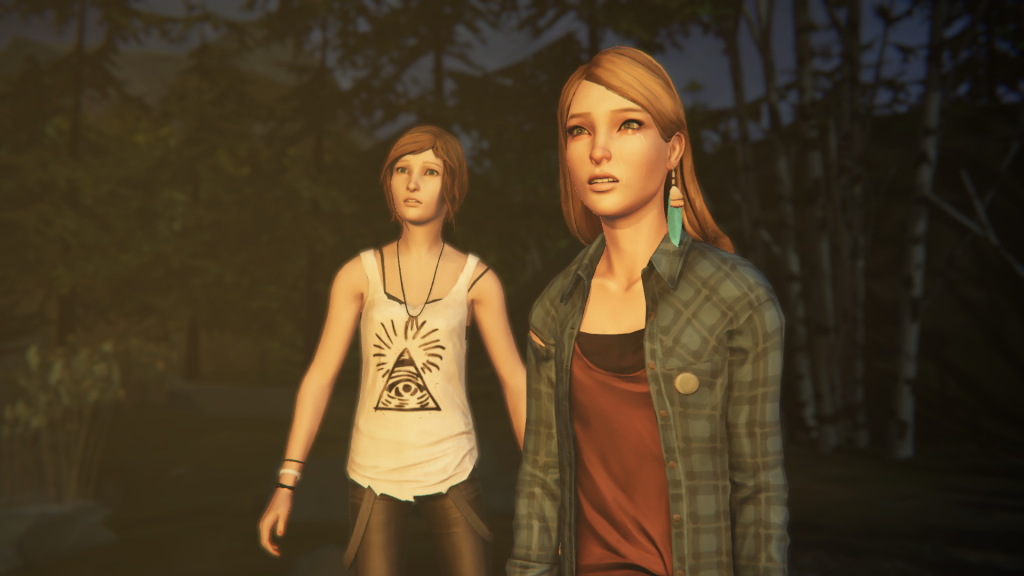
Of course, the highlight here is all about Chloe and Rachel. While the lightning-paced speed at which their friendship develops stretches credibility (even for high-schoolers), it is nevertheless endearing, not to mention heartbreaking knowing what eventually becomes of Rachel. I would go so far as to say Before the Storm‘s emotional weight relies quite heavily on the foreknowledge most players have after playing Life is Strange. They cut school, hang out in the junkyard, face the principal together, and dream about running away. The game’s second act, where Chloe and Rachel pour their hearts out to each other is just soul crushing. An excellent job is done fleshing out their characters and it really tempted me to replay the first game to look at them in a new light.
Max’s primary sidequest was taking rare photographs. Chloe’s is making her artistic mark with graffiti. Almost every scene has one or two places Chloe can enhance her surroundings, and you get to choose between a couple of messages she can gift to the world. On at least one occasion, she makes graffiti that you see in the original game.

The production values have improved significantly, with crisper graphics, character animations, and no lip syncing issues. Using the keyboard/mouse or gamepad is intuitive, though the later occasionally has some vibration to intensify some moments.
The voice acting is fairly mediocre for many of the side characters, but quite excellent for the main players. I didn’t know until after I finished that Chloe was voiced by a different actress (due to a voice actors strike at the time). Rhianna Devries takes over quite nicely for Ashly Burch. In fact, every returning character is voiced by a different person and I was none the wiser (though, to be fair, it has been a couple of years since I heard the other voices).
A huge shout out goes to the game’s soundtrack. There are often interludes where Chloe can sit and ponder her situation, and a song will play in the background. They definitely boost the ever present sense of melancholy.
There are a lot of cool Easter eggs connecting the two games together. My favorite is a deep cut but I have to mention it. The writers got a lot of flack in the original game because Chloe said “hella” often, as though she was a teen in the 90’s. Here, Rachel says the word and Chloe calls her out, noting that nobody says that anymore.
Earlier I mentioned plot holes in addition to the continuity issues. The game’s third and final act is pretty much a hot mess. An incredibly convoluted and unnecessary wrench is thrown into Rachel’s life because of her parents, and no matter how much exposition they tried to throw at me, I still didn’t believe these characters would act the way they did. In addition, there’s a scene near the end where Rachel asks Chloe to snoop in her dad’s office for some vital information. While the request is realistic, what happens after Chloe gets there is utterly preposterous as Chloe makes one decision after another that not only is out of character, but relies on so many contrivances that I kind of stopped caring what happened after that.
The game’s ending also does not make up for it. Like the first game, there is a huge choice at the game’s conclusion. Or so it seems. In reality, this really heavy decision only changes one five-second part of the epilogue. As this is a prequel, they couldn’t go too crazy with alternate endings (which would further wreck continuity), but there is nothing remotely satisfying about the conclusion. I was also disappointed that Rachel’s disappearance is only alluded to and none of the ultimately fateful decisions Rachel makes are shown here.
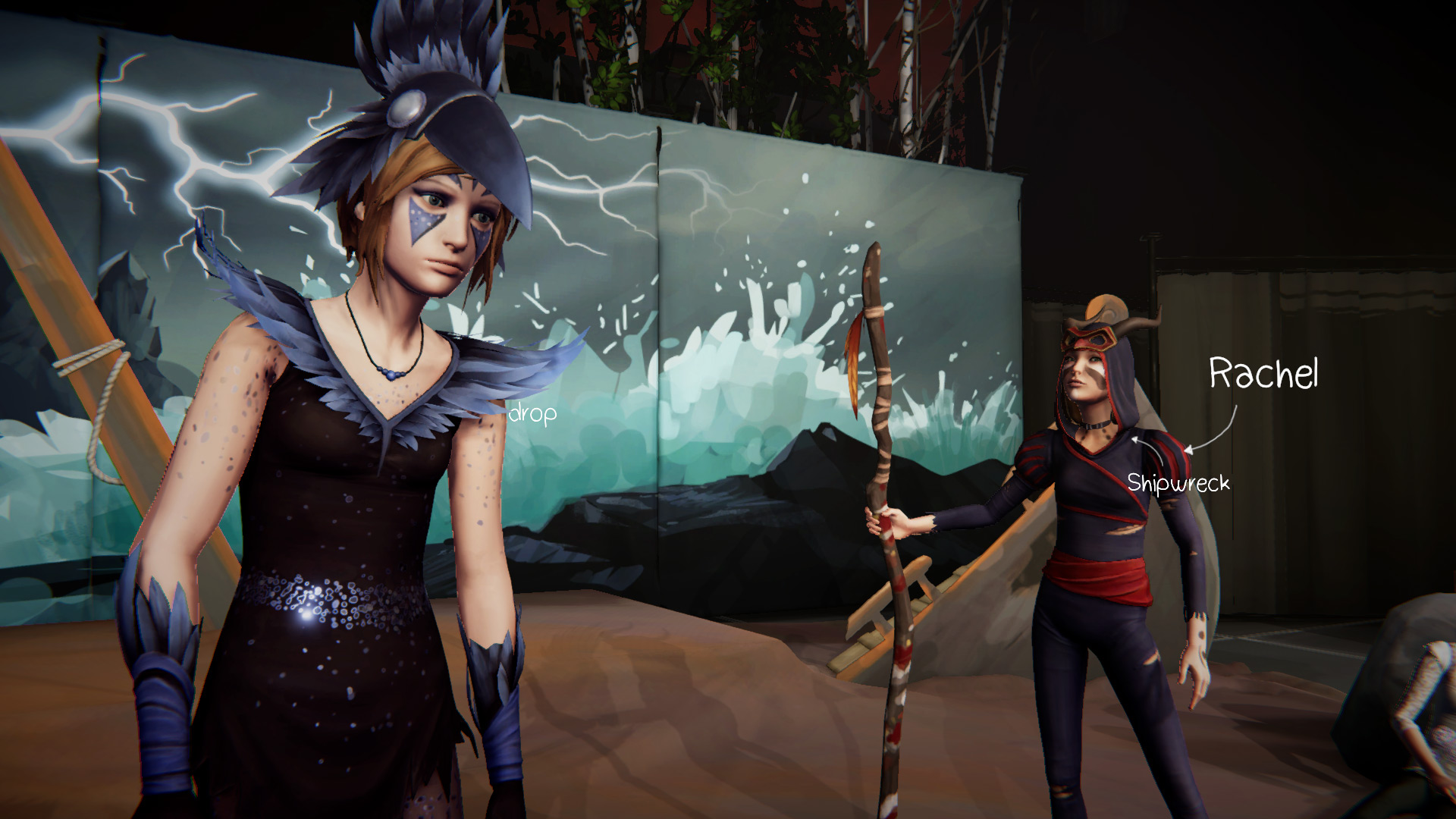
Despite all of these critiques, I still rather enjoyed myself. The second act, as mentioned, is especially strong, culminating with a funny and heart rending scene where Rachel performs in Blackwell’s presentation of The Tempest. I should mention, that unlike Don’t Nod, Deck Nine had a woman on the writing team (you know, for a game all about women). I wish I could have spent more time hanging out with Chloe and Rachel and am eager to continue with the other games in the Life is Strange universe.
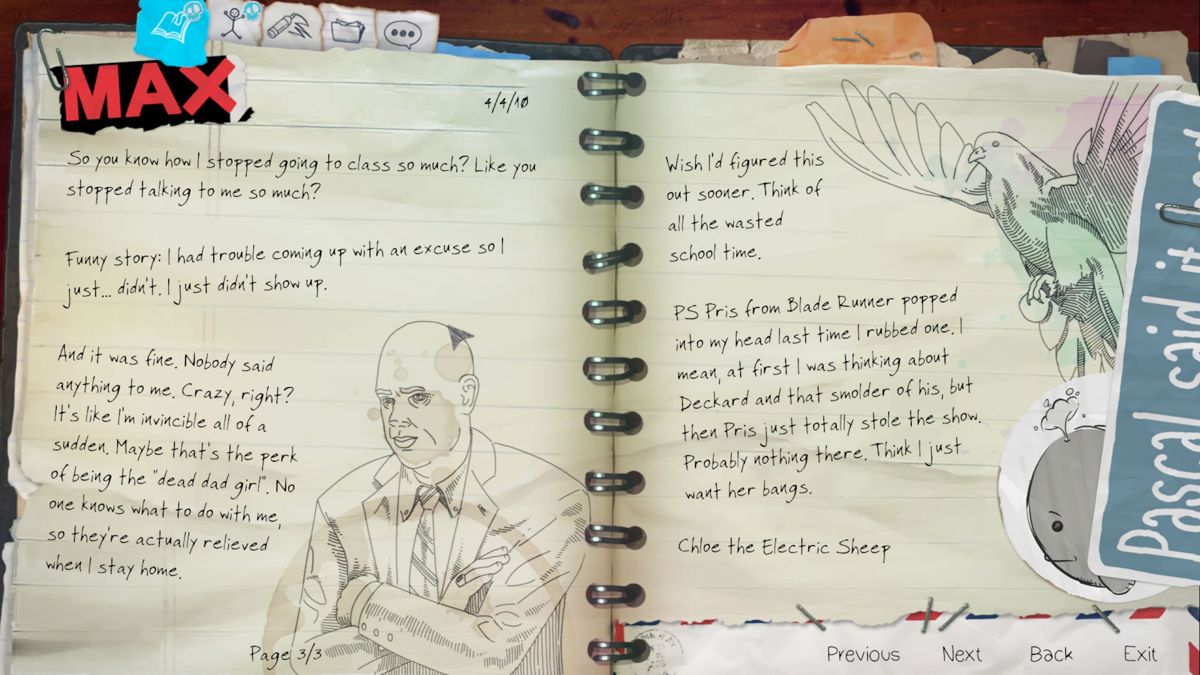
There’s also a short DLC where you get to play as Max, who is hanging out with Chloe (a few years prior) on the day Chloe’s dad dies. The original voice actors are back to play the middle school versions of our heroes. There are no puzzles and it’s rather linear and predictable; nevertheless it was still quite moving and I’m glad I played it.
 Death By Troggles