
Publisher: Frictional Games
Developer: Frictional Games
Year: 2015
Platform: Windows, Mac, Linux, PS4, Xbox One, Xbox Series
Rating: 8
The older I get the less I can tolerate the horror genre. Perhaps it’s the state of the world right now, or maybe I’m just getting old, but my nerves are already wound up enough without artificially tightening them further. For example, Frictional Games is most famous for their Amnesia series. I’ve attempted that, and despite enjoying it, have not been able to get through it due to my anxiety.
Yet they catered to me with Soma, adding an optional setting that more or less prevents you from dying at all. At first I worried that the horror would be dampened by eliminating the risk, but then I remembered that I still enjoy reading a Stephen King book even though I know I’m not going to die then either. Soma’s atmosphere is incredibly intense, risk or not, and the story is strong enough that it’s easily one of the best horror games I’ve played.
You play as Simon Jarret, who has recently been in a car accident that killed his girlfriend and gave him terminal brain damage. You’ve opted to undergo experimental bran scans for science, less so because you hope your scan can be downloaded into another body in the future, but more so because you want to do something good with the remaining life you have left. As the game begins, you’re in your Toronto apartment and about to head into the facility for another scan. However, during this scan, something goes wrong and you wake up in what appears to be a similar but different complex that is crumbling. And you’re alone.
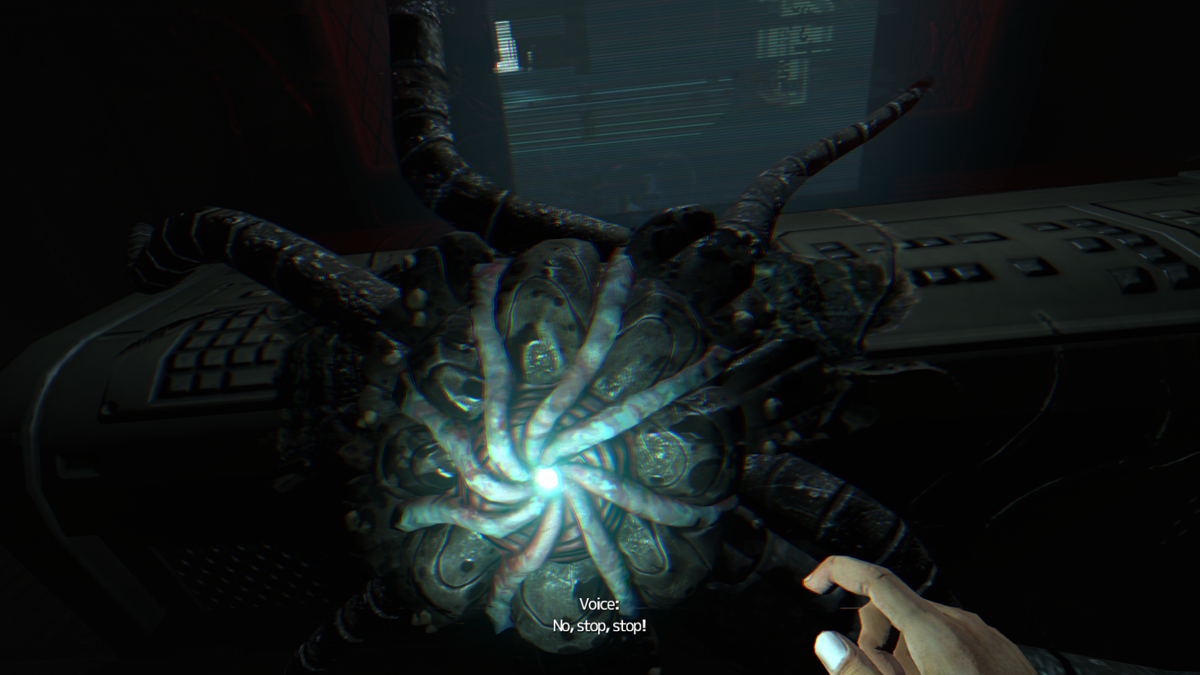
Gameplay is first-person. As you take control of Simon again, your first task is figuring out how to get out of this locked room while accessing what you can from the computer terminals. There is no inventory, though you will occasionally pick up items to quickly use in a nearby location. In this room for instance, as you will need to pick up a chair and throw it at a cracked window in order to get out. Once you leave it hits you that this is definitely not the same building you first entered.
The atmosphere manages to be foreboding without being over the top. Emergency power is on, with flashing red lights being a majority of the illumination along with the rare working computer console. The groans of metal suggest the walls are going to collapse at any moment. Occasionally a stray liquid drips or a stray wire is sparking. Not every area has danger, but nearly every area makes it feel like it’s right around the corner.
Eventually, you will be able to use a terminal to access another complex, and with that another person who is as stuck as you. Somewhat cryptically, she helps guide you on what to do and where to go, at least every time you can access another terminal. Adding to the isolation, occasionally you can reach another location, hearing someone’s distress call without being able to interact with them. The only spoiler I’ll give here is that you learn you are at the bottom of the ocean, and in between complexes you will also need to traverse the sea floor.

Atmospheric puzzles exist, insofar as you sometimes have to deduce the best route to take or figure out where the disk you’re holding can be activated. My favorite may be an area on the ocean floor where you must manipulate communication equipment underwater to access other sites. It helps that with nearly every puzzles you solve, you’re gifted with more information that answers a burning question while also creating several more. The urge to keep going is ever present.
Actual danger is limited at the beginning of the game, and slowly ramps up as you progress. Even on safe mode, the dangers exist, mostly consisting of creatures that feel part machine, part alien. But for me, they mostly kept their distance unless I ran straight into them. They weren’t any less scary, though, as their hideous noises and unpredictable movements still had me on the edge of my seat. I should also note that safe mode also allows you to ensure you get to see everything there is to see, including accessing world lore by digging into computers or reading notes on desks. If you’re constantly running away, taking the time to browse doesn’t always seem possible.
But the atmosphere would barely hold its weight if it weren’t for the compelling story. It’s hard to really share anything without major spoilers, but each plot twist feels well-earned and the lore continually builds upon itself in a satisfying manner. And the endgame is just about perfect, both from an emotional and intellectual level.
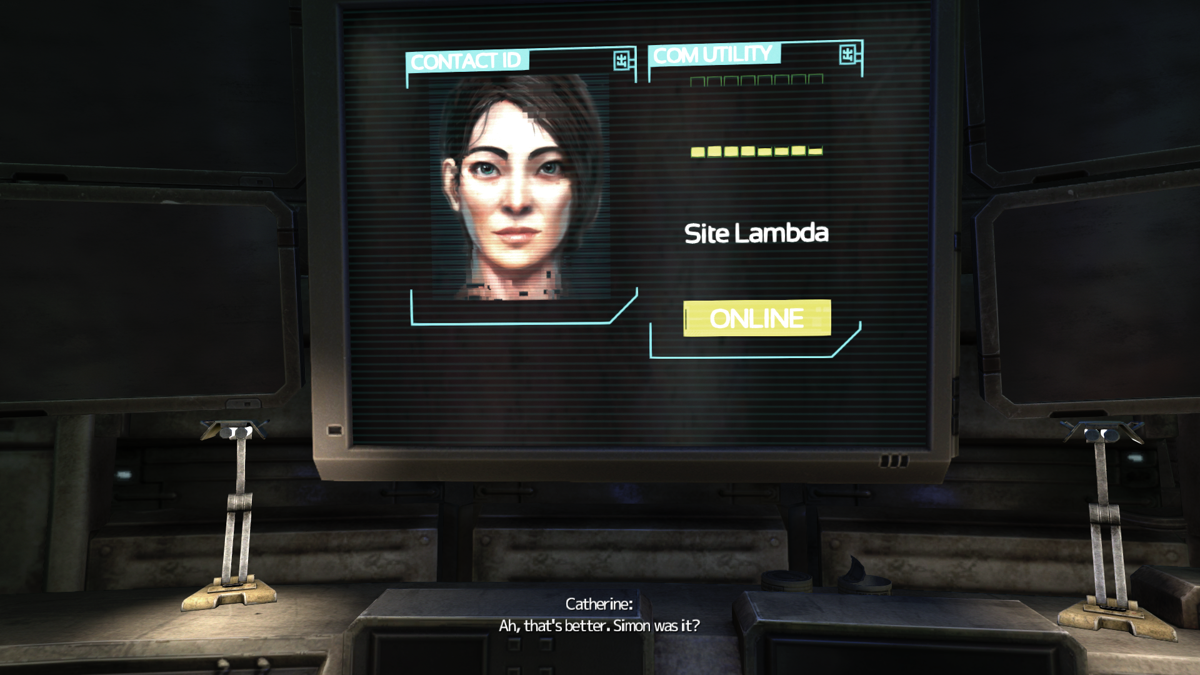
Soma had the potential to be a top 10 game of all-time for me. Sadly, the dialogue, when present, is often brutally written, as if AI were tasked to tell the story. On top of that, the voice acting also leaves a lot to be desired. There are moments that really resonate, but then they’re soon ruined when the actors stumble over their delivery of the wooden lines they’ve been given. While the story remains compelling, some of the dramatic moments would have hit a lot harder if more care had been put into the writing itself.
That said, anyone who likes horror simply has to play Soma. Even with its faults, it never ceases to be a chilling rush from beginning to end. Hopefully, Frictional Games takes a break from the Amnesia series in the future and puts together another terrifying sci-fi adventure.
 Death By Troggles