Publisher: Mixtvision
Developer: Okomotive
Year: 2018
Platform: Windows, Mac, PS4, Xbox One, Switch, iOS, Android
Rating: 4
If I had known going in that FAR: Lone Sails, the first game by developer Okomotive, was a platformer in the vein of Limbo, I probably would have passed on it. I’m not particularly against platforming, but like Limbo, Unleaving, and many other games of its ilk, there’s virtually no story and hence little motivation to what you’re doing. I was able to tolerate the bare-bones experience thanks to its brevity, easy of play, and some neat visual effects.
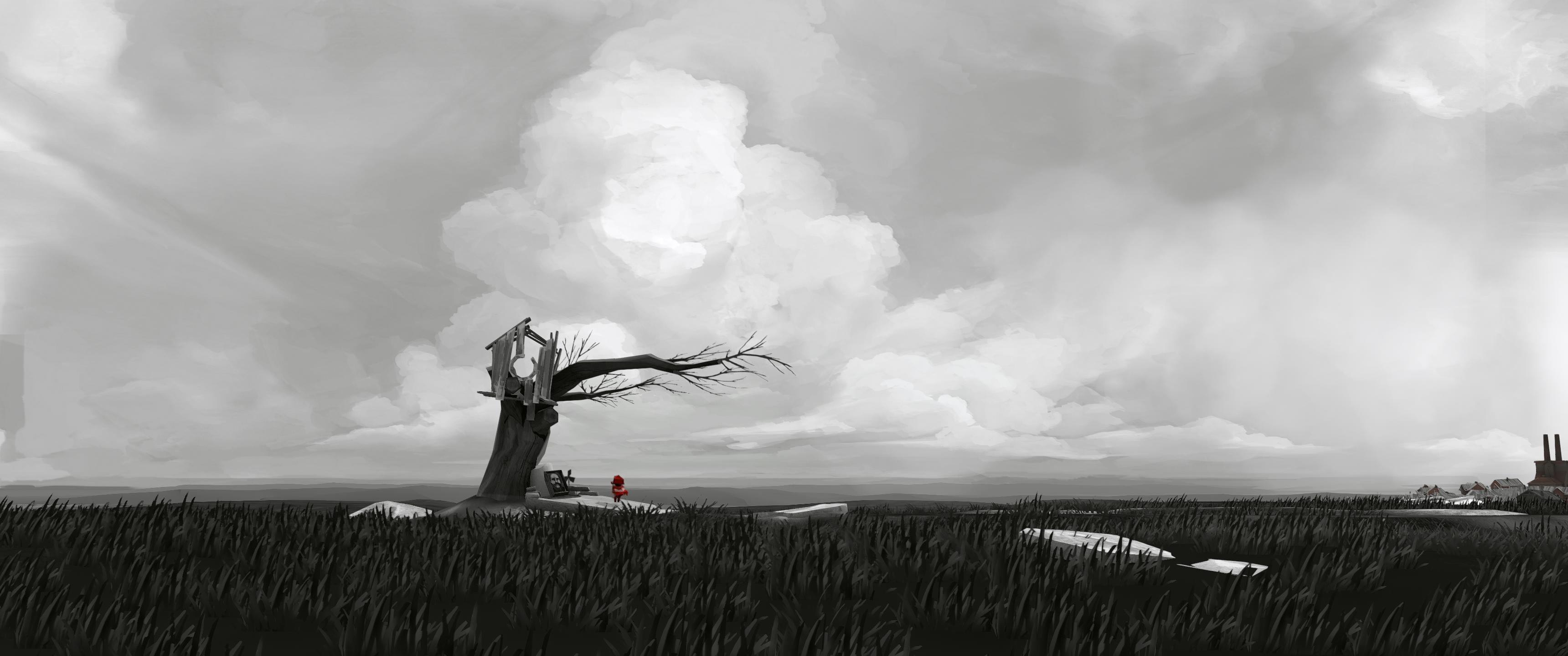
As play begins, you see what looks like a young girl wearing a red outfit, sitting next to a tree. There’s a framed photo of a man, presumably her father or someone else very dear to her, and not much else. The world appears post-apocalyptic, with you being the only person left, at least in this corner of the world. All there is to do is to move to the right.
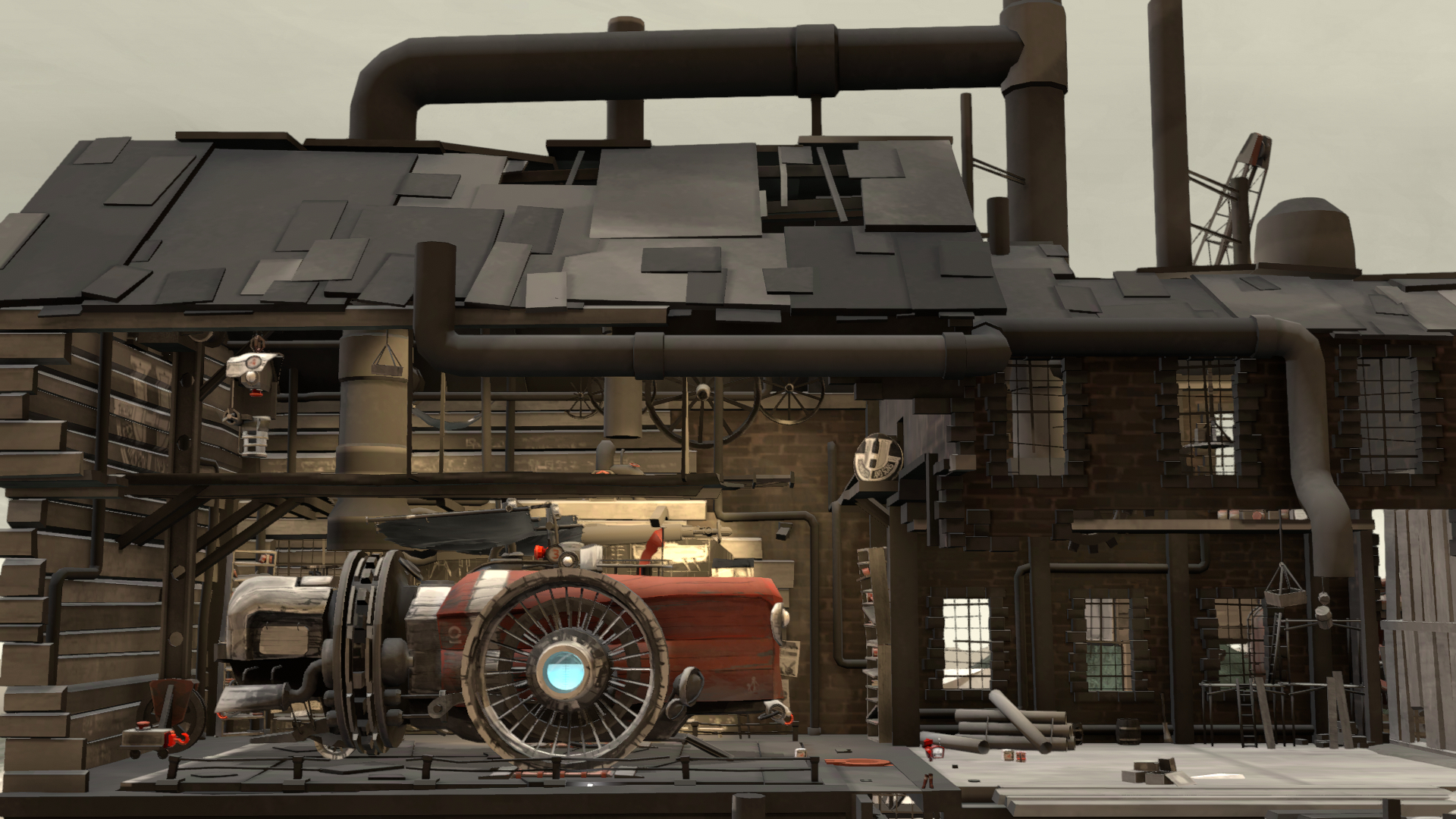
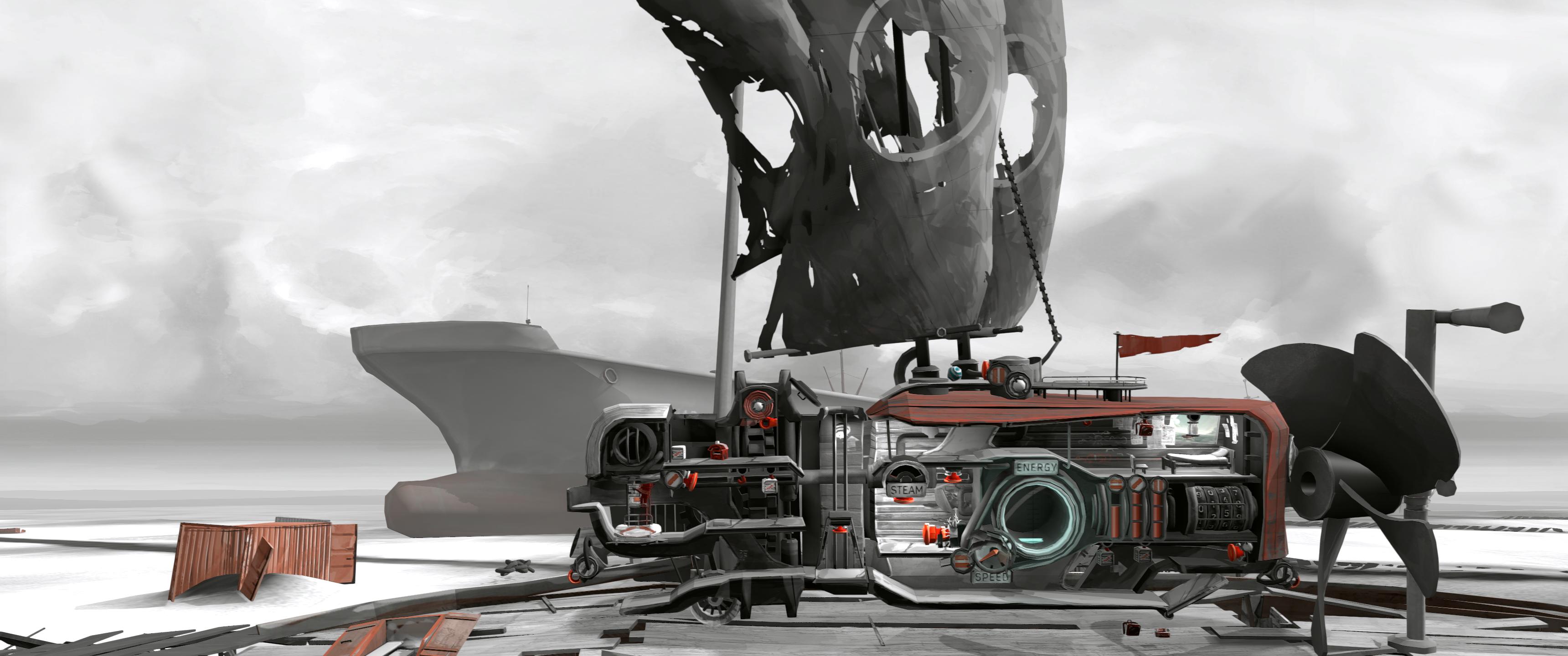
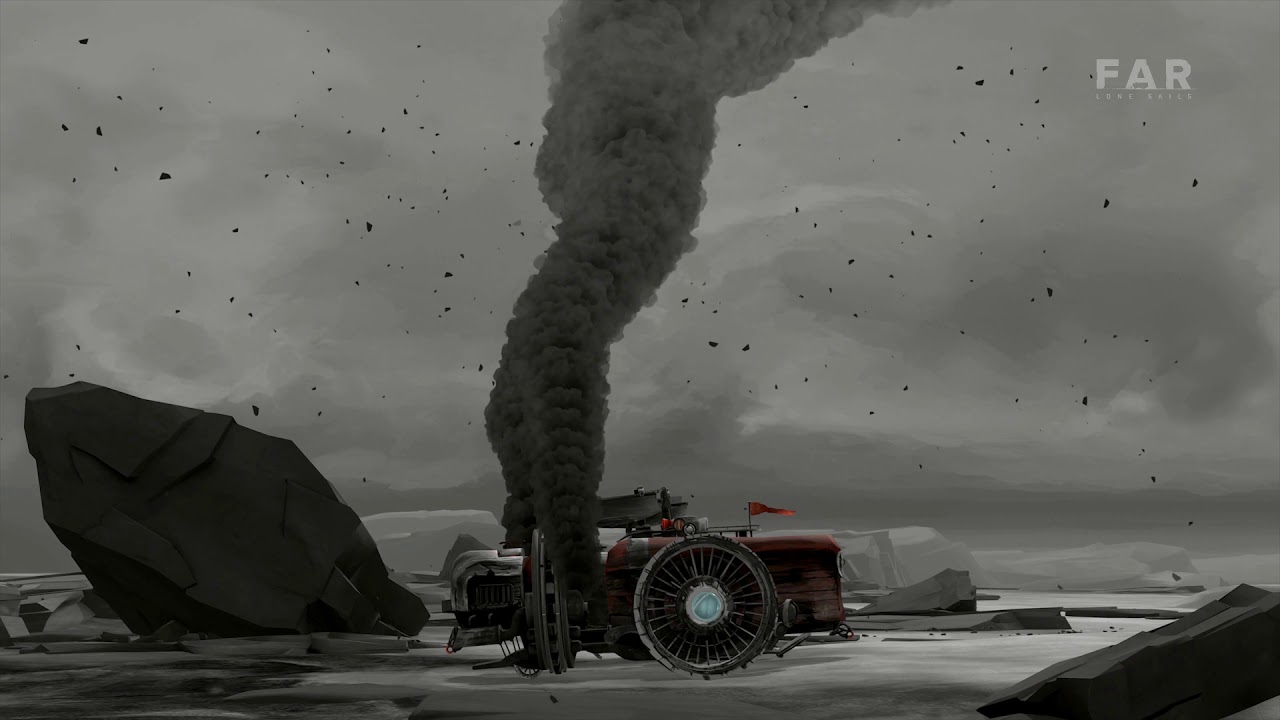
There’s a brief tutorial on how to pick up objects, jump, and move around, all fairly straightforward. Shortly, you find a leftover machine, a giant steam-powered tin can that you enter from the rear. It has three levels to move around in with a slew of big red buttons to activate various features. You’ll first learn which button makes it go, then how to let out any excess steam and utilize random fuel and other material you find to keep it going.
Additionally, there are various hooks you can use. There is one in the back if you want to pull on it to reverse course. There’s one in the front you can use to hook onto objects in your way or to pull your machine forward if you’re out of fuel. There are also hooks you can use to hang sources of fuel so they’re not in your way. There’s also a hose you will need to put out any fires.
You will guide your machine throughout the countryside. While your machine is essentially on a rail, majestic watercolor backgrounds will keep your attention. While there are many remnants from what used to be an advanced steampunk society, including towers, submarines, mines, and factories, you will also mosey on past farms, animals, hills, and deserts. You’ll see nearly every type of weather along the way, and sometimes surviving the weather is a puzzle itself. Where you’re going is unfortunately a mystery, and there’s no context clues on the way. Occasionally you will see a billboard or sign, but the content is so vague as to not come close to worldbuilding.
Your ride can and will plow through fences and other weak structures, but occasionally you will come across something impenetrable, like a wall, gate, or large building. In these cases, you will need to leave your machine to solve what is usually a straightforward mechanical puzzle. You may wind up opening long-sealed doorways or use massive elevators to move your machine into an open area. Sometimes you will even nab yourself an upgrade. The first one is a sail that you can use in lieu of steam when the wind is blowing in the right direction. All the upgrades are mandatory as part of the story; in general they make things easier while the game’s difficulty barely increases.
While it seems at first impossible to die, you can do so. If you’re machine starts on fire and you don’t douse it in time, your ride will explode. You can also get yourself burned into a crisp as well. If this happens, you will be automatically brought back to the last checkpoint, which is often only a minute back.
The background music is minimalist, with acoustic arrangements generally on the pleasant side, though turning sinister if the weather warrants it. There’s also some perfunctory sound effects, such as releasing steam, knocking over fences, or gears turning.
I wish I could say the ending was a reward, providing illumination for your character and your journey. Alas, it was as vague as everything else. For those who are looking for a laid back, austere platformer, Far: Lone Sails should be right up your alley. It was an ideal way to use my Steam Deck when I wanted to play something in short bursts that didn’t require my acute attention. However, I feel like there was a missed opportunity for worldbuilding to make this an emotionally resonant experience. That said, I enjoyed myself enough that I will likely play the sequel that hopefully fills in some of these gaps.