Top 75 Studio Albums

As opposed to the previous countdowns on this site, I don’t consider myself particularly passionate or all that knowledgeable about music. I neither listen to nor seek out music like I did when I was an angsty teenager, and I find myself to be incredibly picky in my old age when it comes to new stuff. However, when compiling this list, I did find some gems so not all hope is lost.

What makes an album worthy of being on this list for me? While most have a song or two that are amazing, the common thread among the albums on this list is consistency. If I can listen to the whole album without cringing or having to skip a song or two, I am impressed. And while I have many soundtracks, greatest hits and live albums that I adore, this list is intended to honor those artists who can create a whole bunch of amazing material all at once. Many artists can string together ten hits over ten years and put them together, but there’s something special about a single great album.

Like I said, I am not a music critic. My reviews will likely sound pretty uneducated. Hopefully, you’ll find a gem or two yourself while reading the list. Several genres are represented, including rock, folk, bluegrass, country, grunge, punk, R&B, hip hop,  pop, and one band that’s kind of bluesy. Five decades are represented. To help guide you with any new music you might be interested in, I’ll specify key songs on each album.

Red: 5-star songs. These are in my top 100.
Orange: 4-star songs. Top 500 or so.
Blue:
Garbage. I most likely skip past this song if I’m listening.

To illustrate, here’s an album that is not making the countdown.

Album: Pendulum
Artist: Creedence Clearwater Revivial
Year: 1971

1. Pagan Baby
2. Sailor’s Lament
3. Chameleon
4. Have You Ever Seen the Rain?
5. (Wish I Could) Hideaway
6. Born to Move
7. Hey Tonight
8. It’s Just A Thought
9. Molina
10. Rude Awakening #2

Pendulum is probably the most frustrating album I own.  Two of my top 100 songs are here, the fourth and fifth tracks. Have You Ever Seen The Rain? is stunning in it’s catchiness considering what a mournful song it is. Pagan Baby and Born to Move are pretty decent rockers. And It’s Just a Thought is a great melancholic tune about John Fogerty’s resentment towards his brother (as is Hideaway, actually).

But as you can see there are four songs on here that I just cannot listen to. Sailor’s Lament sounds off-key, Chameleon is dull, and Molina has an awkward rhythm with banal lyrics. But what really takes the cake is Rude Awakening #2, CCR’s only avant-garde offering. The first ninety seconds is actually a pretty good instrumental, and then it devolves into random noise for five minutes. It’s truly horrifying.

Monday we’ll kick this off the list. I hope you can enjoy it with me.

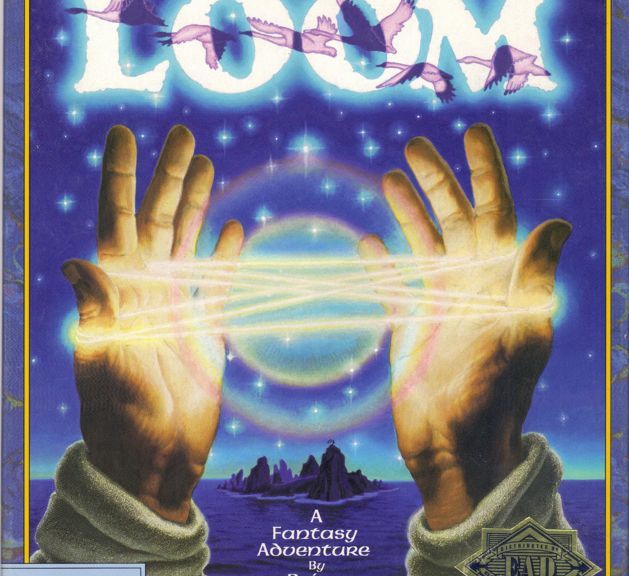
Loom

Publisher: LucasArts
Developer: LucasArts
Year: 1990
Platform: DOS; Windows; Amiga; Atari-ST; CDTV; FM Towns; Macintosh; TurboGrafx CD;

Review: One of the most original adventures ever conceived, Loom largely succeeds at just this, while failing to engage the player in a captivating story or with interesting characters.

As a 17 year-old member of the guild of Weavers, you must guide Bobbin Threadbare through a mystery, trying to learn why you’ve been outcast from the guild, and why the rest of your guild have been transformed into swans. There is no inventory. Progress through the game entails casting spells with your staff by weaving musical notes, with more powerful spells available as things move along. For example, you may learn that the spell for Open is the note sequence C-D-E-D; play this sequence on a particular object and see if it works. On easy difficulty level, you are shown the correct notes for each spell.  On medium, you see the notes played on your staff without the letters. On the expert level, you only hear the notes. Unless you are tone deaf, even the expert level is not too difficult.

While many of the spells are interesting, it is usually obvious which spells are needed where.  And with no other types of puzzles available, progress is incredibly easy. I finished the game in a mere four hours, even on expert level. Unfortunately, the characters (of other guilds) you meet are classic stereotypes with rather banal dialogue. Even Bobbin rarely acts consistently, vacillating between an appropriate meek teenager and a highly philosophical elder. Moreover, there are few surprises in the plot until the ending, which is confusing, alluding to a sequel that never happened.

Thankfully, the music is gorgeous, heavily borrowing from Tchaikovsky. There is a CD-ROM version with 256 color graphics and voice acting. Sadly, to fit the game on the CD, much dialogue was cut (though the acting is generally below average), as were additional scenes that rewarded the player for playing on expert level.

It is easy to see why Loom has a cult following, as therein is a unique experience in gaming. And while I would recommend this to anyone looking for something different, it is too short and underdeveloped to be considered a great game.

Contemporary RatingMedium.

Cruelty RatingMerciful.

Top 50 PC Adventure Games: Wrap-up and Poll

Company appearances in the countdown

Sierra: 17
LucasArts: 9
Legend: 4
Infocom: 4
Virgin: 3
Interplay: 3
Valve: 2
Access: 2

Sierra’s total looks impressive until you remember how many adventure games they actually made (sixty-two, if you’re wondering).  Still, that’s over 25% that made the list.  But then you look at LucasArts, who had 9 games make the list, which is exactly 60% of their catalog. I am guessing that if I played Telltale’s entire catalog, it would rival LucasArts’ percentage.

So here’s a poll for you all.  Check out the list of games here and write in the comments how many games you’ve actually played. Then, if you can, recommend an adventure game I haven’t reviewed (even if it’s not for the PC).  And The Walking Dead doesn’t count, because I already own it and just haven’t gotten around to it yet.  And, just for fun, if you recommend a game that makes my worst list, I’ll post that review tomorrow.

Police Quest 2: The Vengeance

Publisher: Sierra
Developer: Sierra
Year: 1988
Platform: DOS; Amiga; Atari-ST; PC-98

Review: Sonny Bonds is back…with a vengeance! Actually, the perp he testified against last game and put in prison is back with a vengeance. Not only has he escaped prison, he has kidnapped Sonny’s girlfriend and is knocking off everyone that was at the trial. Since you’ve been promoted to homicide, the case is yours. Lest you worry that you’ll get bored with nobody familiar around, Jim Walls has created several more characters with wonderful personalities.

First is Keith Robinson, your partner. Other than taking smoke breaks and making snide remarks, he offers little help, but befits the easy comic relief that every cop game needs. Then you have Captain Hall, who has a very short temper but a keen taste for pistachio ice cream and a master at working the telephone. And as with Police Quest 1, the supporting cast of characters usually have something funny and interesting to say.

The production values remain quite satisfactory, with improved graphics and sound over the predecessor. Even the sound that tells you that you’ve been awarded points is addicting. The game takes a bit more of a linear route this time around as Sonny usually knows his next destination. However, the puzzles remain fair and moderately difficult. Police procedure is toned down considerably, but still must be followed regularly in order for Sonny to achieve the maximum points and have a clue as to what’s going on. The design team also made a smart move in eliminating manual driving. Since Sonny is in an unmarked car and never needs to patrol the streets, driving would have become pointless and quite tedious.

But where this game shines again lies with the character and plot development. The Vengeance has the best story in the series, with the game spanning over two cities, under water, and in the air. The humor is still very prevalent, and suspense and action are dished out at regular intervals. There is one highly contrived plot device, but can be forgiven considering its entertainment value. And the end-game is fantastic on all levels.

As close to flawless as an adventure game can get, Police Quest 2 remains my favorite game of all-time.

Contemporary RatingMedium. Good parser, but going to the shooting range multiple times to adjust the sights on your gun would annoy many.

Cruelty RatingTough. If your only saved game is a split second before you’re going to die, then yes you can make the game unwinnable. Otherwise, you should be fine. You can miss a ton of things through your investigation, and this will make the game more difficult (and less enjoyable), but it won’t lock you out.

Portal

Publisher: Valve
Developer: Valve
Year: 2008
Platform: Windows; Macintosh; Playstation 3; Xbox360

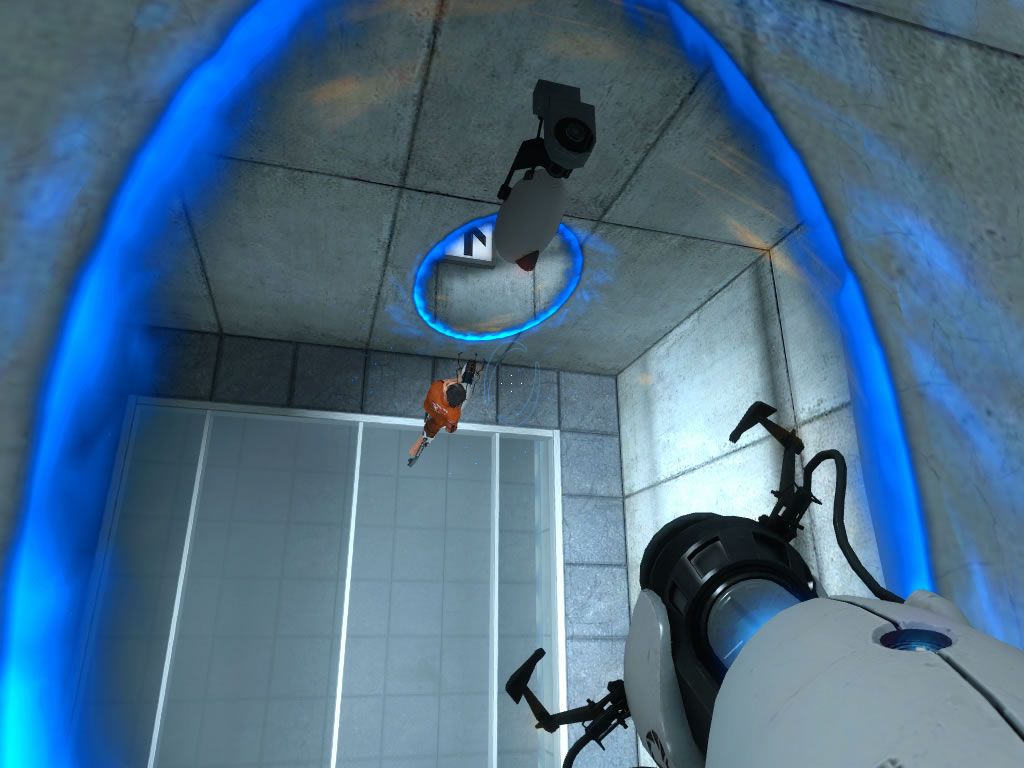
Review: When I first played Portal, I had never played Half-Life, nor been particularly fond of first-person shooters. Basically, I’m more interested in engaging my mind than I am my reflexes. Portal manages to do both at the same time, striking the perfect balance of action and strategy. While using a similar environment as in Half-Life, you control a subject who is trying to advance through test chambers in a research laboratory. What is being tested is a device that fires beams of light that create portals in walls for easy transport or escape. For example, say you need to traverse a pit and you can’t jump across; create a portal on the wall across the pit and one on your side. Walk through and—voila!—you’re on the other side. Valve fleshes this idea out considerably, with several chambers testing your mind, and in some cases, your agility. 

Yes, that’s you you’re looking at

An excellent learning curve is aided by the computer, who explains things to you along the way and gives you some tips early on. Eventually, a plot of sorts develops that is aided by superb voice acting and a chilling atmosphere. At no point did the sounds or colors feel superfluous, the designers proving themselves a model of efficiency.

Speaking of efficiency, the game can be won in a cool four to six hours. For the low price, this is certainly acceptable. And as always, too short trumps too long (at least in gaming). But if you finish and are still thirsting for more as I was, you can play challenge missions or download user-created missions, some of which rival the quality of the original. Or you can go ahead and get the sequel. Despite how one feels about this genre, there is no denying that Portal is one of the best developed games of all-time. This one is definitely staying on the desktop.

Are you still there?

Contemporary RatingHigh.

Cruelty RatingMerciful. There are regular checkpoints that the game sends you back to if you kick the bucket.

Fahrenheit

Publisher: Atari
Developer: Quantic Dream
Year: 2005
Platform: Windows; Playstation 2; Xbox; Xbox 360

ReviewWow.

That was my reaction after completing this adventure. To be honest, that was my reaction about every fifteen minutes while playing. About two or three times a decade I play a game that blows my mind with its innovation and storytelling.  This is one of those games.

The movie-like introduction carries you through New York City to a little diner where you see one man murder another in cold blood, right there in the restroom.  The murderer is you, Lucas Kane. The game takes off from there, and while it’s obvious that Lucas, in a trance, was being controlled by something else during the murder, there isn’t any time to worry about that at the moment. A cop is drinking coffee just outside, and you have to figure out how to get out of there without being caught.

The premise is good enough in its own right, but the way the game treats your predicament is where Fahrenheit really shines. Do you want to bolt out of there and head for the subway tunnel? Or do you want to clean things up, wash your hands, hide the murder weapon, and casually stroll out of the diner? Either way, you only have a few minutes, and nearly every action you take has repercussions later. Bolt out of there frantically, and your mood meter drops (and if it drops too low, Lucas will commit suicide or go insane). Cleaning everything up will improve your mood, but it’ll give you less time to escape the police. And the witnesses will remember everything you did and report it to the police accordingly.

Speaking of the police, you’ll also be playing Carla Valenti and Miles Tyler who are investigating the crime. You can switch between the two officers most any time, and they’ll provide different information based on the way they investigate. You’ll also play as Lucas’ brother Markus, a priest who will struggle between his faith in his Lord and his faith in his brother. Sometimes, the game will have you debating over how hard you should follow a character’s motivations, because you know it’s in direct conflict with another character you control. All four are developed very well, and I cared about all of them to some extent while playing. The performances (including the supporting cast) look as natural as you’ll see in a computer game, and the narration itself blends seamlessly with each scene.

Throughout the game, Lucas will be learning about what happened, trying to gain the trust of his brother and avoiding the police. The police will be doing their best to find Lucas. And while Fahrenheit was not billed as a pure adventure, it really has what I think most adventurers are pining for. People have realistic motivations. Puzzles are in the form of game-related problems; none are inappropriate to the situation at hand. Some require strategic planning, such as distracting guards to make it through an area. There is no inventory, though you will pick up objects at times and use them shortly thereafter. And, bless their hearts, you can actually die in this game. Not only that, puzzles have multiple solutions, with some leaving you better off in the long run. There are even three different endings.

However, the designers added an action element to the game which is going to appeal to some and turn off (if not completely alienate) others. Many scenes require quick reflexes and hand-eye coordination, such as playing a pick-up basketball game, or diving away from police cruisers. The game will flash a “GET READY!” sign before presenting you quick-time events in the form of the game Simon. For example, it will quickly flash a sequence of lights that you must copy in order to successfully complete that action sequence. There are three difficulty levels, and the easier the setting, the less of the sequence you have to perform correctly to move on. In some scenes, you have to perform anywhere from ten to twenty of these sequences in rapid succession, all while trying to watch what’s going on in the background. Furthermore, there are other scenes (such as pulling someone up from the edge of a balcony, or balancing on a high beam), where you must alternately mash two buttons for a predetermined length of time to complete the sequence.

From what I’ve read, these action scenes are very difficult using a keyboard and mouse, so I took the advice of other reviewers and bought myself a dual analog joystick, in my case, the Logitech Rumblepad 2. So yeah, I also got to enjoy the controller vibrating in my hands during intense moments. For me, these parts of the game were exhilarating.  I had the difficulty setting on medium and managed to make it through without ever dying (though I did die in other scenes where button-mashing wasn’t required), but I have excellent hand-eye coordination.  I was also able to enjoy the scenes in the background while still focusing on the button mashing. Many people will have a hard time with this, even on the game’s easy setting. If the sound of this turns you off, or if simple action games like Super Mario Bros. gave you fits, you’ll probably become frustrated with Fahrenheit on the whole and should probably avoid it.

I could nitpick this game all day long (e.g. how can these guys be outside when the weather is 70 degrees below zero and not have their exposed skin freeze instantly?), but the only real quibble I have is with the conversation system. Conversations happen in real time, so there’s no pausing for two minutes to figure out what you want to say.  When a player asks you a question, a list of two to four responses will appear on the screen, and you must select one before the timer runs out. If you don’t select anything, the players will continue to talk on their own. While the game won’t let you miss anything vital to completing the game, you’ll miss out on quite a few helpful details if you don’t participate.  The frustrating aspect is that oftentimes your choice of responses are condensed to single words.  Sometimes their meaning is obvious. I could figure out that Suspect/Bizarre meant “Did you see anything bizarre about the suspect?” But I had no idea that News meant “So is there anything new in your life lately?” It’s hard to make appropriate choices when you’re not sure what your choices even are.

Obviously, the game has a ton of replay value, as there are thousands of ways the game can be played out. Granted, most of the differences are just in the details, as no matter what choices you make, the plot eventually pigeonholes you into just a few different ending sequences. But it is the fine attention to these details that makes Fahrenheit such a delight. And you don’t have to start the game over just to see something you missed. You can replay any chapter you like and experiment with different conversations and actions. Of course, I wanted to check out all of the fun ways to kill Lucas. And trust me, there are plenty of ways to do that! Many have complained about the endgame for its sudden and bizarre plot twist, and I can’t say I disagree. But I did enjoy the final boss battle and all three endings just the same, so it didn’t ruin my enjoyment.

The soundtrack is above average, though at times is just a little cheesy. The graphics are wonderful, with obvious inspiration from The Matrix. Character movement is about as realistic as I’ve seen in an adventure game, with facial details a marked improvement over other engines. Switching camera angles and moving the guys around takes a while to get used to, but is not too clumsy. The game is rated Mature for strong language, violence, adult themes, and sexual situations. To keep that mature rating in America (retitled Indigo Prophecy), they removed some non-gratuitous sex scenes. Apparently, animated nipples are more impressionable than brutal, gory murders.

If you like your games to have a little action and a little tension, but are still primarily told with narrative and dialogue rather than guns, then I can’t recommend Fahrenheit enough.

Contemporary RatingHigh.

Cruelty RatingMerciful. You always get taken back to the beginning of a scene if you die.
Heart of China

Publisher: Sierra
Developer: Dynamix
Year: 1991
Platform: DOS; Amiga; Macintosh

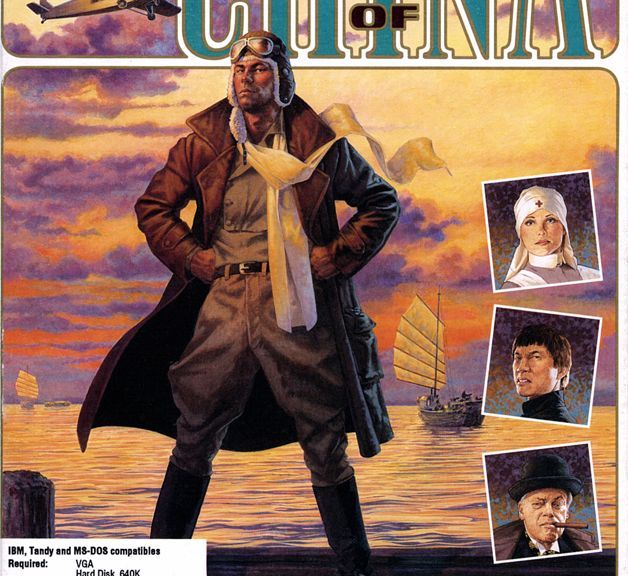
Review: Dynamix took everything great about Rise of the Dragon and nearly perfected it for their second adventure game. You play pilot Jake Masters (though Indiana Jones would fit as well) of a touring company in the Far East. The only blemish Mr. Masters has on his record is an acquiring debt with his creditor E.A. Lomax, a ruthless businessman out of New York and currently stationed in Honk Kong. Lomax gives Masters an ultimatum: save his daughter Kate who is in the hands of the Chinese in Chengdu and his debt will be cleared. Refuse Lomax’s offer, and well, let’s just say Masters can’t refuse the offer.

In Honk Kong, Masters finds Zhao Chi, a masterful ninja who offers to help Masters. Of course, Masters knows he needs no help, but lets him tag along anyway. Saving Kate in China is just the beginning of the adventure as you travel to several different cities, trying to get back to Paris where Mr. Lomax will be waiting for you.

Heart of China is a captivating game. Every character is fully developed, making the player feel for the heroes and hate the villains (and sometimes vice versa). Conversation is realistic. As in the game’s predecessor, what you say can come back to help or haunt you later. A romantic story develops with believable sexual tension and humour. The graphics are superb, and the sound is appropriate and lively most of the time.

Even the plot develops as the game progresses, which is a rare treat in the adventure genre. You can play all three main characters at various times, and discover plot branches that give you a completely alternate path to proceed through that part of the game. Along with three distinct endings based upon the relationships you develop (or destroy) throughout, the replay value is high.

My only major gripe about this game is the same one I had with Dynamix’s first offering.  The arcade sequences simply do not fit.  While the first one is marginally enjoyable, the second one (which literally ends the game)  is a clunky mess that ruins the tempo of the ending. Blissfully, you are given an opportunity to skip them if you fail a certain number of times, but that’s certainly anticlimactic.

Despite the arcade debacle, Heart of China is easily one of my favorite games and is one that I have gone back to on more than one occasion. If you love Indiana Jones, then this game should be on your must-play list.

Contemporary RatingLow. The arcade sequences along with some occasional confusion manipulating inventory items would likely irritate some.

Cruelty Rating: Nasty. There are a few times you can make the game unwinnable, sometimes obviously, sometimes not.  However, the game never allows you to become walking dead for long, as it becomes obvious pretty quickly you’ve goofed.  Regular saving should allow you to explore and enjoy various paths and dead ends without getting frustrated.

Portal 2

Publisher: Valve
Developer: Valve
Year: 2011
Platform: Windows; Macintosh; Playstation 3; Xbox 360

For those not indoctrinated on the Portal world, it is a first-person platformer that is more or less a bunch of physics-based puzzles involving opening portals in multiple walls and jumping through them to transport. I review it because the game is immersed in a deep plot and because it’s adventure-gamer friendly. I also review it because it’s amazing.

While Portal was a short game that spent most of the time easing the player into the game mechanics, Portal 2 assumes you know what you’re doing and plunges you in right away. The continuity with the first game is a bit muddled, but easy to forgive, especially since the plot is engrossing from the get go. Also, instead of simply going through each level while being condescended to by the computer, you get a friend this time to tag along with you. After rescuing Wheatley, he guides you through the game all the while making you laugh at his mannerisms.

Wheatley

Portal 2 is also deeper, with a few plot twists and additional game mechanics to learn as you are inundated with the entire history of the portal gun. While the added game mechanics (mostly involving different liquids that change the properties of walls and floors) are welcomed, it is precisely the last half of the game where these are introduced that makes the game less than perfect. This section goes on and on, and then goes on some more. There were times when I was so mentally exhausted I wanted to stop playing, which didn’t happen with the first game. Yes, it’s longer, but it also got just a wee bit tedious near the end.

That said, I still give it a perfect 10 rating. What saves Portal 2 from a score of 9 are a pretty fantastic endgame and a separate 2-player game where you team up with a friend and play through a different, near indomitable course, learning even more game mechanics along the way.

Playing with a partner

If you liked Portal, there is no reason not to play the sequel. If you haven’t played either, and are interested, you must play the first game first.

Contemporary RatingHigh.

Cruelty RatingMerciful. There are regular checkpoints that the game sends you back to if you kick the bucket.

Full Throttle

Publisher: LucasArts
Developer: LucasArts
Year: 1995
Platform: DOS; Windows; Macintosh

Whenever I smell asphalt, I think of Maureen. That’s the last sensation I had before I blacked out; that thick smell of asphalt. She said she’d fix my bike. Free. No strings attached. I should’ve known then that things were never that simple. Yeah, when I think of Maureen, I think of two things: Asphalt, and trouble.

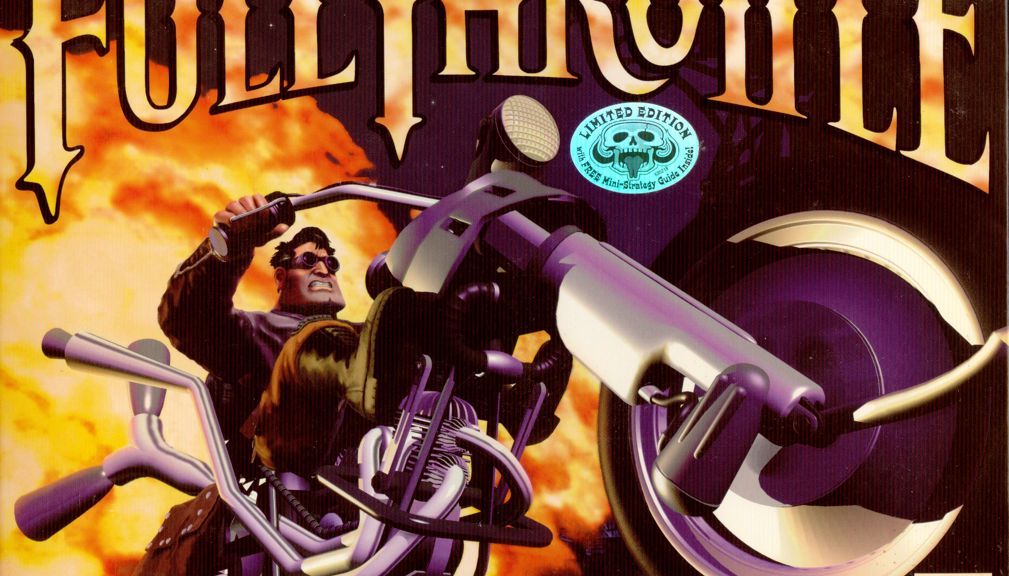
Review: That’s the first line of narration in Full Throttle, in the deep, gravelly voice of Roy Conrad, as Ben of the Polecats biker gang. He narrates over a beautifully shot 2-D road sequence as the credits roll, giving the player the immediate feeling that it just won’t be a game, but an experience. And an experience it is.

You play as Ben, who quickly becomes involved in a conspiracy, being framed for murder by some powerful people who’d just as well like to see biker gangs disappear altogether. Though you’re left for dead, you manage to survive and go on pursuit to straighten out the mess.  On the way, you meet a handful of characters, who may or may not be helpful (and you won’t always know until much later!), and are veered through some plot twists, all the while solving puzzles.

If there’s anything that hurts this game it is the puzzles. There are many, and quite a few of them are there for puzzle’s sake and nothing else.  While nearly everything is humorous, or at least amusing, one can only take so many pointless diversions. You’ll know what I mean when you are forced to collect Energizer bunnies to clear a path through a mine field(!). There are also a few arcade sequences, one of them painfully irritating, though original. Much to my delight, the player can die in this game (though rarely), but Ben is automatically restored to a point shortly before his death to give the player another shot.

What makes this game a classic is the writing, the best I can remember. Tim Schafer ably makes us feel for the protagonist, and despite his aggressive tendencies, gives him a personality that reaches far beyond the cliché persona. And the dialogue is consistently engaging and genuinely funny. To wit:

Ben: Why’d your dad keep you a secret for so long?
Maureen Corley: He didn’t want people to find out about my mom.
Ben: What was wrong with Mrs. Corley?
Maureen Corley: She wasn’t my mom.
Ben: Ah.

The dialogue is made even better by the believable acting throughout. Mark Hamill continues to amaze me with his voice talent, and here he plays the bad guy, Adrian Ripburger, in an unrecognizable performance. But it’s Roy Conrad that makes the game. Even the “You can’t do that” messages are a non-issue, as Ben gives simple, yet clear remarks (in character) to let the player know to try something else. And several Easter eggs and in-jokes are competently weaved into gameplay for LucasArts fans.

All of this is complemented by a soundtrack rivaled by only The Dig in sheer quality. San Francisco band The Gone Jackals provides most of the music, with all original songs that capture the atmosphere to perfection. The soundtrack Bone to Pick is available on their website and has sold many copies. Also, a Richard Wagner composition is slid in neatly as well as a catchy and hilarious country-western ditty called “Increased Chances.”

To top it off, the ending pays homage to overblown action movies but surprisingly doesn’t resort to trite dialogue or closure that infests many games (and movies, for that matter). Anyone who considers themselves a fan of adventure games must play Full Throttle.

Contemporary RatingMedium. Some tedious puzzles is all.

Cruelty RatingMerciful. All deaths are remedied by the game.

Dreamfall

Publisher: Aspyr
Developer: Funcom
Year: 2006
Platform: Windows, Xbox, Xbox 360

Randal Graves: Which did you like better? Jedi or The Empire Strikes Back?

Dante Hicks: Empire.

Randal Graves: Blasphemy!

Dante Hicks: Empire had the better ending. I mean, Luke gets his hand cut off, finds out Vader’s his father, Han gets frozen and taken away by Boba Fett. It ends on such a down note. I mean, that’s what life is, a series of down endings. All Jedi had was a bunch of Muppets.

ReviewDreamfall, probably the most anticipated adventure game ever, is the sequel to The Longest Journey, a surprising gem that was released out of Scandinavia, circa 1999. Seven years between installments creates unbelievably high expectations (see: Star Wars, Terminator). Fans tend to judge sequels with extra scrutiny, demanding marked improvement in entertainment whilst remaining true to the original. The long wait multiplies the scrutiny exponentially. Essentially, producer Ragnar Tørnquist had virtually no room for error. Roberta Williams could release crap like King’s Quest II and get away with it, because the prequel was still on the shelves, and the sequel was coming right up. With production time longer than most any movie, and those critics pining for eternity, Dreamfall had the bases loaded with two outs, down by three runs. And it hit a bases-clearing triple (and then–according to a faithful reader–was so exhausted it blew chunks).

Dreamfall eschews the classic point’n’click 2-D environment that worked well in the prequel and instead tries on a 3-D environment for size, a medium that has come a long way since Mask Of Eternity. It works here. You guide a new cute but aimless lass, Zoë Castillo, much like April Ryan before her. Thankfully, she comes off as less whiny and sarcastic, and therefore even more appealing than the prior heroine. Of course, this is Longest Journey, so Zoë reluctantly becomes wrapped up in a plot to save the world, or worlds, as is the case in this fantasy.

As the plot thickens, you also have the opportunity to play as two other primary characters, April Ryan and Kian. April has become jaded over the years but is admirably helping the good guys fight a war. Kian is a mercenary on the other side of that war, who strongly believes his cause is the right one. Naturally, Zoë gets tangled in the middle, with little clue as to what’s going on.

Unlike TLJ, Dreamfall is not an inventory based adventure. All focus here went to the characters and the plot, mostly for the better. Puzzles almost always fit seamlessly into the story as real-world obstacles, and no rubber chickens come into play. Only one pointless fetching puzzle comes to mind, and while there are some locks with keys to be found, they are realistic and not all too difficult to solve. In fact, the puzzles do not exist for challenge, but rather for pacing, and Dreamfall is one of the better paced adventures I’ve ever played.

One of my criticisms of TLJ was that despite the existence of a suspenseful plot, there was no risk to be had in any decision. While Dreamfall is easy, there is plenty of risk. I probably kicked the bucket a good dozen times. There are several times where you must fight other characters, though this is very easy with just a little bit of practice. Slightly more difficult are stealth missions, where Zoë must crawl and sneak around enemies undetected, lest a difficult battle or instant death ensue. This simple addition kept me focused on survival, thus allowing myself to appreciate more fully the calmer moments the game has to offer. And lest you worry about play control, the game offers three different methods of playing: mouse, keyboard and mouse, and gamepad. I opted for the dual-analog controller, which provided more ease of movement.

The crowning achievement here, as intended, is the story. Caring about Zoë’s fate is incredibly easy, especially when you meet her uber-cute automaton pet, whose affection for Zoë is programmed but deserved. Conversation is handled beautifully, and while what you say unfortunately is of no consequence to the plot, the illusion of choice diffuses TLJ’s problem, that of endlessly droning chatter. Well detailed faces with satisfactory lip-syncing help emphasize the emotion of each character. And perhaps most important, the voice acting is out of this world. For starters, Ellie Conrad-Leigh, who plays Zoë, has one of the sexiest British accents I’ve heard. Many characters in addition to April Ryan reprise their previous roles, as do the most of the same actors who played them seven years ago. The best performance after Zoë is put in by Crow, who is so rip-roaringly funny (and suddenly PG-13) I doubled over on multiple occasions. His one-liners alone made the game worth the cost.

Sadly, as with all good things, they come to an end. And in this case, way too soon. Fifteen hours of gameplay seems to be the average, and while that is acceptable, the way the game ends is not. In comparison to The Empire Strikes Back, the game ends with many loose ends, not all of them optimistic. And while it is obvious that the intention is to have a final episode to complete the story, the end comes too abruptly and with little satisfaction. At least with Empire, there were some hints as to what might come next. Dreamfall is littered with confusion.

Fans have known a sequel was coming for several years, though had one not been finished, TLJ would have been able to stand on its own triumphantly. Dreamfall, on the other hand, is so obviously dependent on a sequel that if one isn’t completed, fans will feel especially cheated. The final game is scheduled to come out in November of 2014, so we’ll see what another eight years of development can do for the series.  For years it was stated that it would only be released on game consoles, but now it thankfully appears to be slated for the computer (with the possibility of porting it to consoles) because that’s where most of the series’ fans play their games.  Let’s just hope it doesn’t contain any Muppets.

Contemporary RatingHigh.

Cruelty Rating: Merciful.  When you die, you’ll be brought back to the beginning of any dangerous event to try it over.