
Year: 1973
Director: William Friedkin
Summary: A troubled cleric tries to help a very disturbed teenage girl.
Year: 1973
Director: William Friedkin
Summary: A troubled cleric tries to help a very disturbed teenage girl.
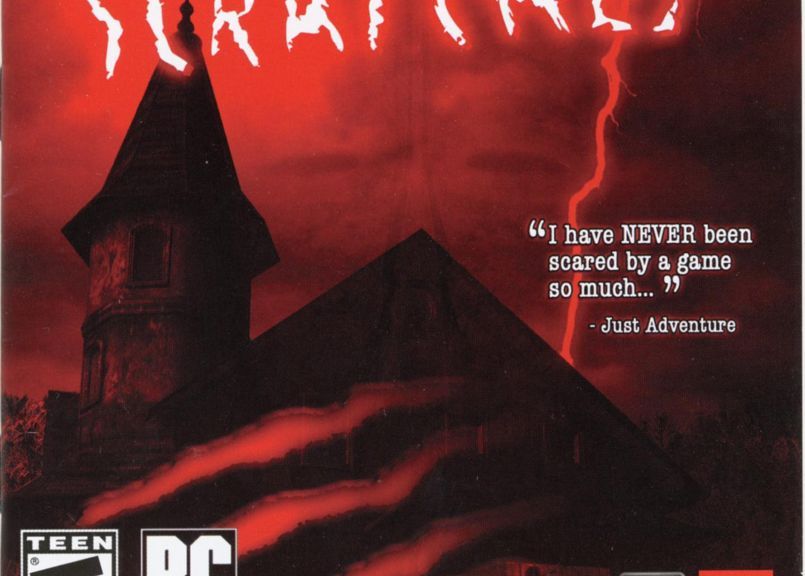
Publisher: Got Game Entertainment
Developer: Nucleosys
Year: 2006
Platform: Windows
Horror is my favorite fictional medium, and I think there’s a simple reason why. I have virtually nothing in my wonderful life to fear, and thus it is an emotion I rarely feel. Additionally, it is an adrenaline-inducing intense feeling with the security of fiction laced around it, making it very attractive. And when I mention horror, I refer to the suspense of the unknown, not hack’n’slash gore. True horror allows the imagination to create feelings of terror. Bad horror has a cat jump out of the cupboard, coupled with disproportionately loud noises, jarring the senses.
Continue reading ScratchesPublisher: Sierra
Developer: Sierra
Year: 1995
Platform: DOS; Windows; Ma c; SEGA Saturn
Never before has Roberta Williams, or rather any game designer, integrated horror and humor to such monumental proportions. Of course, the humor derives itself from the George Lucas-type dialogue and poor acting, and much of the horror comes from the realization you had spent quite a bit of money to play this mess.
Publisher: The Adventure Company
Developer: XXv Productions
Year: 2003
Platform: Windows
Review: Produced seemingly out of nowhere, Dark Fall is the labour of love from Jonathan Boakes, a British game designer who finally struck it big with this offering. And the returns were well deserved. Despite having limited resources to create it, Boakes stretched the limits of his game engine to create a highly atmospheric mystery.

After receiving a desperate call from your brother, you take a train into Dorset, England. He has been working on plans to redevelop an abandoned hotel and train station, and just as was suspected happened here seventy years ago, he along with some local ghost hunters have gone missing. Unraveling the mystery is your obvious goal, but enjoying the atmosphere is most of the fun. There’s something to be said about a game that can be won in about seven minutes if you know what to do, but can take hours upon hours of note-taking and puzzle deduction to arrive to the conclusion.
The hotel and train station are exquisitely detailed with a plethora of historical pictures, posters, and hand-written notes to really plunge the player into the 1940s. Everywhere you turn there is an added touch to really make the hotel come to life. Though there is not one character you interact with throughout the game, you feel like you truly get to know about a dozen people simply by seeing their rooms and evidence of their existence. And as movement and the limited inventory puzzles are quite intuitive, the atmosphere can be enjoyed without too much frustration.

Of course, the game is highly touted for being scary, which is also its major draw. Personally, I found the isolation, graphics and simple sound effects quite effective at producing chills, especially when played with the lights out. However, nearly all of this effect was excised when I discovered that there is no way to die. I realize that striking an effective balance between a risk-free environment and the instant-death room games of yore is tough, but for a game to truly be considered horror there has to be something to fear. If there is no way to make a mistake, then nuances which may originally be considered frightening are reduced to mere intrigue.
I would still recommend this game to those who like exploration and investigation. A few puzzles are a bit esoteric and recall the true horrors of Myst, but most are fairly intuitive and logical. And with many optional touches, such as using an Ouija board and solving some old cryptograms, Dark Fall has a lot to offer puzzle enthusiasts. Just don’t expect to lose any sleep over it.

Contemporary Rating: High. Impressively intuitive from an independent designer.
Cruelty Rating: Merciful. No risk to be had in this horror game.
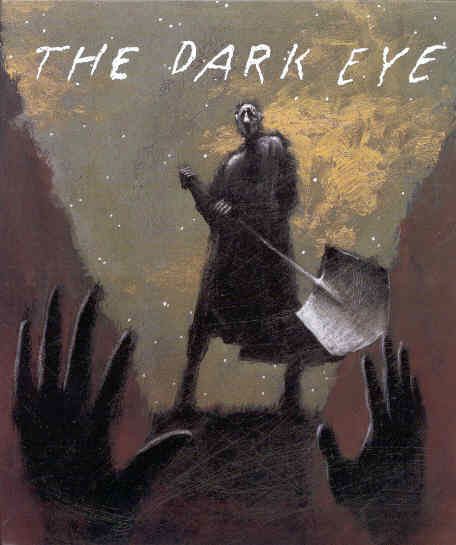
Publisher: Expert Software
Developer: Inscape
Year: 1995
Platform: Windows, Macintosh
Review: If I scored games on originality, The Dark Eye would probably have the highest score. One of the few adventures that has no inventory, the player weaves through three Edgar Allen Poe stories, as well as one original, haunting tale in true Poe fashion.
The game begins with you arriving at your eccentric uncle’s mansion, simply on a trip to visit him, your brother, and your cousin. You learn quickly that your uncle disapproves of the relationship between your brother and cousin and a plot begins to develop, growing darker at every turn. However, to advance the plot you must enter the world of Poe’s stories. The three works you explore are The Tell-Tale Heart, The Cask Of Amontillado, and Berenice. You get to complete each story playing both the victim, and the victimizer, unable to change the course of the original story. The farther you advance, the more of the plot you see, until the last story is finished where the game’s end is revealed.

The characters are strictly claymation, in both the real world and in Poe’s stories. At first this may seem like a turn-off, but the brilliant acting (especially by William Burroughs) combined with the dark, ominous setting draws the player into their world. The only drawback in this department is character movement, which is very blocky and poorly rendered (perhaps intentionally, but not to my taste).
However, despite being an interactive story without puzzles, the gameplay mangles some of the tension. To trigger advancement in the story, one must click on various objects on the screen, which will trigger events or, at times, memories or voices. Many times this whittles down to a monotonous exercise in guess-and-check, creating more frustration than tension. Additionally, it is often difficult to discern what direction you are heading. There is at least one time during the game where I kept turning around in circles, pleading for an exit before I was felled by carpal tunnel.
Though the game can be played without having read any of Poe’s stories, I’ll guess that it is more enjoyable if one knows the material heading in. The story and the motivations of each character should make a little more sense. There’s also the foreknowledge of the tragic end, which being forced to endure satisfies any internal sadistic tendencies one may have.
Of course, if you don’t like Poe, you probably won’t enjoy this game. For those who do, I strongly suggest playing this fascinating, if imperfect, campaign. And while I found the final Easter egg to be overlong and dull, those who win the game get to hear Burroughs do a reading of Poe’s The Masque of Red Death.

Contemporary Rating: Medium. What is essentially an interactive movie is not made intuitive, which is amazing when you think about it.
Cruelty Rating: Merciful. You can’t win the game unless you die!


 Death By Troggles