Tag Archives: PC Adventure Games

Back to the Future: The Game

Publisher:  Telltale
Developer: Telltale
Year: 2010
Platform: Windows; Macintosh; Playstation 3

Review: When I discovered this game was a thing, I immediately bought it for the wife and I to play. Like with most Telltale games it was released in agonizingly slow chapters. Each time a new one came, we’d knock it out in a day or two and then wait a couple of months. But as evidenced by my score, it was definitely worth it.

I was a bit hesitant as every single game that has ever been released with this license has made as much sense as a screen door on a battleship (e.g.  killer bees!). But Telltale has yet to screw up a license, or any game for that matter. For starters, Bob Gale was consulted on several story elements. And not only did they get Christopher Lloyd (who was also great in Toonstruck) and Claudia Wells(!) to reprise their roles as Doc Brown and Jennifer, they held a worldwide contest to see who would play Marty. Enter A.J. Locascio, who sounds so much like Marty McFly that if one didn’t know any better, you’d swear it was Michael J. Fox.

Of course, the game has to be more than its voice talent. While some of the chapters are better than others, the overall story is entertaining. It has countless paradoxes and is unendingly silly, but no more so than the second movie. It doesn’t have the dramatic impact of the first or third movies, but it’s funny enough to make up for it. One chapter in particular had us laughing out loud time after time, as the script writers were not afraid to go blue on several jokes.

As for the puzzles, they’re generally straightforward and easy. Only a couple of mindbenders are in the game, and there are unfortunately a few annoying lock & key puzzles that are not obvious.  But one should never get stuck long.

The ending leaves things open for a sequel, though one certainly isn’t necessary. If they do, there is no doubt in my mind the wife and I will drop what we’re doing and play it.

Contemporary RatingHigh.

Cruelty Rating:  Merciful.  There is no way to die, which does take some of the drama out of a few puzzles.

25: Eric the Unready

Publisher: Legend
Developer: Legend
Year: 1993
Platform: DOS

Review: Rated by many the best adventure game of 1993 and it’s pretty obvious to see why. You are the infamous Eric the Unready. You have been assigned to save the princess from her evil stepmother. Unbeknownst to you, you were assigned because you are the most ill-equipped knight in the land.

As with the early Legend games that used a text parser, you can play the game with or without graphics.  The graphics are gorgeous for the time, and being a comedy they do well to serve the humor.  The music is pleasant if too repetitive.

It’s more of a parody than a game. To the skilled adventurer, this should take less than a couple of weeks to win. The puzzles are not all that well-developed, and can even be annoying at times. But it is without a doubt the funniest game I have ever played. Bob Bates spoofs everything from Star Trek to Saturday Night Live to Zork and has a grand ole time with medieval culture. There is something here for everyone.  I haven’t played the game since 2000, however, so it’s possible the jokes have become dated.

Contemporary RatingMedium. Some of the puzzles seemed there just for busy-work.

Cruelty Rating: Tough. Like many text games, you can get rid of objects that you need later, but you never really need to.

Blade Runner

Publisher: Virgin Interactive
Developer: Westwood Studios
Year: 1997
Platform: Windows

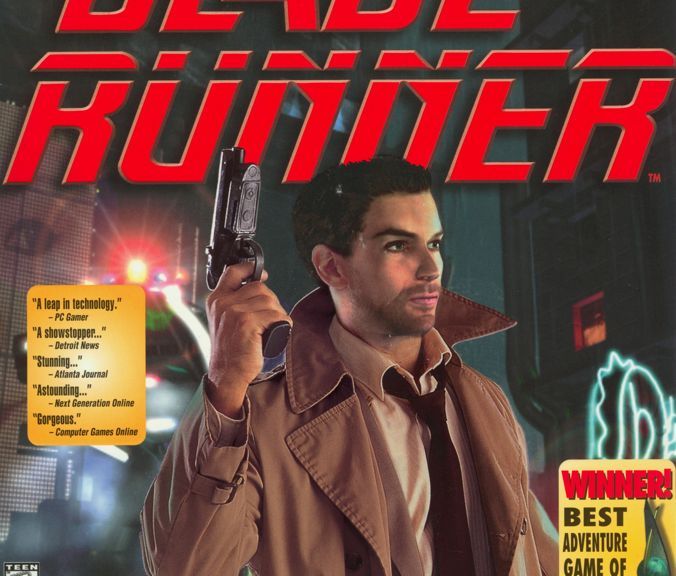
Based on the cult-classic movie of the same name–starring Harrison Ford–this cyberpunk adventure is one licensed title that doesn’t disappoint.  I unabashedly feel this is better than the source material. Being as that the movie is currently ranked #123 at IMDb, I am sure to be in the minority.  Good news is if you liked the movie it is doubtful you’d be disappointed by the game.

In the future, where buildings rise above the city, crime is rampant, and man has colonized the moon, a mega corporation has developed replicants, super-humans with a predetermined lifespan. Naturally, some of the more advanced replicants have begun to become self-aware and are pissed that they have been essentially subjected to slavery for moon colonists. And some of them have come back to Earth in order to meet their maker with the intention of reversing their fate. Blade runners have been employed by the city to terminate all replicants before the bloodshed spreads. However, it’s not so simple, as determining who is and who isn’t a replicant is not a foolproof process and there is considerable sympathy for the replicants. It’s even possible some of the blade runners are replicants and don’t know it!

This premise is the same for the movie and the game. The designers of the game were smart in creating a new storyline, sharing only a few characters from the movie made fifteen years earlier (of which Sean Young and William Sanderson reprise their roles!). Not only does this keep the game from becoming stale, I felt the movie’s story was plodding with poor dialogue. To be fair, the plot of the game is no Oscar-winner, but I actually did enjoy the script significantly more, feeling the characters on my desktop were more sympathetic than the wooden personae on the silver screen.  They did, however, keep the Voight-Kampff testing, and you can whip that out whenever you feel it’s appropriate.

I keep discussing this game as if it’s a movie, which is only because that’s what it feels like. There are very few puzzles and it is incredibly difficult to become stuck. Atmosphere and exploration rule the game, with gorgeous sights and beautiful sounds lifted straight from the movie. There is certainly detective work to be done, but a significant portion is optional, shedding a light on the finer points of your case. What gives Blade Runner the feel of a game (and not just an interactive movie) is that there are multiple paths, stories, and endings dependent on several factors.  Every time you start a new game, character motivations change, which in turn changes some puzzles, dialogues, and eventually plot branches. In addition, whether or not you decide to terminate or sympathize with the replicants will also change the story.  If you like this sort of thing, you’re in for a treat. Personally, I did not have a desire to replay the game multiple times, but I did reach a few endings on my own before downloading some save files to see the others. Blade Runner has incredible production values and it is worth trying to find everything there is to see.

Oh, and you can use your gun. Good times.

Contemporary RatingMedium. Some modern timing issues in action-scenes.

Cruelty Rating:  Polite.  You can die, so saving is necessary.  If you “screw up” the worst that happens if you take an alternate path through the game.

Grim Fandango

Publisher: LucasArts
Developer: LucasArts
Year: 1998
Platform: Windows

Review: How does one review a game that is universally loved by everyone? And I mean everyone. I can’t find one negative review of Grim Fandango anywhere. Oh sure, there are criticisms out there, but this may be the only game that has nothing but choirs to preach to. So I guess the only thing to do is to keep this short.  And once again sing the praises of Tim Schafer.

The last pure adventure game by LucasArts, Grim Fandango tells an epic tale of Manny Calavera, a travel agent in the Land of the Dead. Your job is to give clients their best means of reaching the underworld where their souls can move on. Problem is that your coworker seemingly is getting all the good clients now, while you’re getting all the bad ones. And if you can’t get some saints to give express tickets to, you can’t work off your time (for whatever unspeakable moral crimes Manny committed in his first life) and leave this place. The plot (unraveling over four years and many hours of gameplay) turns sinister as Manny reveals the mystery behind his problems at work.

The graphics are fabulous considering the designers were able to convincingly give pathos to skeletons (albeit well groomed skeletons). The atmosphere is film noir with heavy touches of Mexican mythology and Art Deco. The play control is all keyboard (or joystick), which while allowing for less artificiality to the atmosphere, is rather clunky and annoying at times (as you’ll discover after accidentally whipping out your scythe for the fiftieth time when you don’t want to use it). The puzzles are mostly fair and some are devilishly complex.

16812067-grim-fandango-windows-starting-location-our-hero-manny-calavera-

But what I believe truly makes this game for the fans is the incredible voice acting. Yes, the dialogue is good, but I’m not sure this game reaches the pantheon of adventuredom without the characterization and emotion that can only be provided with tone and inflection. Nearly every hero, villain  and bystander is marvelously portrayed without devolving into caricature or stereotype. If you’re not reeled in by the introduction, then you will be after speaking with your co-worker and your boss’s secretary.

While I became antsy at times while playing due to the controls and a few inane puzzles, I was never bored. I even forgave the multiple bugs and occasional game crash, which speaks volumes as my patience for such sloppiness is on a very short leash. It’s not one of my favorite games, but there’s not a gamer out there I would have reservations recommending Grim Fandango to, adventure fans or otherwise.

Contemporary RatingMedium. The controls suuuuuck.  Also, very buggy.  But everything else holds up today.

Cruelty Rating:  Merciful.  No way to die, though you still need to save regularly in case the game crashes.  And maybe save twice in case a save file gets corrupted.

Mission Critical

Publisher: Legend
Developer: Legend
Year: 1995
Platform: DOS, Windows

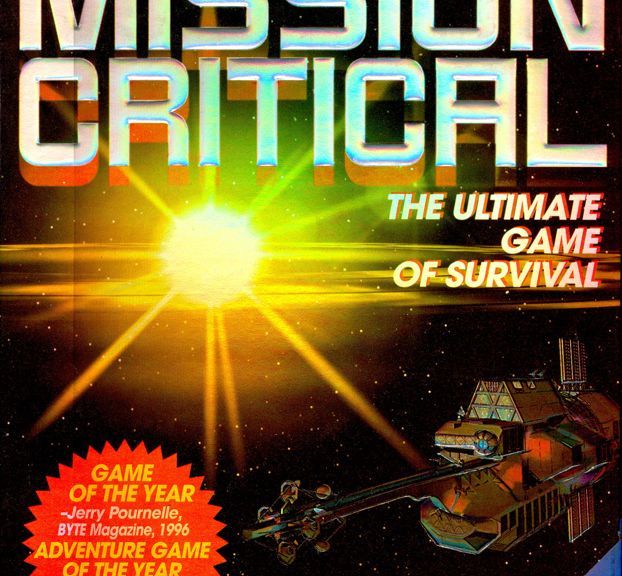
Review: An easy, plot-driven space-faring adventure by Legend Entertainment, Mission Critical tells the story of a lone surviving crewman of a terrible battle. An incredibly long FMV opening sequence depicts this battle where the Alliance (composed mostly of survivors of North America) loses to the United Nations at a key turning point in the war. However, the captain (played by Michael Dorn), decides to destroy his own crew to save the ship (and its secrets) by taking the enemy with him. As you were left unconscious and were the only person kept aboard, the U.N. ignored your presence, allowing the kamikaze plan to work. Now awake, you must quickly make repairs to the ship, figure out what’s really going on in this war, and try to complete your ship’s mission.

As with all Legend games, you play from the first-person perspective. Puzzles are mostly inventory based but are creative and perfectly logical. Never does one feel contrived or thrown in just to make the game longer. Sadly, many are too easy, ramping down the satisfaction level taken from completing them. The ship’s computer will also help guide you nearly to the answer for many problems. But the puzzles do their job, which is provide the necessary pacing to make this extensive story work. Information is revealed slowly, with regards to suspense and intrigue. It is also possible to die, either violently or due to running out of time (though the time limit is very liberal), which adds to the realism. And thankfully, it is impossible to put the game in an unwinnable state.

One aspect that does hurt the pacing is a battle simulator, where you must practice several missions before fighting a few real ones. While the simulation is well-done and the difficulty level can be adjusted to please any gamer, it seems out of place, especially with the type of adventurer the writers had in mind.

The graphics and sound are above-average, and the FMV sequences are beautifully done. Being dead, Michael Dorn’s character doesn’t make a lot of appearances  but it was fun seeing him without the Klingon makeup on. The other actors are up to the task as well, except perhaps the protagonist, who sometimes makes it a little too obvious he’s reading from a script.

While nothing about Mission Critical strikes me as fantastic, it is very solid throughout until the end, where the story comes hurtling at the player with seemingly endless exposition. Thankfully, the game rescues itself a bit with the final puzzle, which is clever and satisfying enough. I would recommend this game to any adventure fan who’s looking for a sci-fi story that plays more like an episode of Star Trek than a puzzlefest.

Contemporary RatingMedium. Intuitive, but the battle simulator definitely doesn’t stand the test of time.

Cruelty Rating:  Polite. You must save the game regularly, but you don’t have to obsess about it.

The Dig

Publisher: LucasArts
Developer: LucasArts
Year: 1995
Platform: DOS, Windows, Macintosh

Review: In 1989, Steven Spielberg pitched this story to his television series Amazing Stories, but learned the production costs would be too high, so he gave it to LucasArts (then LucasFilm Games). It went through several rewrites and had Orson Scott Card (from Monkey Island and Ender’s Game) and Brian Moriarty (who wrote Wishbringer and Trinity for Infocom as well as Loom for LucasArts), before settling on Sean Clark, who had created the successful Sam & Max Hit The Road. With this kind of development, there had been extraordinary expectations on the final result, and when it didn’t reach those expectations, it tanked.  The Dig is widely considered the worst game in LucasArts’ ca8talog.

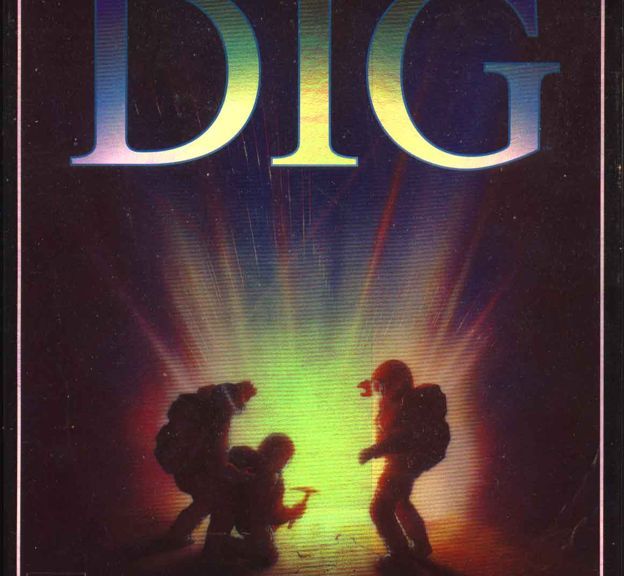
I, however, am not in that camp. The story, while not exactly original, is well developed. An asteroid is heading for earth and commander Boston Lowe (played by you), reporter Maggie Robbins, and archaeologist Ludger Brink are in charge of detonating nuclear explosives on the surface to change the asteroid’s orbit, thus making it another moon (a little more realistic than the plot of Armageddon). That’s just the game’s introduction, as inside the asteroid your team discovers something so extraordinary that they wish they had just headed for home after completing their mission.

Without giving away more of the plot, the game has heavy doses of science-fiction and is a change of pace from LucasArts’ humorous tongue-in-cheek plots.  However, this should still be enjoyable for the average gamer, as very few of the puzzles are difficult or frustrating, allowing the story to take precedence. There are a few plot twists; while some are obvious, they are engaging nonetheless. And there is still plenty of humor, especially when Lowe begins talking to himself.  I laughed out loud on more than one occasion.

Where the game runs into trouble is character development. All three run cliché for all its worth, and many of their motivations are just plain silly. Worse yet, the dialogue is so awful that one wonders if George Lucas actually had a hand in the scripting himself.  The actors give it their best, including rookie Robert Patrick of Terminator 2 fame, but they can’t overcome the juvenile writing.

Still, I enjoyed the experience throughout, thanks in part to beautiful graphics and one of the best soundtracks in video game history. I was ready to rank this game at the upper echelon of my collection until the resolution, which may be one of the most disappointing in video game history. There have been worse endings, but none so unbelievably bland in comparison to the material that precedes it. Yet, I would recommend it to adventure game aficionados, as there is much to take from the game.

Contemporary Rating: High.  A few obtuse puzzles is all that that would inhibit the modern gamer, but by that time, if you’re into the game, they wouldn’t matter.

Cruelty Rating:  Merciful.  The game won’t let you do dumb things.

Dark Fall: The Journal

Publisher: The Adventure Company
Developer: XXv Productions
Year: 2003
Platform: Windows

Review: Produced seemingly out of nowhere, Dark Fall is the labour of love from Jonathan Boakes, a British game designer who finally struck it big with this offering. And the returns were well deserved. Despite having limited resources to create it, Boakes stretched the limits of his game engine to create a highly atmospheric mystery.

After receiving a desperate call from your brother, you take a train into Dorset, England. He has been working on plans to redevelop an abandoned hotel and train station, and just as was suspected happened here seventy years ago, he along with some local ghost hunters have gone missing. Unraveling the mystery is your obvious goal, but enjoying the atmosphere is most of the fun. There’s something to be said about a game that can be won in about seven minutes if you know what to do, but can take hours upon hours of note-taking and puzzle deduction to arrive to the conclusion.

The hotel and train station are exquisitely detailed with a plethora of historical pictures, posters, and hand-written notes to really plunge the player into the 1940s. Everywhere you turn there is an added touch to really make the hotel come to life. Though there is not one character you interact with throughout the game, you feel like you truly get to know about a dozen people simply by seeing their rooms and evidence of their existence. And as movement and the limited inventory puzzles are quite intuitive, the atmosphere can be enjoyed without too much frustration.

Of course, the game is highly touted for being scary, which is also its major draw. Personally, I found the isolation, graphics and simple sound effects quite effective at producing chills, especially when played with the lights out. However, nearly all of this effect was excised when I discovered that there is no way to die. I realize that striking an effective balance between a risk-free environment and the instant-death room games of yore is tough, but for a game to truly be considered horror there has to be something to fear. If there is no way to make a mistake, then nuances which may originally be considered frightening are reduced to mere intrigue.

I would still recommend this game to those who like exploration and investigation. A few puzzles are a bit esoteric and recall the true horrors of Myst, but most are fairly intuitive and logical. And with many optional touches, such as using an Ouija board and solving some old cryptograms, Dark Fall has a lot to offer puzzle enthusiasts. Just don’t expect to lose any sleep over it.

Contemporary RatingHigh. Impressively intuitive from an independent designer.

Cruelty Rating:  Merciful.  No risk to be had in this horror game.

The Curse of Monkey Island

Publisher: LucasArts
Developer: LucasArts
Year: 1997
Platform: Windows

Review: With Ron Gilbert gone, the Monkey Island series veers slightly in tone and design, but manages to maintain an excellent example of adventure gaming. The pixelated backgrounds have been replaced by hand-drawn cartoon graphics, and Guybrush Threepwood’s personality has gone from “fish out of water” to “dumb and clumsy.” He’s also been given a voice to match. And all the changes work because the game matches the changes.

After saving Elaine from death at the hands of once-again revived Captain LeChuck, Guybrush proposes to his love, accidentally giving her a cursed ring, turning her to stone. The plot gives way to the puzzles as Guybrush tackles one after another. But unlike in Monkey Island II: LeChuck’s Revenge, it works here. For one, the plot does pop up more frequently, but more importantly, the puzzles aren’t so freaking obtuse. They’re goofy and irreverent, sure, but for the most part don’t take giant leaps of logic to figure out. That isn’t to say the game is a cakewalk. Several of the puzzles are difficult but certainly fair.

I also found myself laughing quite a bit, especially at Murray, the talking skull. Even though I didn’t prefer the series’ personality shift (including the Hollywood ending), The Curse of Monkey Island remains entertaining throughout. Fans of the series shouldn’t be too disappointed.

Contemporary RatingHigh. Flawlessly designed, never really frustrating.

Cruelty Rating:  Merciful.  It’s a LucasArts game!

Nord and Bert Couldn’t Make Head or Tail Of It

Publisher: Infocom
Developer: Infocom
Year: 1987
Platform: DOS, Macintosh, Commodore 64, Apple II, Amiga, Atari ST

Have you ever wanted to get a nice juicy steak, but all you had was a stake?  Have you ever wanted to literally kill two birds with one stone?  Or have you come across a pretty girl and it made you long for a gritty pearl?  Then you should definitely help out Nord and Bert, because they truly can’t make hails or teds of it.  Wait, um…

This adventure has you playing with homonyms, spoonerisms, idioms, and other plays on our language and culture in order to help save the town of Punster from total chaos.  There’s a story, but it’s there to serve the puzzles.  Just dig in and get your lexicon dirty.

The game designers smartly realized that most gamers would not be intimately familiar with every phrase, idiom, and slang the game is riddled with; thus an in-game hint system is a welcome sight. Despite the occasional frustration that ignorance creates while playing, the game can be funny and very satisfying when you do advance on your own intellect. Nord & Bert is a must-play for those who love word puzzles. Hardcore adventurers may want to look elsewhere.

Contemporary RatingHigh. If you figure out the answer to a puzzle, the parser is not going to get in the way.

Cruelty Rating:  Tough.  While you can get rid of an item you need and the game won’t tell you you’re stuck, you’ll figure it out pretty quickly.  Also, the game is short enough that even if you screw up it’s not really frustrating.

The Pandora Directive

Publisher: Access Software
Developer: Access Software
Year: 1996
Platform: DOS, Windows, Macintosh

Review: The fourth installment in the lauded Tex Murphy series, The Pandora Directive takes a huge step forward in nearly every facet. While using the same engine and basic controls of Under A Killing Moon, most of the problems have been rectified to create a truly enjoyable experience. This time, Tex is once again broke and desperate for any case. He gets one when an old friend of scientist Thomas Malloy drops by the diner and asks Tex to locate him. What follows is an epic cat and mouse chase through California and South America, not only to find Dr. Malloy, but the secrets he carries.

While there remains several contrivances throughout the game, the plot is tighter and simply more interesting than that of the last game. There are fewer puzzles that involve goose-chases, which helps maintain interest. But the best addition to the plot is a dynamic scoring system that changes the story as you proceed. There are three main paths throughout the game depending on how you treat the people you cross. You can take the high road, treating your friends and enemies with dignity and respect, take the middle road by taking some shortcuts, or take the low road by being arrogant and despicable. The story can veer based on the choices you select when talking with people or actions you make when you have the opportunity to take advantage of someone. Each path has some puzzles and videos of its own, making replay an actual treat instead of a mindless chore. All in all, there are six possible endings, and a few of them can only be seen if Tex has taken a certain path.

Also improved significantly is the acting. Chris Jones remains adequate, if unmemorable, as the Bogart-like protagonist who narrates his own adventure. Barry Corbin (Northern Exposure) is over the top as a bad guy, but he’s still entertaining. Tanya Roberts (That 70’s Show), Razzie nominee recipient, is decent as a sexy adversary. And Kevin McCarthy (Death Of A Salesman) is excellent as Malloy’s friend. Heck, Suzanne Barnes even improves as Chelsea, Tex’s love interest. Nobody grates on the nerves which goes a long way to making the game enjoyable.

In fact, your enjoyment of the game will largely depend on your patience with the first-person maneuvering through pre-rendered scenes (and blue-screened actors). Like the last game, it can be clunky at first, but eventually becomes second nature. And there are plenty of shortcuts one can use to keep from walking the same streets over and over. The stealth missions are more frequent and more intense, making good use of the game’s engine. Frustratingly, many objects hide in very hard to see places as you kneel and turn your head to find them. At least Jones, recognizing that a game dependent on atmosphere shouldn’t slow down for long, included an on-line hint system to help you through the tough puzzles (at the cost of points). Furthermore, if you want to skip half the puzzles and just enjoy the plot, you can play without them.

If you liked Under A Killing Moon, you will undoubtedly love The Pandora Directive. You don’t need to have played the former first to understand what’s going on, but you may enjoy the plot even more if you do.

Contemporary RatingLow. Early 3-D rendering and clunky controls would irritate today’s gamers, not to mention the pixel-hunting.

Cruelty Rating:  Polite.  There are many ways to bite the bullet, but dangerous situations are apparent.  I found no way to get stuck.