Publisher: Bandai Namco
Developer: SupermassiveGames
Year: 2019
Platform: Windows, PS4, PS5, Xbox One
Rating: 4
The Dark Pictures Anthology is a series of four relatively short games (so far) in Supermassive’s usual formula of narrative-based horror. The first game, Man of Medan, does a decent job at providing action and scares, though ultimately left me unsatisfied thanks to a poor script and mediocre story.
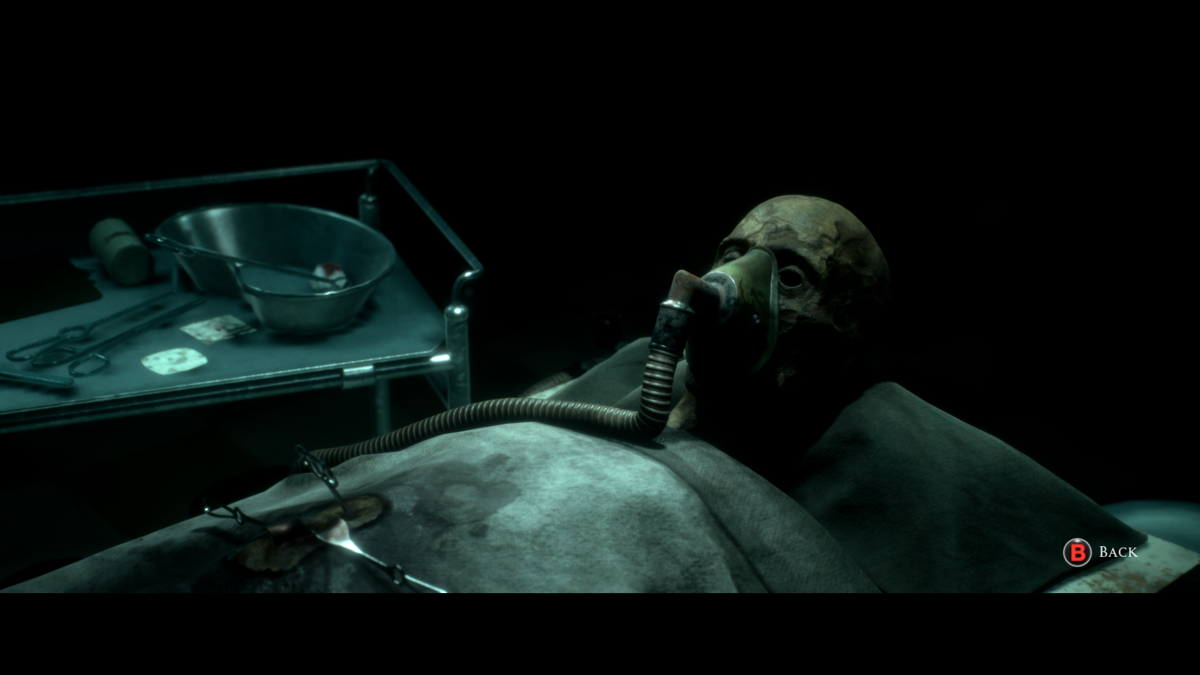
The games begins with a cold open (that also serves as a tutorial) as you follow two inebriated U.S. soldiers (one of whom you control) on break in a coastal Chinese town post World War II. After getting your fortune read and battling with a mechanical training dummy, you return to the ship and get tossed into sick bay after a skirmish with your drunk friend. Waking up, you find the doctor dead and the ship mostly quiet. Your life doesn’t last much longer as you suffer a similar fate to all your shipmates.
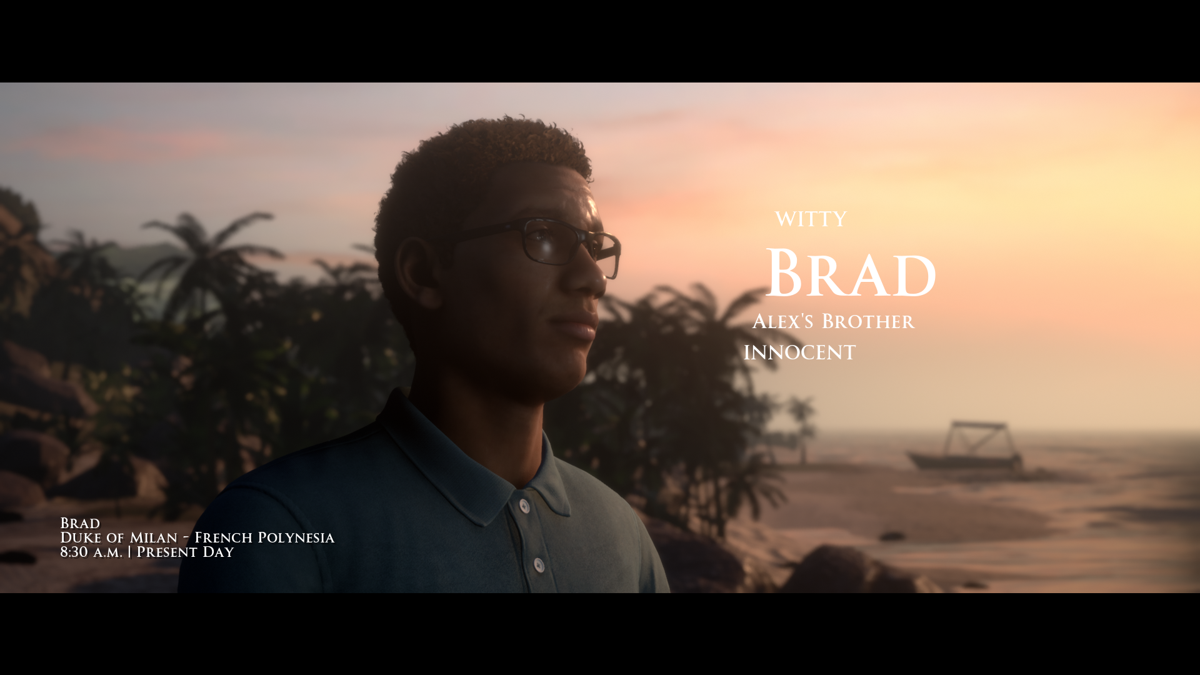
Fast forward to present day and a group of four rich young adults (a jock, his nerdy younger brother, his girlfriend, and her douchey but enterprising brother) that book a boat to dive for sunken crafts. The boat’s captain hesitantly agrees to allow them to search for undocumented wreckage, warning them not to touch anything. After searching a downed war plane, the group is deciding what to do next when they are commandeered by three pirates on a speedboat.
The pirates initial plan to hold the rich kids for ransom changes when they discover the plans for the next dive, mysteriously titled “Manchurian Gold.” They head towards the coordinates to find a massive war ship, the very one from the game’s prologue. The pirates bring everyone on board to help them search for the alleged gold. Almost immediately characters begin randomly hallucinating and seeing ghosts, giving the protagonists (and the bad guys!) a second enemy to worry about.
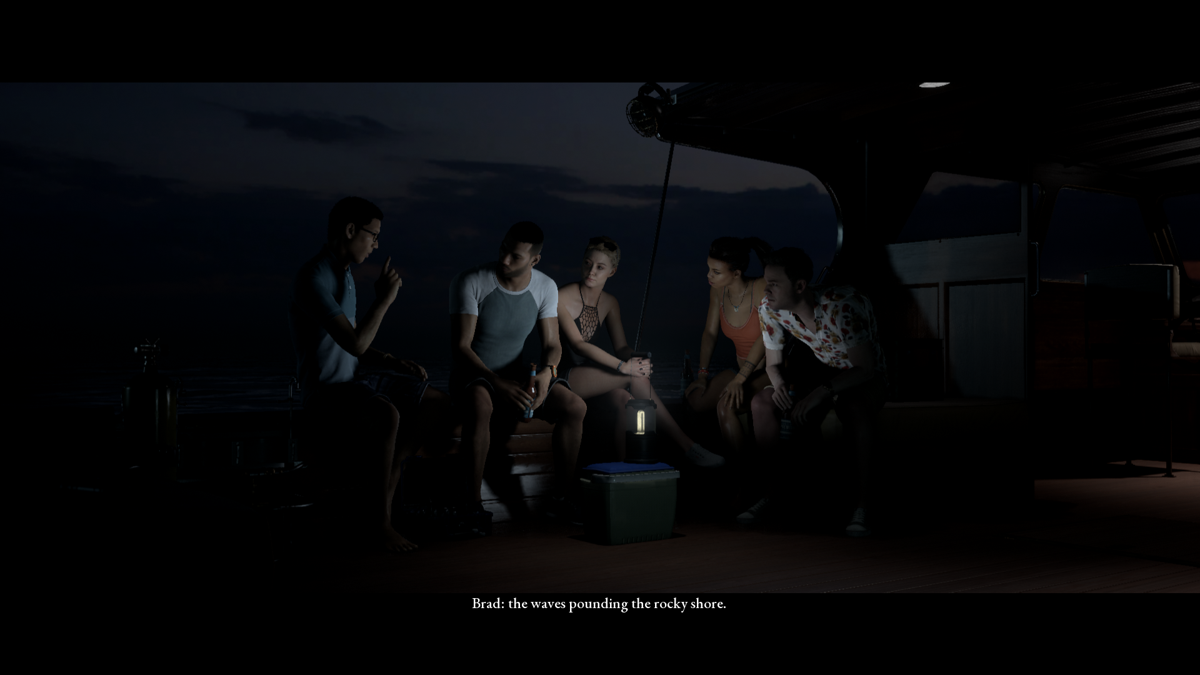
Gameplay is standard for this type of narrative game. You will control all five characters (including the captain) on multiple occasions, moving them around to identify clues, open doors, and regularly making split-second decisions. These decisions are often choice based, where you have the option of making a choice with your heart, with your head, or doing nothing at all. Some seemingly significant choices matter little, while some seemingly minor choices matter a whole heluva lot, and sometimes you won’t realize until much later. While this succeeds at giving each decision a lot of weight, it can also feel cruelly random. For example, I made a decision that I thought successfully saved a character’s life, only for it to get them killed near the end of the game due to some other completely unrelated choices I made.
Your decisions will also impact the relationships among the five characters, illustrated by scales with a list of which actions improved or harmed the rapport. This mostly just affects some of the dialogue and a couple of romance related story points, but it does not appear to impact any major decisions on who lives or dies.
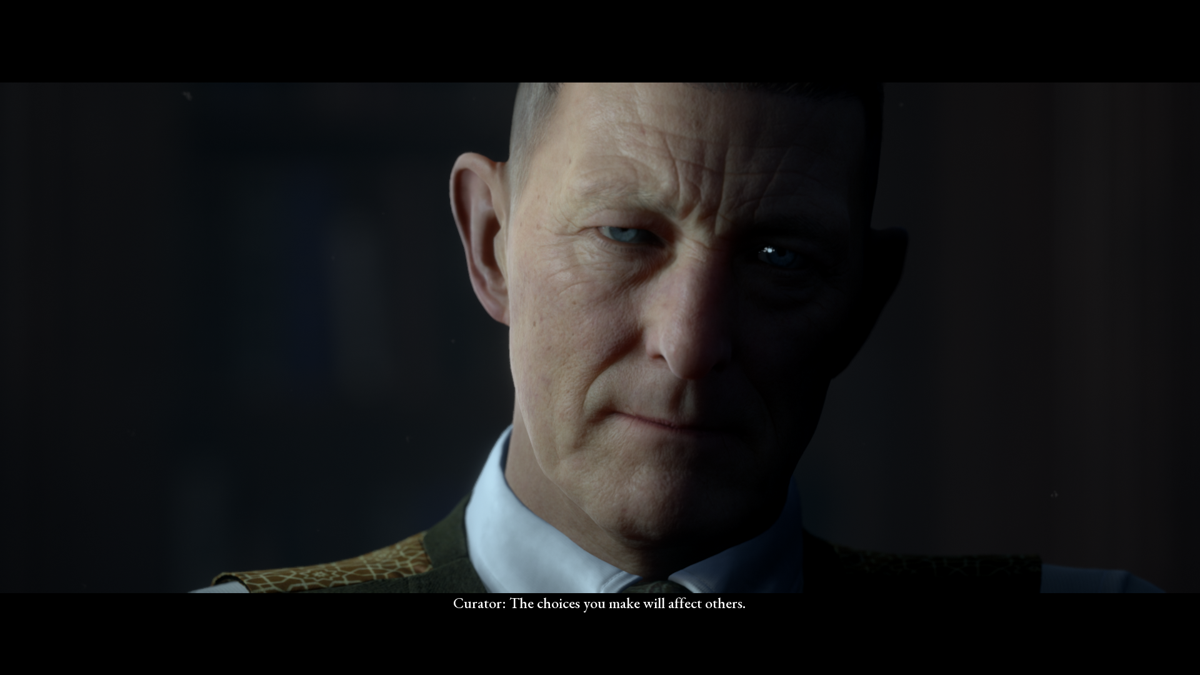
On your travels you will run across several paintings, and should you look at them, a premonition will be revealed for an event that could occur depending on future choices you make. These aren’t particularly helpful given the lack of context, but do contribute to the general anxiety of the moment, which I’m sure is the point. There is also a narrator of sorts; in between chapters, an aged gaunt man in a library will recount what you’ve done (replete with his opinions) while also offering extremely vague hints on what to do next. While pointless from a gaming perspective, the narrator’s presence adds a welcome flare, much like Rod Serling in the Twilight Zone or Alfred Hitchcock in his anthology series.
The productions values otherwise are a mixed bag. The motion capture of the actors is top-notch, which helps give a sense of realism to the performances. You actually believe these characters are scared. The ship itself feels appropriately dark, gritty, and weather-worn. The soundtrack is also appropriately eerie, though I quickly began to become annoyed at, and then able to predict, all of the cheap jump scares punctuated by an annoyingly loud cacophony of instruments.
Reflexes are important thanks to occasional quick time events, mostly centered around jumping or fighting (which only occurs if you decide to pick up various weapons you find). There are also times when you’ll need to stay quiet while being pursued, which is done by tapping along with your heart beats until the danger has passed. The difficulty of these events can be changed at any time. I played on standard difficulty, and made only a few mistakes that didn’t cost me anything. Easy difficulty virtually guarantees you can’t screw up unless you’re trying to, and hard difficulty virtually guarantees you will kill off some characters unless you’re an expert.
While the QTEs didn’t trip me up, I did kill off three of the five characters in my playthrough. One was for a truly dumb decision I made where I should have known better given all the clues I had. Frustratingly, the other two deaths were due to choices I made with mostly unpredictable results. For some this increases the replay value. While there are only about six primary endings to find, there are 352(!) permutations of those endings based on who is alive, the status of your relationships, and what you discovered along the way.
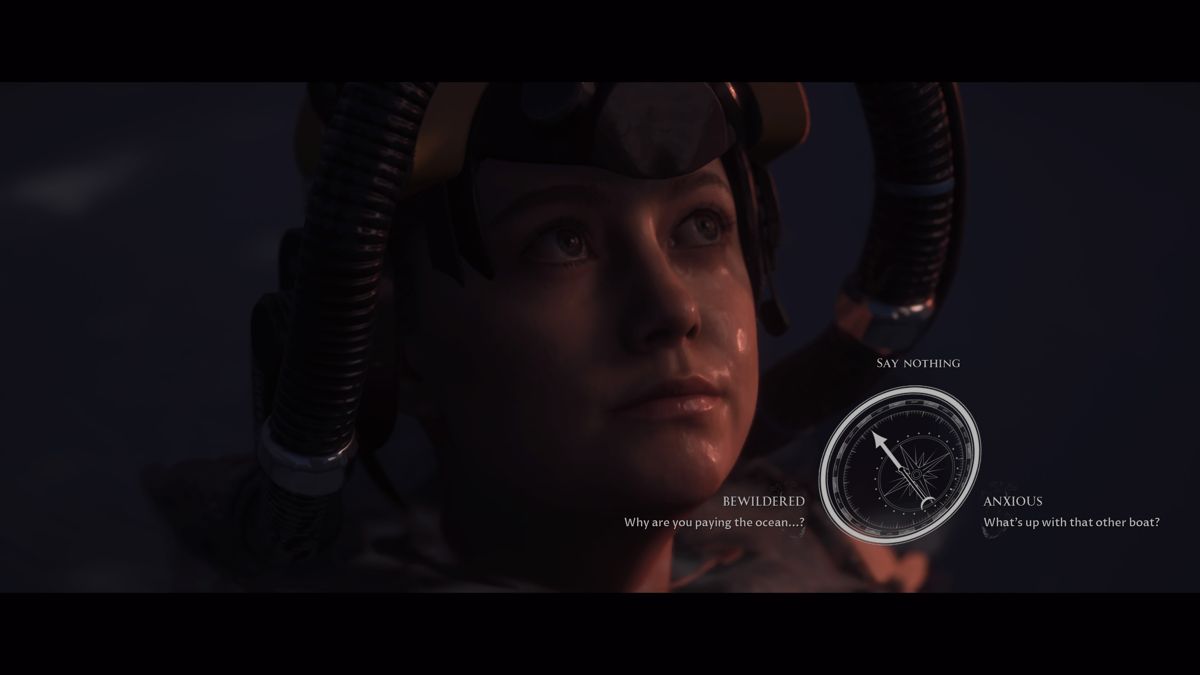
Sadly, I had no desire to do a second playthrough, less so due to the random nature of some choices but rather my general disinterest in the story. While you do learn about the ship’s history and the reason for the mysterious frightful occurrences, it all feels quite shallow, barely rising above a Scooby-Doo ghost plot. The pirates’ involvement never feels not contrived. And none of the characters get their due. You barely learn anything about any of them, and I found myself not caring the slightest about their fates. Scene selection is available for those who just want to replay certain chapters.
While the acting is fine (with props to Ayisha Issa, who plays the perpetually annoyed captain), the script is pretty brutal. Conversations will occasionally feel authentic but then get punctuated with pithy quips. Characters will too often talk out loud to themselves, as though the audience isn’t trusted to follow along. Though I did appreciate that the characters understood the clues aboard the ship in the same way I did and shared their knowledge with the group; nothing is worse in a horror story than completely oblivious heroes bumbling around.
I was curious enough to look up the various endings and death scenes on YouTube, and it only confirmed my decision to not play it again. While it was impressive how many plot branches were squeezed into such a short game, I found it ultimately hurt the overall narrative. Man of Medan is oft praised for this in comparison to the rest of the anthology series, which actually makes me look forward to playing the rest of them.