Publisher: No More Robots
Developer: Tendershoot, ThatWhichIs Media
Year: 2019
Platform: Windows, Mac, Linux, PS4, Xbox One, Switch
Rating: 5
If you ever lament how we moved from the early internet days where there were no links to anything and every site had frames and auto-playing music, then Hypnospace Outlaw was made for you. I was a teenager during those days, and while this game sent me on a huge nostalgia trip, I found it mostly just overstimulating.
It’s 1999 and while the internet is more or less how you remember it back then, one private tech company has invented a headset (called HypnOS) that allows people to surf and build web pages on the company’s server while sleeping. Users generally don’t remember much of what they did when they wake, but when they return to sleep their on-line memories return. While on-line, they can chat with others, listen to music, play with virtual pets (and make sure their poop goes in the recycling bin), or design their own pages.
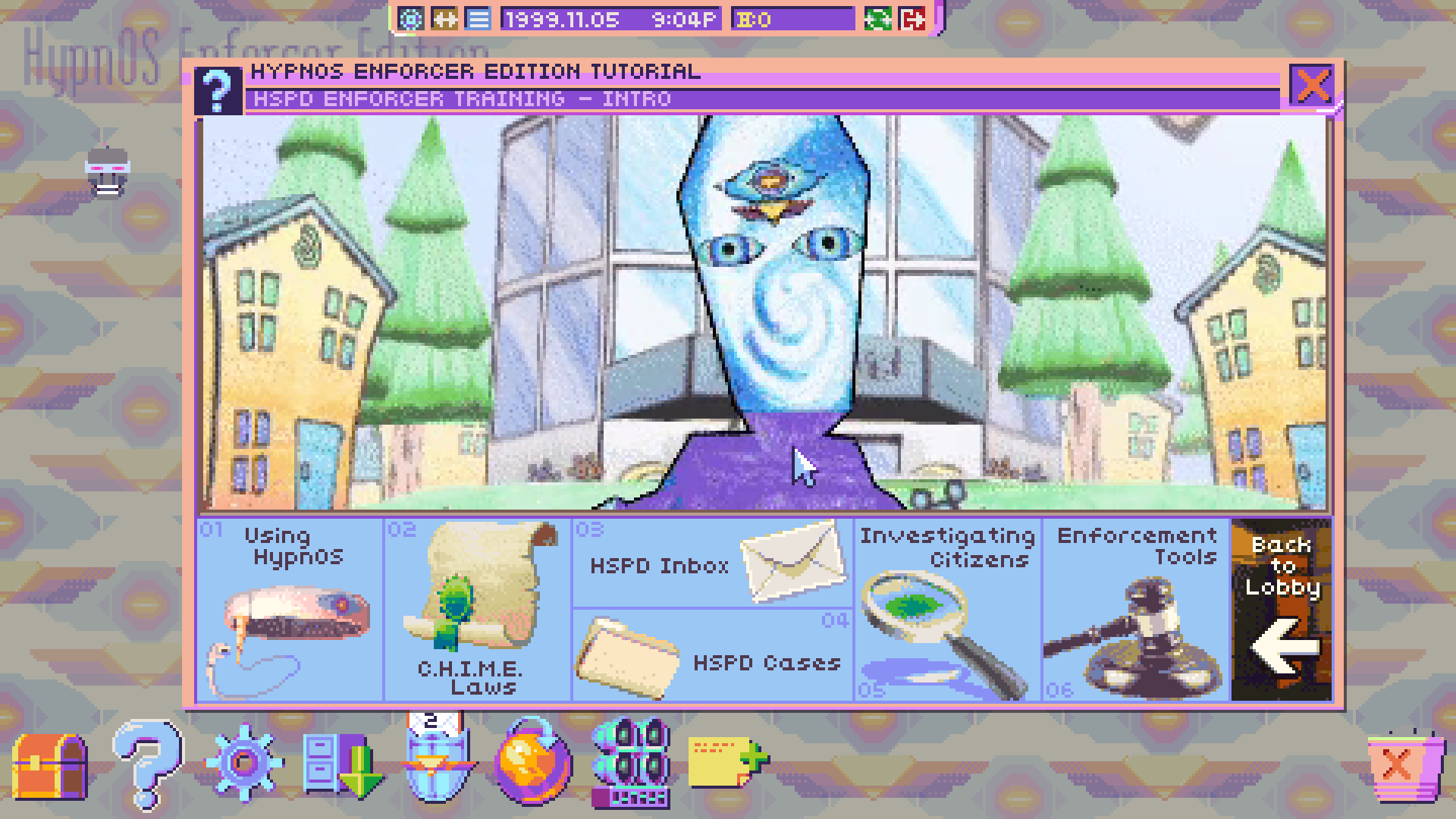
Your job is that of Enforcer, who must help moderate the server to ensure people aren’t bullying, infringing on copyrights, or uploading malicious software. A HypnOS employee (after having you watch some helpful video tutorials) will give you various tasks and tips on where to look on the server to find people breaking the rules; when you do, you report them back to your superiors who will decide on any potential consequences to the users.
The interface, as you would expect, is intentionally clunky. You’re given a Windows-like desktop which has the programs you need, though everything is ugly and in low resolution. You have the ability to do a little customization, but ultimately it’s annoying to navigate between programs. Primarily, you’ll be reading e-mails from corporate, browsing the internet, and managing your downloaded files.
I found the beginning of the game to be legitimately a blast, and not just for the constant drip of nostalgia. The designers obviously put a ton of work and love to make this server to appear authentically and earnestly 90s. Reading people’s personal pages is often fun as there’s an overuse of clip art, random personal musings, and a haphazard web ring for users to link to each other’s pages. Unfortunately, much like reality, many people’s personal pages are obnoxious or boring, and there’s a lot in the game that is just for flavor.
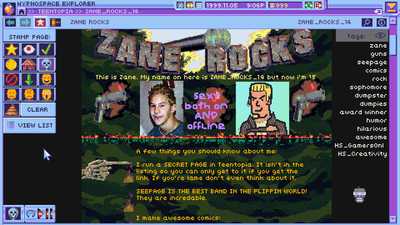
Though I did laugh out loud at one page, who insisted readers keep scrolling and scrolling, with a warning to only keep scrolling to the bottom of their page if they were truly ready to see it, and then when you get to the bottom it just says “Under Construction.” And I have to admit I was also guilty of many of these sins on my AOL Hometown page back in 1999. I also giggled when one prominent user has a page dedicated to helping pick strong, memorable passwords by using things that nobody else would know, like your birth year(!).
While some of your work as an enforcer feels useful, like flagging people for bullying or uploading viruses, some of it feels big brothery and uncomfortable (e.g. getting a site shut down for posting a copyrighted image). The game does a nice job of balancing these out so that you never feel too icky, and you often to get to see the ramifications of your actions, including pleased and upset customers.
As mentioned, almost every site you visit had a song that auto-plays, which is as irritating as you remember. Thankfully, unlike back in the day, it’s easy to mute the song (though you do have to do it every time you visit). However, some of the songs are legit good, especially ones written by in-game bands. Nearly every song in the game is original and reminiscent of up-and-coming sounds back then, which is frankly impressive.
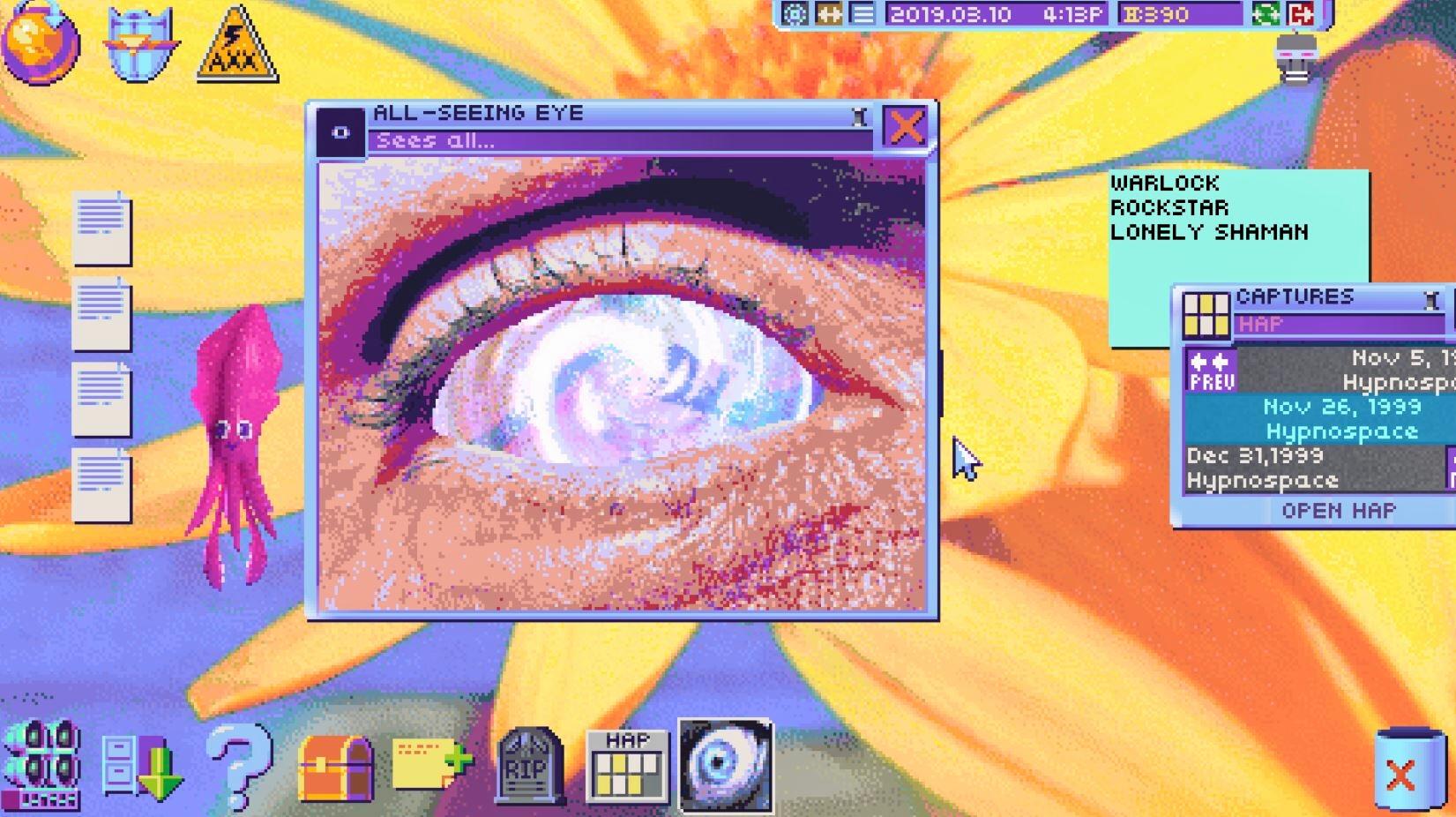
Gameplay is simply not just clicking on links and finding banned content. Sleuthing is required, as not everything is linked to directly. You’ll need to review tags and do searches for them, or find your own keywords you think will give you a new lead. This starts out rather simple with a gradual learning curve. I only required one hint until the end game. The final puzzle (which involves taking everything you know and applying it) is difficult but fair, and I could have solved it on my own given enough time. But I have to admit I was just burnt out by the time I got there and just wanted it to be over. I was frequently frustrated from clicking the wrong program or finding dead links or just the constant visual assault on my senses. The “internet while you sleep” technology becomes a huge plot point, and I would have been more invested if I had been comfortable while playing.
I can see why Hypnospace Outlaw is well-regarded, at least with the limited audience it caters to. It’s a meticulous, loving tribute to the early internet days with some fun puzzles to boot. And it’s one of those games that if you think you’ll like it, you probably will. I’m glad I played it, and while in the end I wasn’t particularly enjoying myself, I was consistently impressed.

