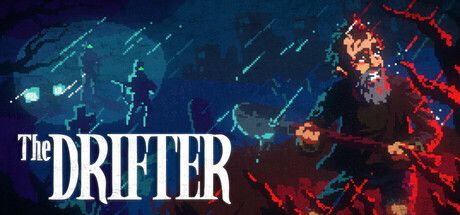
Publisher: Powerhoof
Developer: Powerhoof
Year: 2025
Platform: Windows, Mac, Linux
Rating: 7
Even though they have become infinitely more polished over the last fifteen years, I often find myself underwhelmed by modern point-n-click, inventory based adventure games. Many hold the player’s hand a little too much, but mostly I just find many of them have uninspired puzzle design. If I’m going to be carrying around a dozen unrelated items in my pockets, I want to be excited about their possibilities. The Drifter understands this, consistently delighting me in ways I hadn’t felt in a long-time. While the story about a homeless man wrestling with his past and future doesn’t quit hit the emotional punches it strives for, I still had a blast from beginning to end.
Australian Mick Carter is hitching a ride in a boxcar, on the way back to his hometown to catch his mother’s funeral, an event he’s reluctant to attend as it means seeing his estranged wife and reliving some undisclosed tragedy. However, before he can dwell too much on that, shots ring out, killing another man on the train and leaving Mick barely escaping with his life into a homeless encampment under a bridge. Unfortunately, his phone is dead and he has no idea how to find his sister’s home where he was supposed to bunk up.
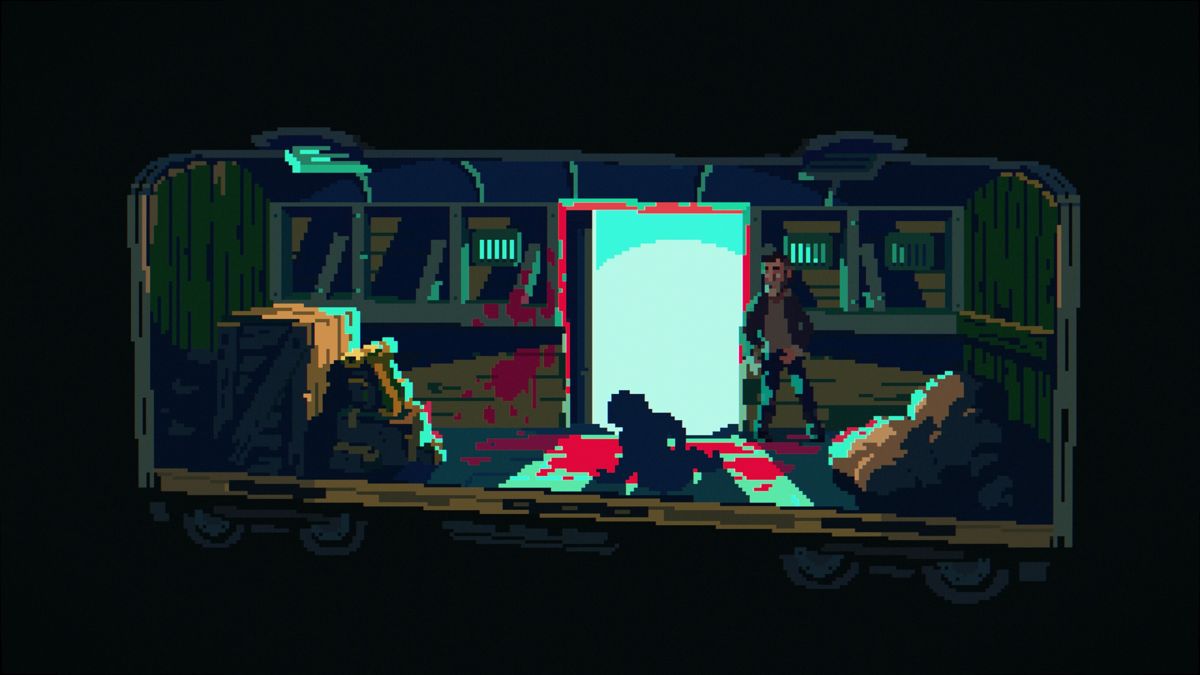
While Mick is the character you control, it’s his voice that takes center stage. Voiced by video game veteran Adrian Vaughan (who impressively voices six other characters as well), Mick’s thick Australian accent is the star. In addition to dialogue, Mick narrates everything from your decisions to his own emotional state. I was initially nervous that hearing him near-constantly would begin to annoy me, but it never does. Vaughan manages to switch between narration voice and dialogue voice seamlessly and believably, effectively emoting dread, fear, excitement, and tenderness when the moment calls for it.
Under the bridge Mick is accosted by a young reporter looking to investigate a story about missing homeless people. In a flurry of events, she is kidnapped, Mick’s friend is murdered, and Mick himself in a tossed into a reservoir, tied to an anchor. You will most certainly die, then get restored back to this moment to try again. Only, unlike most games, this isn’t a simple helping hand by the game itself. Mick realizes he’s been sent back in time to try again. And again. And again, until you get it right. Each time he dies, a flash of white envelops the screen, and Mick is terrified by the time travel process. Between that and the mysterious armed men chasing him the game’s plot hits the ground running.
Nearly every chapter has at least one section that has a similarly timed life-or-death conundrum (e.g. a crypt or a surrounded apartment building) that Mick must escape. The puzzles themselves are difficult enough on their own, but are made doubly so given that you often have less than thirty seconds to figure them out. While it admittedly got a little tiresome when it took me fifteen to thirty deaths to get past an area, I also enjoyed the amped up difficulty.
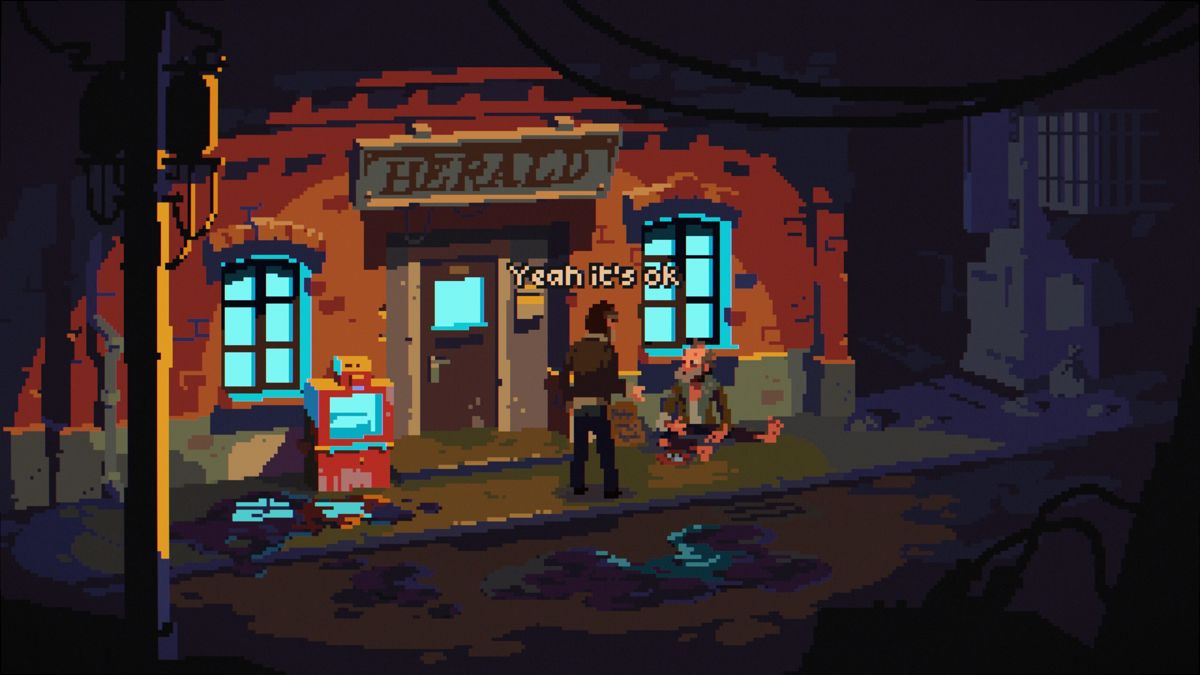
Part of what makes it work is that the game’s UI is nothing short of perfect. Looking at important parts of the screen is as simple as hovering over an item and reading a description. The only reason to click is to interact (either with your inventory or the screen) and there is no pixel-hunting needed. While determining the correct course of actions takes thoughtful consideration (and there are red herrings for sure), once you decide what you want to do, the game always makes it easy for you to try it. Combining items is a breeze, and while there’s some barely believable MacGyver inventions that Mick puts together, they are mostly intuitive and I rarely found myself inventory spamming.
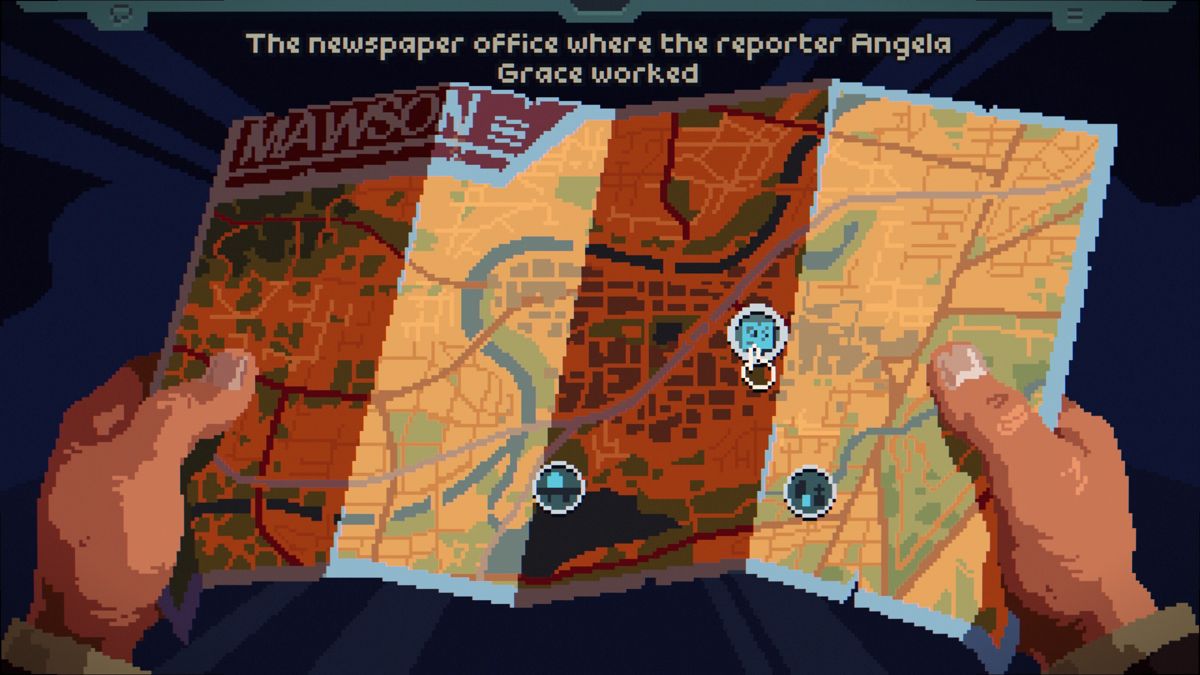
As the story unfolds, one of the drop-down menus show sketches of thoughts in Mick’s head; each one is a topic of importance that you can click on to get a reminder of your current objectives. Additionally, these sketches will be used as conversation topics with those around you, at least the ones that would make sense for Mick to bring up to that person.
Rounding out the primary cast of characters are Mick’s aforementioned snarky but devoted sister, his (deservedly) bitter but forgiving wife, and a local detective who sports a pompadour and a charming combination of loyalty and laissez-faire tendencies. Most of the remaining side characters come off a bit one-note, with little time spent on backstory to make room for the puzzles and the action.
The graphics are quite attractive, evoking a brooding, pulp atmosphere despite a relatively low pixel-count. It is easy to tell what’s what and I found each new area successful at evoking the mood intended. Hit and miss are the animations, insofar as I wish there were more. Many seemingly simple actions are not shown at all; rather, the screen goes black and when it returns, the deed is done. I remember thinking a dozen times that I missed out on a potentially sweet animation.
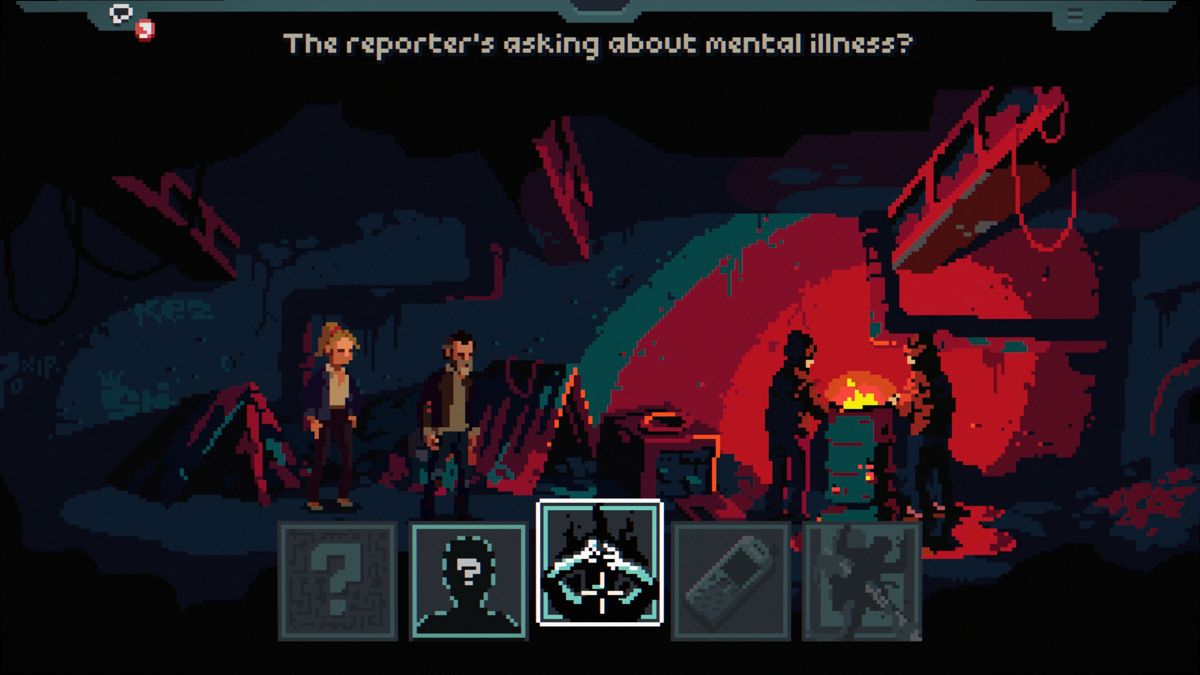
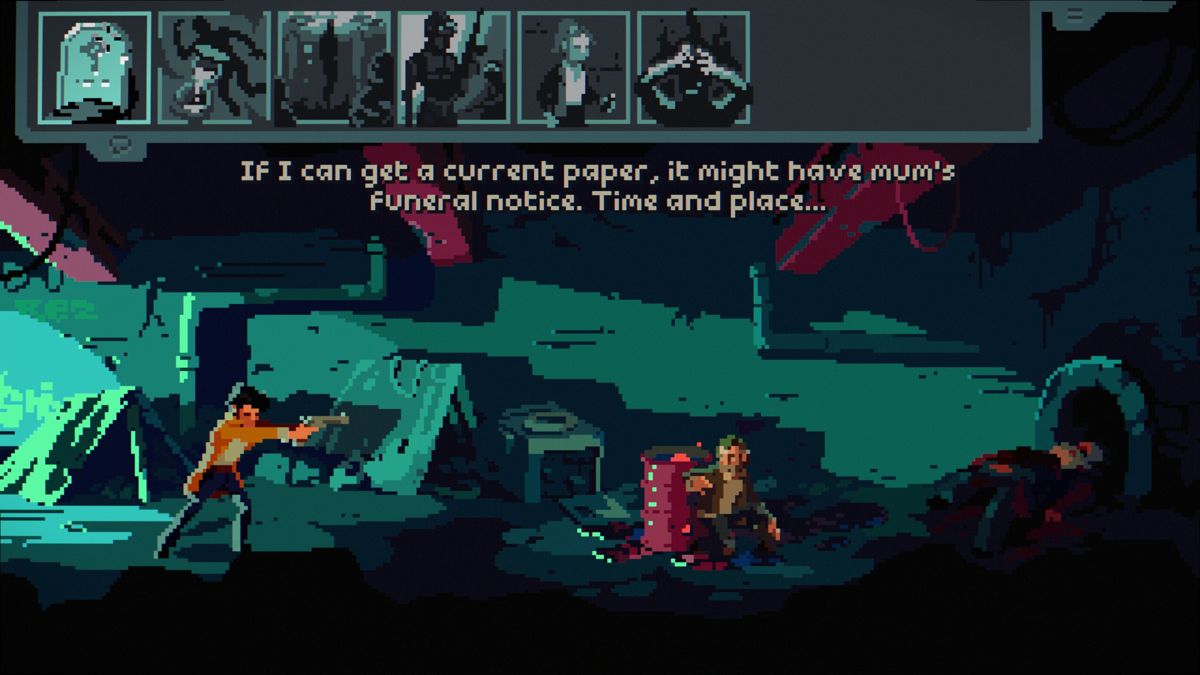
But it’s certainly not due to lack of artistry talent. There are some truly impressive animations, especially when Mick is killed (which happens often!). From fire to blood to character transformations, The Drifter has some of the most gripping animations I’ve ever seen in a pixel-art game. The soundtrack also sets the mood well, with dark, synthetic tracks that reflect the mood of each scene and never overstay their welcome.
The game flies by at breakneck speed, and the eight or so hours of gameplay are over before you know it. While this makes for a thrilling action-adventure, unfortunately the game’s story takes a backseat quickly and never successfully returns. We learn Mick’s backstory at a decent pace, but the revelations about his trauma and his relationship with his ex-wife are too easily lost in shuffle as the increasingly fantastical science-fiction takes over. Additionally, the detective’s emotional investment in Mick’s fate is never fully explained and most of the side characters have very shallow motivations. While all that is fine, it really kills the weight of whatever heavy story beats were intended. A ridiculous (albeit fun) Hollywood ending further erodes any feels I was at the risk of experiencing.
Despite that, I fully recommend The Drifter to all fans of pixel-art adventures. Mick is a fun character to follow, the puzzles are consistently engaging, and the time travel mechanics wind up being a lot of fun.
 Death By Troggles