Publisher: Sony
Developer: Supermassive Games
Year: 2015
Platform: Windows, PS4, PS5
Rating: 7
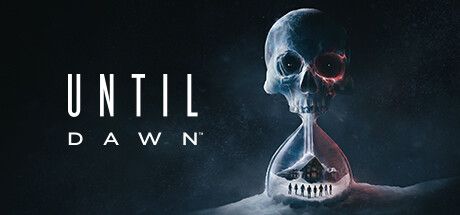
The first game I played by Supermassive was The Quarry, and it appears I was a bit spoiled. I heard great things about Until Dawn, but I didn’t own a Playstation. And then they released it on 2024 on the PC, but my computer couldn’t handle the specs at the time. I finally got around to it this year. And I wished I had played Until Dawn first. I thoroughly enjoyed myself, but I couldn’t help thinking the entire time how they improved the choice-based horror formula in nearly ever single way a few years later
As Until Dawn begins, ten teenagers are partying alone in a home in a remote area at the top of a mountain. Hannah, Beth, and Josh are siblings and they’re hosting their friends, while their parents (who pretty much own the mountain) are out of town. And because teenagers are assholes, things go horribly wrong. With Josh passed out drunk, the rest play a prank on Hannah, who is in love with Mike. They write her a fake letter inviting Hannah to spend some alone time with Mike, then all come out of hiding at a vulnerable moment. Hannah, distraught, flees into the woods, with her sister Beth tailing her. Some unexplainable spooky things occur, they wind up at the edge of a cliff, and accidentally fall to their deaths.
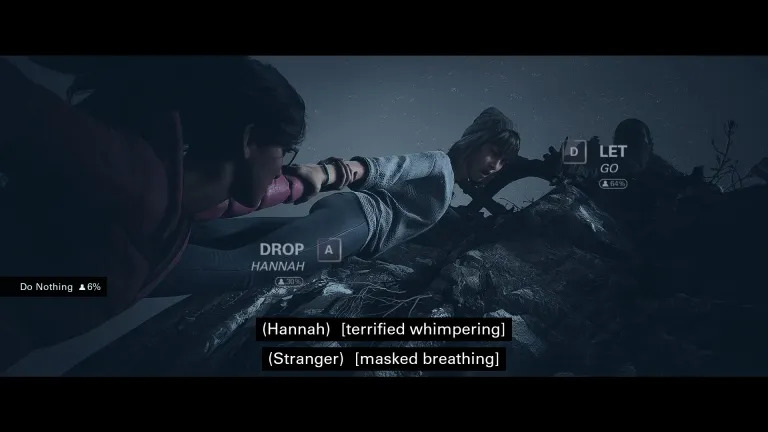
Fast forward one year later, and Josh has invited the rest of them back to continue their tradition in order to honor Hannah and Beth’s memories and help move on. Guests begins to arrive ten hours until dawn, just as the sun is setting. The first character you will take control of is Sam as she finds a way to get through the locked gate and onto the tram leading to the cabin. You will learn how to use quick-time events (tapping the correct button in time) to traverse the gate, as well as practicing with the choice-structure, your first major decision being whether or not to peek at someone’s phone without their permission. Some decisions have little to no impact, while some can massively change the course of the game.
The more impactful game decisions (noted therein as The Butterfly Effect) will be tracked on a menu screen, alerting you to the fact that you just did something important. Some of these choices involve how you handle conversations with others, and some are split-second decisions you make under pressure. As the consequences of your actions bear fruit (sometimes several chapters later), the menu will be updated to help you trace things back to your initial choice. Some choices can directly lead to a player’s death, while some may only potentially lead to their death depending on additional future choices you make. While some of the consequences seem disappointingly random, it’s refreshing to at least know after the fact where you went wrong so you can try something else on future playthroughs.
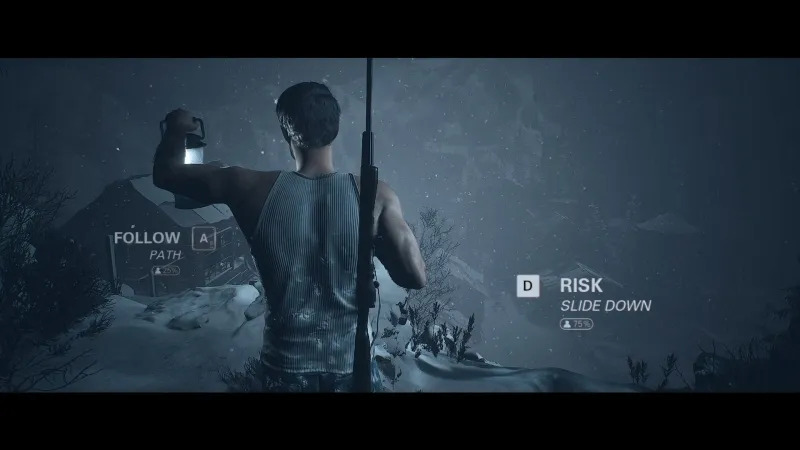
The first couple hours of the game are relatively stress-free, with the occasional spook but no real danger as you slowly get to know the teenagers, taking control of most of them for brief periods of time. Some of the teens stay in the cabin, while some go walking outside together. When you’re just moseying around, items you can interact with (such as a television, picture frame, or journal) will have a shining white star, making it easy to determine what’s important. You will also find totems lying about both outside and inside for no discernible reason; when you pick one of them up, your character will have a very brief vision of their future, or potential future depending on upcoming choices. Some of these visions are tough to interpret, though some are genuinely helpful if you can recall them in the split-second decision you face down the road.
It’s difficult to describe the terrors in the game without spoiling the surprises. Familiar horror tropes are present, with spooky things in the dark, mad science gone wrong, being chased by unknown assailants, and several sprinkles of the occult thrown in. While many of your split-second decisions and quick-time events are during chase scenes, there’s also several intense moments where you have to make a Sophie’s choice and are given about ten seconds to make up your mind. I really appreciated this as most choice-based games have a laughably easy “good path” to follow.
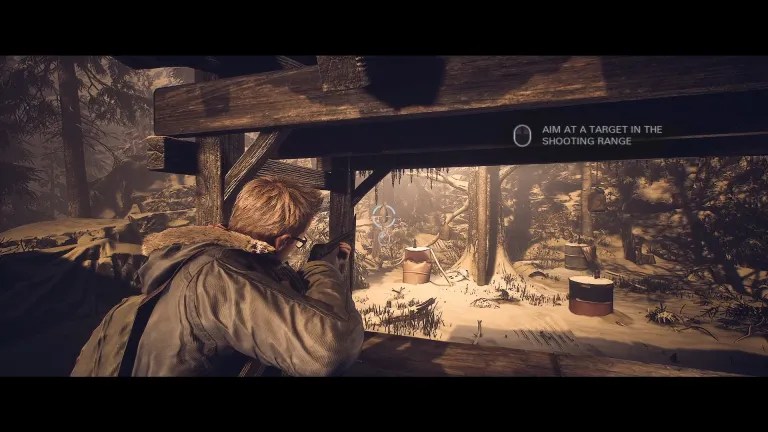
On a few occasions you will have a gun (or something you can throw) and when the time comes to make a decision, a crosshairs will appear on the screen, giving you a brief moment to move it to your target and fire. It’s fairly intuitive, and I hit my target most of the time, but missing just once can potentially spell death. In some situations there’s often a choice to “do nothing,” which sometimes is the correct thing to do. Some sections require you to stay completely still until a danger passes; the mechanic is cool on the Playstation as you must keep your actual controller as still as possible. On the PC, you have to keep a reticle inside a bounding box (using the keyboard or joystick) which is almost impossible to fail if you’re paying attention.
For the most part the graphics do the setting justice. Motion capture was used for the actors and in general everything looks believable. For the 2024 remake all of the character models were updated and–weirdly–about half of them look better and half of them look worse. It genuinely does feel like you’re on a mountain with towering trees and babbling brooks. There’s an abandoned mine that is creepy as hell, and an abandoned asylum that hosts two of the most intense outings in the game. Your assailants for sure look unnerving, if a bit too obvious if you’ve seen a few horror movies. My only complaint is that everything is so dark. Yes, yes, I know the entire game takes place in the middle of the night. But in most media of this nature, there are periods of time where things are lit up well before you get plunged into darkness.
One major difference between the two versions is that the first game had a more cinematic feel with fixed camera angles, while the update has a free-roaming over-the-shoulder camera. From what I’ve read, the new version allows for more freedom of movement and makes finding objects less cumbersome, but at the expense of feeling like you’re watching a movie.
I haven’t listened to the original 2015 soundtrack, but the remade 2024 version is not too dissimilar from what I’ve read and it adds some more numbers. Like the graphics, many fans say that some of the new tracks were an improvement while some detracted from the mood. All I can say is that the orchestral movements are generally on point and I never felt like the music got in the way of the tension.
And to wrap up highlighting the differences between the two versions, the modern version lengthens the prologue, adds some totems, an addition to the epilogue, and includes an entire early-game scene that was only available as a DLC before.
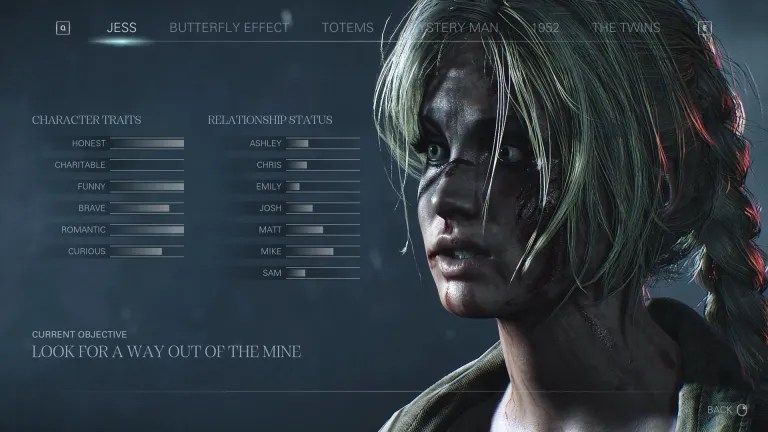
One of my major criticisms of Until Dawn is that unlike The Quarry, there is comparatively little character development before all the crazy shit goes down. The eight teens split up almost immediately upon entering the cabin, despite dusk already passing. The total time they’re all in the same room together is about thirty seconds. In fact, one character in particular doesn’t interact with most of her friends for the duration of the game, disappointingly making them one-note. We rarely get to delve into why any of these people are friends, and outside of a couple of romances, the whole group feels very shallow. As a result, it was hard to root for some of the characters.
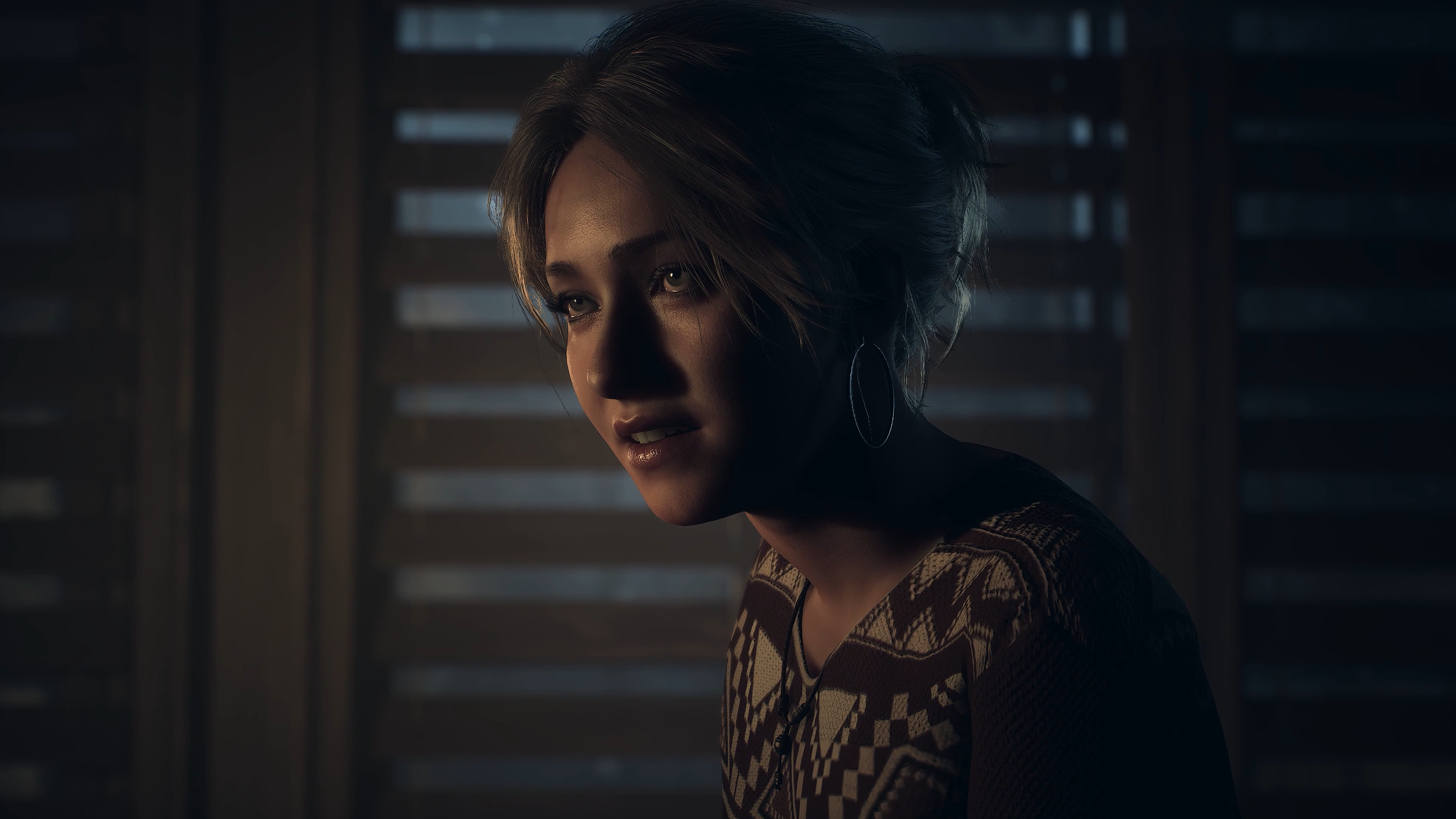
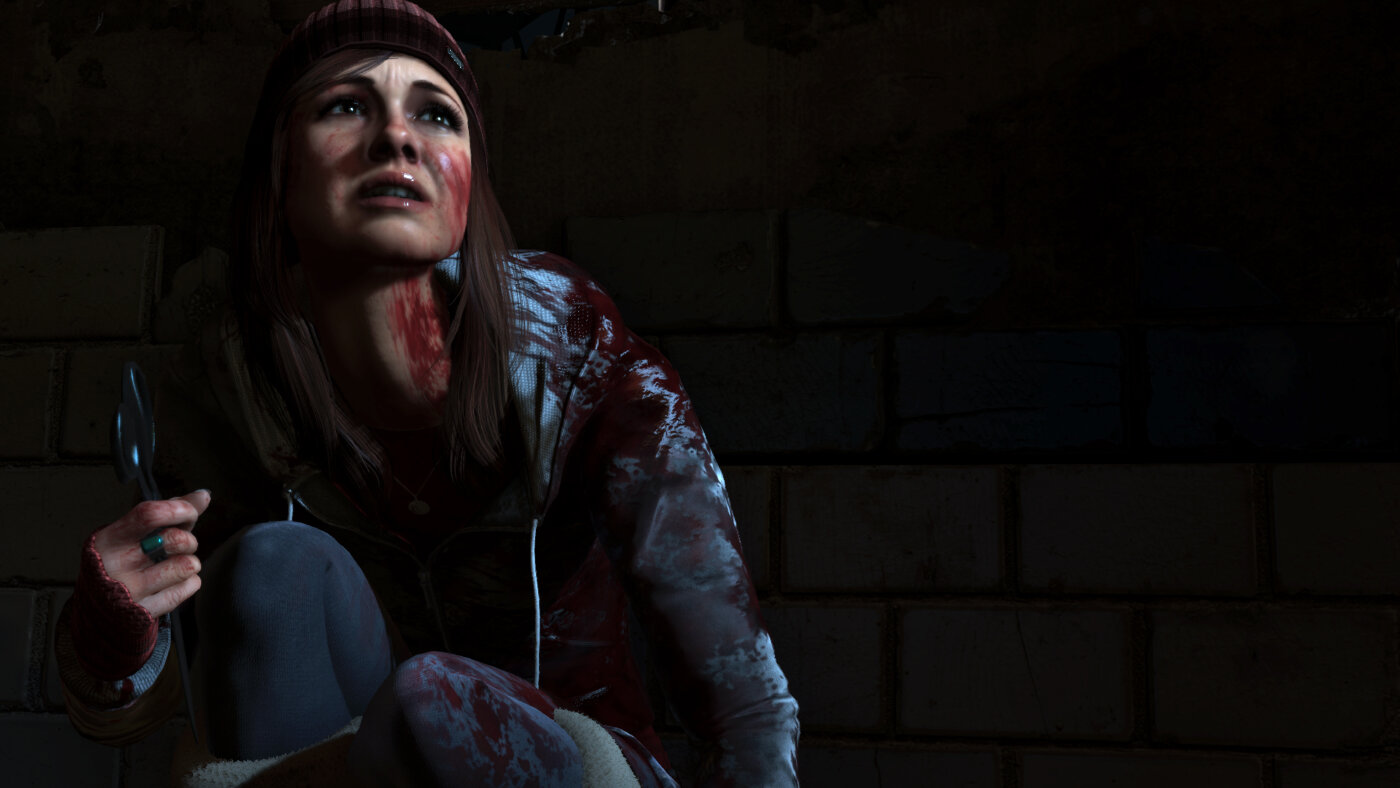
I did have my favorites, though. Sam, played by Hayden Panettiere, steals every scene she is in with a wonderfully understated performance as the emotional rock of the group. She’s rational, empathetic, and witty, and Panettiere never overacts during the scary parts. Rami Malek, who plays the convivial Josh, is also a delight. His facial contortions alone are worth the price of admission. And the resident beefcake Mike (Brett Dalton) rises above the stereotype, his character developing the most as he’s forced to turn into a hero. Dalton elevates the script to elicit several laughs as he stumbles his way through his new role among his friends. Rounding out the diverse cast (but predictable Breakfast Club) is an athlete, a nerd, a blonde bimbo, a shy girl, and the perpetually catty girlfriend.
Between each chapter you are taken to a doctor’s office to be interrogated by a psychiatrist about your own personal fears and opinions of the characters. It’s not clear at first if your answers to the doctor’s questions matter, but Peter Stormare’s performance as the intimidating doctor is a joy that makes these diversions welcome.
Like all good choice-based games, multiple paths and endings abound based on your decisions and who you manage to keep alive. While a few characters are tougher to kill off, every single one can live or die. Nobody would accuse me of being a war hero during my first playthrough. I managed to kill off every single guy in the group and saved three of the ladies. Of the five I killed, two were due to failing QTEs, one due to a poor choice under pressure, and two due to choices that the internet agrees are random and unfair. That said, failing can be part of the fun and is a very motivating factor in replaying the story. I did play a second time and managed to keep seven of them alive. Twice was enough, though. While you can go back to a previous chapter at any point, finding every possible outcome in the game would take an impossibly long time. Thank goodness for the fine folks at Youtube for showing me what I missed.
Since I’ve been comparing Until Dawn to The Quarry, this would be a good time to point out the one area where it exceeds its successor. When the credits roll, there’s actually an epilogue! Each surviving character is interviewed afterwards and their responses vary based on how they experienced the fateful night. Why they dropped this for The Quarry is perplexing.
From what I’ve read, Until Dawn was a breath of fresh air when it was released, as Telltale had saturated the market with choice-based games where very few of your decisions matter and the ending is the same no matter what you do. While having true consequences for your actions does limit the ability to tell a tight story, it certainly helps me stay more invested on a moment-by-moment basis. While I nitpicked Until Dawn a lot through this review, it excels at providing a truly immersive horror experience for players not adept at the action survival genre. And at no point while playing did I stop having fun, and when it comes down it, there ain’t nothing more important.

