Tag Archives: Sierra

Police Quest 2: The Vengeance

Publisher: Sierra
Developer: Sierra
Year: 1988
Platform: DOS; Amiga; Atari-ST; PC-98

Review: Sonny Bonds is back…with a vengeance! Actually, the perp he testified against last game and put in prison is back with a vengeance. Not only has he escaped prison, he has kidnapped Sonny’s girlfriend and is knocking off everyone that was at the trial. Since you’ve been promoted to homicide, the case is yours. Lest you worry that you’ll get bored with nobody familiar around, Jim Walls has created several more characters with wonderful personalities.

First is Keith Robinson, your partner. Other than taking smoke breaks and making snide remarks, he offers little help, but befits the easy comic relief that every cop game needs. Then you have Captain Hall, who has a very short temper but a keen taste for pistachio ice cream and a master at working the telephone. And as with Police Quest 1, the supporting cast of characters usually have something funny and interesting to say.

The production values remain quite satisfactory, with improved graphics and sound over the predecessor. Even the sound that tells you that you’ve been awarded points is addicting. The game takes a bit more of a linear route this time around as Sonny usually knows his next destination. However, the puzzles remain fair and moderately difficult. Police procedure is toned down considerably, but still must be followed regularly in order for Sonny to achieve the maximum points and have a clue as to what’s going on. The design team also made a smart move in eliminating manual driving. Since Sonny is in an unmarked car and never needs to patrol the streets, driving would have become pointless and quite tedious.

But where this game shines again lies with the character and plot development. The Vengeance has the best story in the series, with the game spanning over two cities, under water, and in the air. The humor is still very prevalent, and suspense and action are dished out at regular intervals. There is one highly contrived plot device, but can be forgiven considering its entertainment value. And the end-game is fantastic on all levels.

As close to flawless as an adventure game can get, Police Quest 2 remains my favorite game of all-time.

Contemporary RatingMedium. Good parser, but going to the shooting range multiple times to adjust the sights on your gun would annoy many.

Cruelty RatingTough. If your only saved game is a split second before you’re going to die, then yes you can make the game unwinnable. Otherwise, you should be fine. You can miss a ton of things through your investigation, and this will make the game more difficult (and less enjoyable), but it won’t lock you out.
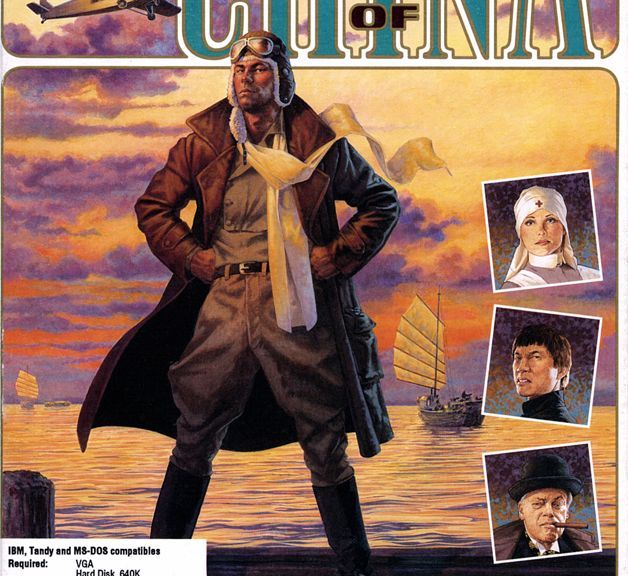
Heart of China

Publisher: Sierra
Developer: Dynamix
Year: 1991
Platform: DOS; Amiga; Macintosh

Review: Dynamix took everything great about Rise of the Dragon and nearly perfected it for their second adventure game. You play pilot Jake Masters (though Indiana Jones would fit as well) of a touring company in the Far East. The only blemish Mr. Masters has on his record is an acquiring debt with his creditor E.A. Lomax, a ruthless businessman out of New York and currently stationed in Honk Kong. Lomax gives Masters an ultimatum: save his daughter Kate who is in the hands of the Chinese in Chengdu and his debt will be cleared. Refuse Lomax’s offer, and well, let’s just say Masters can’t refuse the offer.

In Honk Kong, Masters finds Zhao Chi, a masterful ninja who offers to help Masters. Of course, Masters knows he needs no help, but lets him tag along anyway. Saving Kate in China is just the beginning of the adventure as you travel to several different cities, trying to get back to Paris where Mr. Lomax will be waiting for you.

Heart of China is a captivating game. Every character is fully developed, making the player feel for the heroes and hate the villains (and sometimes vice versa). Conversation is realistic. As in the game’s predecessor, what you say can come back to help or haunt you later. A romantic story develops with believable sexual tension and humour. The graphics are superb, and the sound is appropriate and lively most of the time.

Even the plot develops as the game progresses, which is a rare treat in the adventure genre. You can play all three main characters at various times, and discover plot branches that give you a completely alternate path to proceed through that part of the game. Along with three distinct endings based upon the relationships you develop (or destroy) throughout, the replay value is high.

My only major gripe about this game is the same one I had with Dynamix’s first offering.  The arcade sequences simply do not fit.  While the first one is marginally enjoyable, the second one (which literally ends the game)  is a clunky mess that ruins the tempo of the ending. Blissfully, you are given an opportunity to skip them if you fail a certain number of times, but that’s certainly anticlimactic.

Despite the arcade debacle, Heart of China is easily one of my favorite games and is one that I have gone back to on more than one occasion. If you love Indiana Jones, then this game should be on your must-play list.

Contemporary RatingLow. The arcade sequences along with some occasional confusion manipulating inventory items would likely irritate some.

Cruelty Rating: Nasty. There are a few times you can make the game unwinnable, sometimes obviously, sometimes not.  However, the game never allows you to become walking dead for long, as it becomes obvious pretty quickly you’ve goofed.  Regular saving should allow you to explore and enjoy various paths and dead ends without getting frustrated.

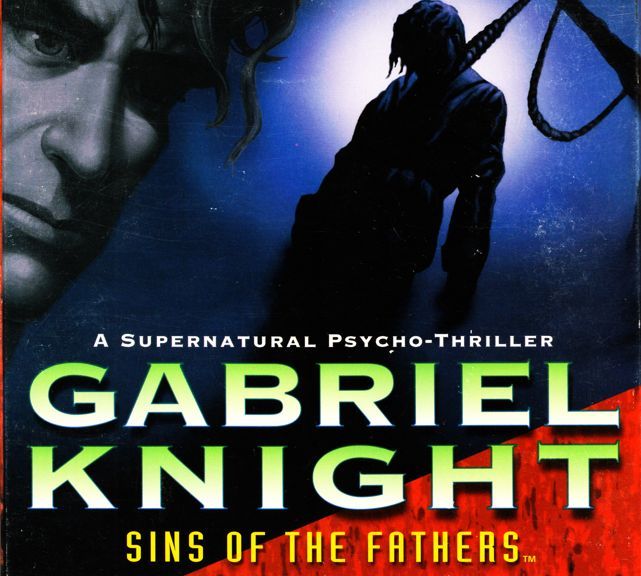
Gabriel Knight: Sins of the Fathers

Publisher:Sierra
Developer: Sierra
Year: 1993
Platform: DOS; Windows; Macintosh

Review: Near the height of Sierra’s peak in the gaming industry they were releasing copious amounts of sequels to the games that made them famous. But in 1993, Jane Jensen began a new series, and in this author’s opinion, created the best game Sierra developed.

You play Gabriel Knight, a New Orleans writer and owner of a failing bookstore. “Employing” a young post-grad, Grace Nakamura, to run the shop while you grimace with writer’s block, there is little to look forward to in life except philandering. The headlines are barraged with stories regarding the “Voodoo Murders,” a series of mutilations that appear to be a part of a ritualistic cult. Your friend Detective Mosely lets you in on parts of the case to help you write your new book about Voodoo, and even reluctantly turns a blind eye to your own personal investigation of the murders the NOPD cannot solve.

While the game includes a comic book prelude to the plot, it gives away very little of the gaming experience. The pacing is brilliant, with a believable timeline and healthy doses of tension and humor. Gabriel’s relationships with his family and friends are genuine and deep, even though he has difficulty coping with his emotions. The story itself is fascinating, with several plot twists (mostly acceptable), and rich in detail and culture. I practically wanted to visit New Orleans after completing the game.

Sins Of The Fathers executes Sierra’s best implementation of the point’n’click system. Rather than four icons at Gabriel’s disposal, you now have eight, all with distinct and purposeful functions. The game differentiates between merely talking to a person and interrogating them about certain topics. Thankfully, you don’t have to take notes as the game saves all conversations for you. Unfortunately, the interrogation process can be painful; you are given a list of topics you can speak to each character about, and as you learn more in the game, more topics become available.  What this leads to is revisiting the same places dozens of times to see if a topic subject has appeared on the approved list.

What makes this whole process tolerable is the excellent voice acting by the game’s many characters. Tim Curry plays Gabriel. At first, I was turned off by his cocky drawl, but the longer I played the game, the more I became addicted to the personality Curry gives Gabriel. Michael Dorn also does a fine job as a Voodoo store clerk, and Mark Hamill gives a believable performance as Detective Mosely.

The game’s puzzles can be contrived at times, but usually fit seamlessly into the plot anyway. A few are also pointlessly difficult. What, if anything, holds this game back is the precise order you must complete all of your tasks in.  While the game employs Sierra’s time advance system, cutting things nicely into several days of action, it rarely allows the player to differentiate from the predetermined path. This creates stagnancy when the player is stuck on one minor puzzle, which a game should never do if the focus is on story and atmosphere.

To wrap up, the graphics and sound are brilliant, and the series of events that lead to the end of the game are superbly written and pack a wallop of intensity. Any serious fan of adventure games must play Sins Of The Fathers.

Contemporary RatingMedium. The constant revisiting of the same places annoyed me, so I’m sure it would annoy modern gamers.

Cruelty RatingPolite. Yeah, a Sierra game that isn’t cruel!  The few times you can die, it should be pretty obvious to save before hand.

Police Quest: In Pursuit of the Death Angel

Publisher: Sierra
Developer: Sierra
Year: 1987
Platform: DOS; Amiga; Apple II; Atari ST; Macintosh

Review: My passion for adventure games began with an AGI figure named Sonny Bonds. A Lytton, California traffic cop, Sonny has aspirations of moving up in the police force, a goal roughly equal to his pursuit of beautiful women. Your job is to help him succeed in both areas.

I love games that take place on Earth with real-world situations. This is likely the case because I can relate to the characters better and put myself in their shoes. Created by police officer Jim Walls while on leave (related to an on-the-job injury), Sierra helped him start another career as a game designer. Though the reaches of his success are debatable, his involvement in the Police Quest series was a boon for the company. This game was also supposedly used as a training tool for real police officers, though likely as a recommendation rather than a requirement.

Sonny begins the story performing his regular duties: briefings, pulling over unlawful drivers, and taking coffee breaks at Carol’s Caffeine Castle. Eventually he may join the narcotics division to pursue the “Death Angel” mentioned in the title. The emphasis on correct police procedure is ridiculously high considering the medium; thankfully, failure to do things correctly will often result in merely losing points rather than becoming stuck. Though, at times it can become mundane, driving Sonny around town and looking for suspicious vehicles gives the game a suspenseful, realistic feel. That is until you run a red light or crash into a curb and hope you’ve saved your game recently.

Go ahead, lose some points!

The typing parser is excellent for its time, and the graphics and sound are also brilliant when you compare them to other games out during the same year. Driving is fairly intuitive as is the process for loading, aiming, and shooting your firearm. Even the copyright protections in the manual aren’t too annoying as they are simply things that your average cop may need to look at a manual for anyway.

While I have played this game many times, I can find few faults. There is one ridiculous way to lock yourself out of a part of the game, but it only prevents you from completing that optional section. And if you choose to restore it will only set you back about ten minutes or so. One annoying part is a poker game you must join.  If you lose, you have to restore the game, and considering how much luck is involved, it can become irritating.  There are also a few times where figuring out what to do next becomes guesswork, visiting locations you’ve been, hoping it will advance the game.

Though I am partial towards this game, it really does have everything the average gamer is looking for. Every character has their own personality even if they get little screen time. Subtle and not-so-subtle jokes abound. The puzzles are mostly fair and many are optional, though the more you complete the easier the game will be near the end. And the plot (with a couple of sub-plots) is developed well throughout the game, with a good deal of suspense and action.

Sierra remade the game with their SCI engine, giving it the look of Police Quest 3.  While the game is a little less random and perhaps less frustrating to a novice gamer, several of the cool puzzles are eliminated, and key characters to the plot are completely missing!  If you plan on playing the other games in the series, you definitely should play the original.

Contemporary RatingLow. The parser is decent but not great. Random event triggers would also annoy modern gamers, as would checking your car every time you get in it for flat tires.

Cruelty RatingTough. One could make the game unwinnable if your only save file is during the poker game and you’re about to lose.  There are a couple of other situations like this but they’re all pretty obvious.

King’s Quest IV: The Perils of Rosella

Publisher: Sierra
Developer: Sierra
Year: 1988
Platform: DOS; Amiga; Apple II; Atari ST

Review: 1988 and 1989 were Sierra’s truly great years, and it all began with The Perils of Rosella. With the series’ fourth installment, Sierra revolutionized the gaming industry with professionally composed music, their new SCI game engine, the best parser they ever created, and an adventure worthy of the moniker.

King Graham is planning on passing his adventurer’s hat to the next of kin, but before Alexander and Rosella can fight over the rights to star in the next sequel, Graham lets everyone down and has a heart attack. While Graham is on his deathbed, Rosella runs out of the room in emotional anguish, only to have the magic mirror come to the rescue once more. Genessa, a good fairy from a faraway land, informs the hopeful Rosella that a magical fruit within her realm can save her father much like drinking water from the Holy Grail. Rosella says “Okay.” Genessa informs Rosella that because the producers needed to flesh out the game, she has been struck ill and does not have enough magic power remaining for a round trip; rather, there’s just enough left for a one stop shop. Rosella says, “Screw that!” Genessa informs Rosella that the evil fairy Lollotte has stolen her talisman, and if Rosella would be so kind enough to destroy the evil Lollotte and bring back her talisman, she just may continue to live, and would thus be able to send Rosella back home. Rosella says nothing. Genessa reminds Rosella of the incredible guilt she’d feel if she didn’t at least try. Rosella says, “Bloody hell!  I’m in!”

Okay, so maybe the introduction isn’t quite like that. I make light of it because Roberta Williams must let the player know the entire plot before the first chapter even begins, as she did in nearly every game she ever made.  At least it’s the only significant mistake she made here. In fact, the plot does veer slightly at various junctures. Rosella ends up needing to complete more quests than the one already outlined during the introduction. While the various plot lines are not connected very well, they do stand up on their own merits, and because the ride is fun you can forgive everything else. The characters (human and otherwise) you meet have good development considering you rarely interact with any of them for more than a couple minutes. The game has humor; I fondly remember reading all of the epitaphs in the cemetery. There are multiple endings, and creative ways you can die. To top it off, halfway through the game day turns into night, fleshing out more characters and allowing for more exploration, not to mention adding a few spooks.

Like the last game, time is a factor, as you must retrieve the talisman within 24 game hours. While that may seem like a short time, the game can be won much quicker than that if you know what to do. There’s a chance you may have to restart if you do enough aimless wandering, but if you make good use of the “save” and “restore” commands you shouldn’t have to worry too much. Some puzzles are difficult without being unfair. Mythology is used quite heavily but knowledge of the stories is neither required nor all that useful. There is one terrifyingly awful puzzle involving a whale’s tongue(!). Thankfully, it is not terribly difficult, although it’s a mite frustrating. At least Sierra was able to poke fun at this very puzzle in Leisure Suit Larry 3.

If you only play one game in the King’s Quest series, and you are not allergic to typing, make it The Perils of Rosella.

Contemporary RatingLow. The pointless time limit and some cheap falling deaths were annoying twenty years ago.

Cruelty RatingCruel. Not as cruel as other Sierra titles, but there is one way to lock yourself out of the good ending without realizing it. You might realize you did something wrong, but the game gives little indication.

Leisure Suit Larry 7: Love For Sail!

Publisher: Sierra
Developer: Sierra
Year: 1996
Platform: DOS; Windows; Macintosh

Review: Al Lowe redeemed himself with his final installment in the series, taking everything good about previous two games in the series (see: not much), and extrapolated it into a massive game that manages to score in several areas.

The premise behind the game is familiar. Larry is left by the girl he wooed in the previous game (count that five times out of six) but manages to get tickets to a cruise, where there are quite a few luscious babes to be had. Of course, Larry can get every girl he desires just like any normal person would do–bring them an obscure item. All of this practice will allow him to bring the super item to the ship’s captain who will ensure Larry has the ride of his life.

Victorian Principles

I jest a bit.  There are quite a few puzzles in this game and they are not all of the lock-and-key variety. Some are fun and logical, some are fun and stupid, and some are just stupid. But since the last couple of games did not list “brain” under the requirements section, all puzzles are welcome.

The cartoon graphics actually work well, in that they don’t completely clash with the game environment. Gameplay is fairly intuitive and there were few times I felt myself annoyed at the production values.

On a positive note, there are a few features that were unique to the adventure game world. Before starting the game, the player can read lines for a character that will show up during play, save them in the directory, and hear your horrible acting in one scene. Also, as you score with each girl, your desktop wallpaper changes to the image of your latest conquest. Not groundbreaking, just unique.

One of the best features is the reintroduction of the keyboard into a Sierra game. Several puzzles require you type in the verb you want to use after you point-and-click the screen to death. Some of them are a little unfair, but it’s refreshing all the same.

Most importantly, I found Love For Sail genuinely funny.  “Where’s Dildo!” is a giant help, as you search the ship for 32 red and white dildos. The easter eggs are some of the best in PC history, and they are numerous. The narrator is hilarious. And the game goes a long way for stupid, elaborate puns. Despite the plot and a few nagging faults, I thoroughly enjoy playing this adventure every time.

Contemporary RatingHigh. Only a couple of pixel-hunting issues, and this is the type of game one feels okay going to a walkthrough if necessary.

Cruelty RatingNasty.  Oh, Al.  There is one way to make the game unwinnable. Most people will probably figure they screwed up, though it’s unclear how badly at the time, as you can still complete most of the game if you ignore the gaffe.

Leisure Suit Larry 3: Passionate Patti in Pursuit of the Pulsating Pectorals

Publisher: Sierra
Developer: Sierra
Year: 1989
Platform: DOS; Amiga; Atari ST

Review: How do you take the success of the Looking For Love and turn it into something better?

1)Crank up the laughs. Al Lowe is at his absolute funniest here.
2)Include lots of sex, but use it simply for the comedy material it presents.
3)Change the perspective. Halfway through the game, you get to play as Patti!

Patti

Larry has lost his wife to a lesbian affair and thus his job when nepotism is no longer an option for him. So, Larry is without money, a job, or a place to live (something all too familiar to him), and must regain his sense of purpose in life.

Everything is improved, including the graphics, music, and parser. The puzzles are also more fair, without being ridiculously easy, providing a good pace to the game. And as mentioned already, the game is relentlessly funny.

Contemporary RatingLow. There is one puzzle that is tied into your computer’s memory.  On faster computers, the time needed to beat the puzzle approaches infinity.  Playing the game in DOSBox can help, but it still is touchy.  There is also a puzzle that is copyright protection.

Cruelty Rating: Tough.  Unlike the previous game, you can only go walking dead if you do something obviously dumb.

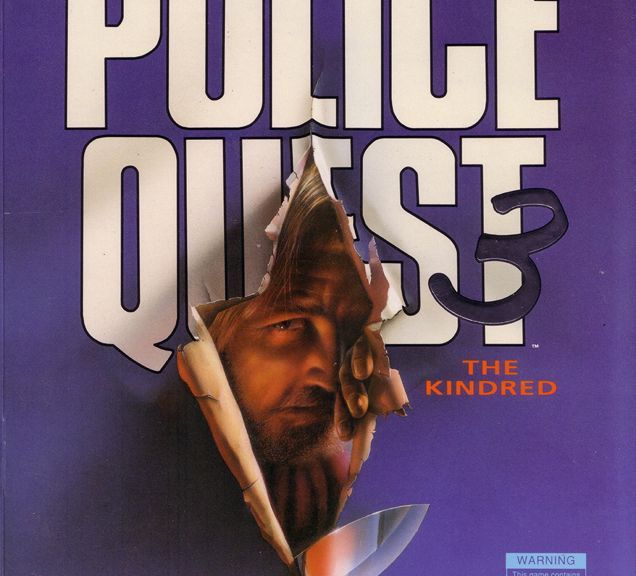
Police Quest 3: The Kindred

Publisher: Sierra
Developer: Sierra
Year: 1991
Platform: DOS, Amiga

Review: Another game, another promotion, another hair-dye, another bad day for your significant other. Your wife is stabbed in a parking lot on her way home from work and has fallen into a coma. Though you are now a sergeant, Captain Hall has authorized you to work as a homicide detective in this case as there are other murder cases that may be related.

The production values are excellent once more. The graphics and sound have taken a giant leap, and the point-and-click interface does not detract from the gameplay.  Firing your weapon is as fun as ever and you’ll use it more than once. Driving is also back, though is less intuitive and less useful than in Police Quest 1. While you do chase some perps, driving becomes tedious fairly soon and damn near impossible on fast computers without a slowdown program.

The plot is developed over a six-day period, though it not as tightly wound as the previous two games. Still, Sonny meets many interesting characters, visits some beautiful (and some dreary) locations, and must once again use logical thinking and correct police procedure to track down the killer.

Though it saddens me to admit it, designer Jim Walls makes two significant mistakes here. First, you are assigned a partner that has zero personality other than “super obvious slimy bitch.” She has no sense of humor.  She obviously does not belong on the police force, especially in a department as high as homicide. From the very start, she is up to no good, and the player can figure out the hows and whys fairly quickly. What’s irritating is that Sonny can’t or won’t do anything about it until very late in the game. Meanwhile, the player has to watch the contrived charades for the duration.

case in point

Possibly even worse is that Sonny has lost all of his personality. Granted, he is in a serious position, and his wife is in the hospital, but there is nothing distinguishing about Sonny here for gamers to remember him by. Thus, it becomes hard to empathize with him.

The programmers also made a significant “We had to hurry to get this game out by Christmas” mistake. Day 6 is chocked full of some serious police work and intense situations. However, there is a bug that makes the entire day repeat if you do something trivial in the wrong order.

Thankfully, there are some new features that give the game some bonus points. There are several potential endings, which would give the game even more replay value than the forerunners if it weren’t for the subpar plot. Also, when you die (which will be quite often), Jim Walls will appear on the screen, mocking you.  He provides what little humor is left in the series.

57836-police-quest-3-the-kindred-dos-screenshot-trouble-at-the-recreation

Definitely play this game if you liked the previous two, as it nicely wraps up the Bonds saga. However, casual adventurers are probably wise to pass it up as it doesn’t really work as a stand-alone game.  I fully admit my love for this game is mostly nostalgia.

Contemporary RatingMedium. All the pointless driving is annoying, plus it’s tied in to your computer’s memory, so getting it to work today is a chore.

Cruelty Rating:  Polite. There is one walking dead situation, but it’s only for about two minutes, so as long as your only save file is at a ridiculous spot, you’ll be fine.  Considering you can die frequently, you’ll be saving plenty anyway.

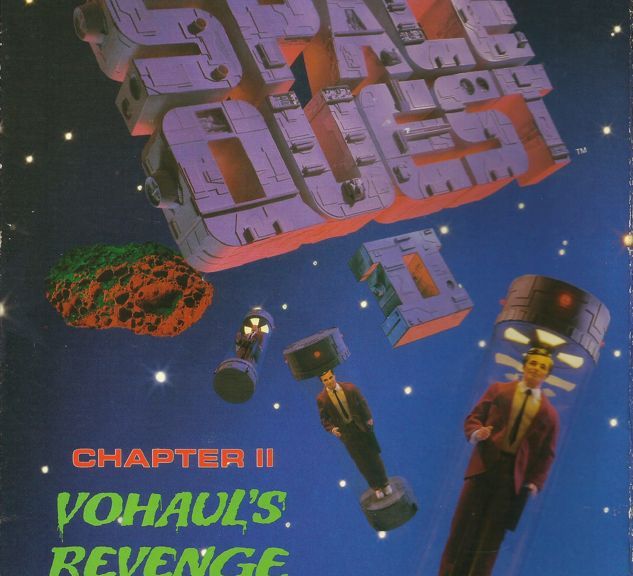
Space Quest II: Vohaul’s Revenge

Publisher: Sierra
Developer: Sierra
Year: 1987
Platform: DOS, Amiga, Atari ST, Apple II, Macintosh

Review: After reading multiple reviews of this game in particular and of the Space Quest series as a whole, I have come to the conclusion that there may possibly be only one living human besides myself that believes this is the best game of the lot. And since that other person is my brother, and since he doesn’t remember anything he did more than six weeks ago, perhaps the following review should be taken with a grain of salt.

Once again you play Roger Wilco, janitor extraordinaire. There is really no plot to speak of, with the running premise being avoiding death while accidentally saving the universe once more. And if you thought dying was annoying in the The Sarien Encounter, be prepared to find yourself in a padded room after playing Vohaul’s Revenge. Not only are there more ways to axe yourself, there are more instant-death rooms, unavoidable except by luck. To top it off, the game designers will mock you every step of the way, insulting your very being with every mistake.

Perhaps a bit more NPC interaction would have spiced the game up, as would have some good production values.  The graphics and sound have not improved since the last installment and neither has the parser. Also, a few of the puzzles have very unobvious solutions. Though, considering I won the game in a couple of days, nothing is all too difficult.

There is one way to put yourself in an unwinnable state, but it is so flippin’ hilarious when you realize what happened that restoring back thirty minutes is worth the mistake. I was actually glad I screwed up.

To sum up, Vohaul’s Revenge has very little to offer from a gamer’s perspective, despite a couple of crafty puzzles. But I found myself laughing so damn much I didn’t care. In fact, I recommend this game to anyone who has the same sense of humor as me.  Or my brother.

9674412-space-quest-ii-chapter-ii-vohauls-revenge-dos-jump-and-type-roge

Contemporary RatingLow. The parser is still weak and the game is not friendly.

Cruelty Rating:  Nasty.  You must save on every single screen because there is a way to die on every single screen.  The walking dead situation isn’t quite cruel, because you have a pretty good idea something went wrong, and you’ll likely have separate save files ready when the time comes.

Leisure Suit Larry Goes Looking For Love (In Several Wrong Places)

Publisher: Sierra
Developer: Sierra
Year: 1988
Platform: DOS, Amiga, Atari ST

Review: Released only two years after the first installmentLooking For Loveis an exceptional game, much better than the original. Also, while the game is still rated for adults, the sex has been toned down considerably, delegated to jokes and conversation rather than the act.  In fact, the easier you are to the various women you meet, the more likely you are to die! This game is appropriate for most teenagers.  This was the only game in the series my parents allowed me to play before high school and I understand why.

Poor Larry has been dumped by Eve (his primary conquest from the first game) and with no money, job, or place to live, he must wander the streets of Los Angeles once more. If Larry gets lucky he’ll also wander a cruise ship, a tropical island, and an airplane! The plot, rather than focusing on sex, involves a KGB conspiracy that Larry accidentally gets himself in the middle of without knowing it!

Using their new SCI engine, the graphics have been vamped up considerably.  The parser has also been upgraded as well, able to understand some complex sentences. Unfortunately, the sound effects and music are mostly unimaginative and flat.

What really makes or breaks this game for most people are the puzzles. While most are creative, this game probably holds the record for most ways to put yourself in an unwinnable state and not know it. What sets this apart from most games that do this is that most of the time it’s hilarious. There are at least four different points in the game where Larry dies, only then realizing that he forgot an important item near the beginning of the game. In fact, I think I encountered every single one the first time I played. The game is already quite long as is, and the playing time was quadrupled for me due to these gaffes. I’d like to think I was able to forgive these torture puzzles as they are humorous, but more likely the reason is I played the game when I was ten and had no other games to boot up. I had an e-mail exchange once with the game’s creator, Al Lowe, and asked him about the design.  He pretty much admitted designing a game in this manner is unforgivable and was glad I liked it anyway.

If you can put up with the puzzles, you should have a good time.  The humor is ubiquitous and quite refined. Along with the gags are more subtle jokes, pleasing fans of both with some laugh-out-loud moments. And the end game is a satisfying conclusion to a satisfying adventure.

Contemporary RatingMedium. The parser is actually pretty good, and the jokes hold up well.

Cruelty Rating:  Cruel.  The cruelest game ever!