Tag Archives: Top 50 PC Adventure Games

Leisure Suit Larry 7: Love For Sail!

Publisher: Sierra
Developer: Sierra
Year: 1996
Platform: DOS; Windows; Macintosh

Review: Al Lowe redeemed himself with his final installment in the series, taking everything good about previous two games in the series (see: not much), and extrapolated it into a massive game that manages to score in several areas.

The premise behind the game is familiar. Larry is left by the girl he wooed in the previous game (count that five times out of six) but manages to get tickets to a cruise, where there are quite a few luscious babes to be had. Of course, Larry can get every girl he desires just like any normal person would do–bring them an obscure item. All of this practice will allow him to bring the super item to the ship’s captain who will ensure Larry has the ride of his life.

Victorian Principles

I jest a bit.  There are quite a few puzzles in this game and they are not all of the lock-and-key variety. Some are fun and logical, some are fun and stupid, and some are just stupid. But since the last couple of games did not list “brain” under the requirements section, all puzzles are welcome.

The cartoon graphics actually work well, in that they don’t completely clash with the game environment. Gameplay is fairly intuitive and there were few times I felt myself annoyed at the production values.

On a positive note, there are a few features that were unique to the adventure game world. Before starting the game, the player can read lines for a character that will show up during play, save them in the directory, and hear your horrible acting in one scene. Also, as you score with each girl, your desktop wallpaper changes to the image of your latest conquest. Not groundbreaking, just unique.

One of the best features is the reintroduction of the keyboard into a Sierra game. Several puzzles require you type in the verb you want to use after you point-and-click the screen to death. Some of them are a little unfair, but it’s refreshing all the same.

Most importantly, I found Love For Sail genuinely funny.  “Where’s Dildo!” is a giant help, as you search the ship for 32 red and white dildos. The easter eggs are some of the best in PC history, and they are numerous. The narrator is hilarious. And the game goes a long way for stupid, elaborate puns. Despite the plot and a few nagging faults, I thoroughly enjoy playing this adventure every time.

Contemporary RatingHigh. Only a couple of pixel-hunting issues, and this is the type of game one feels okay going to a walkthrough if necessary.

Cruelty RatingNasty.  Oh, Al.  There is one way to make the game unwinnable. Most people will probably figure they screwed up, though it’s unclear how badly at the time, as you can still complete most of the game if you ignore the gaffe.
Black Dahlia

Publisher: Interplay
Developer: Take-Two Interactive
Year: 1998
Platform: Windows

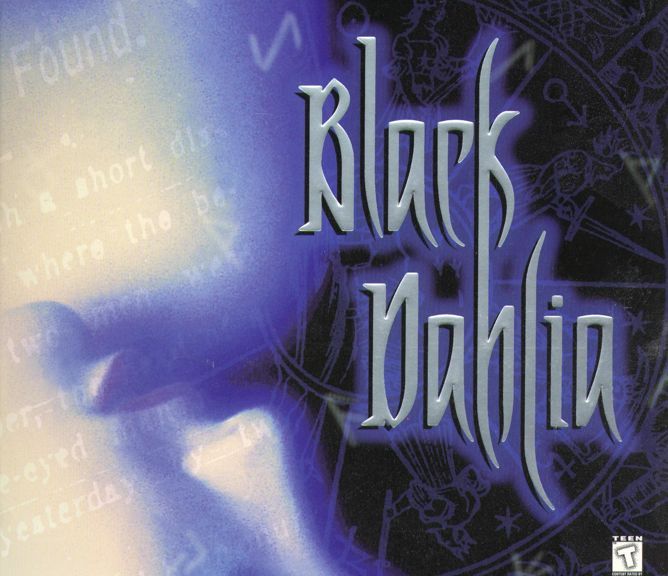
Review: In the mid 1930’s, the Torso Murderer ravaged Cleveland, Ohio by slicing up seven people and leaving Eliot Ness a puzzling case that even he could not solve. In 1947, Elizabeth Short (nicknamed the Black Dahlia), an aspiring Hollywood actress, was brutally murdered in much the same fashion of those in Cleveland a decade earlier. That case wasn’t solved either.

Take 2 Interactive takes their shot at solving the case, creating a mystical black gem (sought by the Nazis, naturally), known by the name of Black Dahlia. The gem gives its owner power to rule the world, quite typical for Nazi relics. The crusade for this gem by various groups is masked by all of the aforementioned murders, and one agent of the CIS is bound and determined to solve the case and stop the world takeover. You play Jim Pearson, a fictional agent of the non-fictional CIS (later the OSS, and still later the CIA). You must interview agents, criminals, and face the murderer himself in order to solve the case, while dealing with interference from the local police, Eliot Ness and the FBI, as well as, of course, Nazis.

Take 2 does so many things right with this adventure that it’s hard to know where to begin. One of the last games (until the rise of indie adventure games in the 2010s) to use extensive FMV sequences, it avoids the pitfalls present in most games of this nature. For starters, the game plays in first-person perspective. You never see Jim unless you’re watching a movie, so the continuity of his clothing and emotional state never come into play. And while some of the script is hokey, there are no noticeably horrible acting performances. The worst performance, surprisingly, is given by Dennis Hopper as an ex-CIS agent who’s been committed to a psych ward. Complementing the movies is the soundtrack, which is nearly flawless. Tense moments are subtly treated as such, without cheapening the mood with overblown scare tactics.

The plot, which is perhaps the most ambitious and well-crafted in adventure game history, spans many locations, including Cleveland, Germany, and Los Angeles, and about ten years of history as Jim Pearson attempts to track down the Black Dahlia and the killer. The story borrows plenty of historical facts to increase the feeling of realism.  As it is fairly easy to determine what is fact, fiction, and pure mysticism, the player never feels insulted by the storyteller. The game never pretends that it knows the truth behind the killings; it simply takes a fascinating historical account and creates an even more fascinating story around it, much like James Cameron did with Titanic.

What either makes or breaks the game for most players are the puzzles. They are hard. While there are a few inventory puzzles, most are symbolical or mathematical and require extensive note-taking. If you’ve ever done Mensa puzzles, think of the hardest of those. I would encourage all players to have a walkthrough handy, as unless you are a literal genius, you will break your keyboard from pounding your head against it. The designers cannot be faulted for the puzzles themselves, as none of them are contrived and all fit seamlessly with the plot. However, there are far too many of them, especially midway through the game, and at times it feels more like a homework assignment than a game. To be fair, some of them I found to be fascinating and I solved approximately a third of the puzzles without any help to much personal satisfaction.

If you like FMV games and don’t mind using a walkthrough to get through the tough parts, there is little doubt that you will be as enthralled with this adventure as I am and will no doubt follow up your experience by hitting Wikipedia for a history lesson.

Contemporary RatingMedium. It takes a little bit to get used to movement.  Also, swapping eight discs during gameplay is a pain, though there’s not much back-and-forth.

Cruelty RatingPolite.  Death (or a premature game over) is a rare outcome but can happen.  The occasional save is needed.

Star Trek: 25th Anniversary

Publisher: Interplay
Developer: Interplay
Year: 1992
Platform: DOS; Macintosh; Amiga

Review: One of the few true adventure games that Interplay had produced, they struck gold with this license. With characters lifted perfectly from the TV show, the game is a pleasure to watch (let alone play) if you even moderately enjoyed Star Trek.

Interplay did an adequate job of incorporating the four icon system into gameplay. At times you must combine items in your inventory and manipulate them, and the designers came up with some inventive uses for the phaser! The graphics are excellent, and the sound is even better than on the original show. Imagine what 25 years can do for production values.

Deftly incorporating all facets from the show, Kirk and his crew must solve each of seven missions efficiently and in accordance with the prime directive. In other words, don’t mess with the natives! After each mission, an admiral from Starfleet will give you a rating representing how well you accomplished your goals. The higher the rating, the more powerful upgrades you receive for your weapons, shields, and flight control. These resources are key if you want to stand a fighting chance during the battles. Several times you will be confronted by either the Romulans, Klingons, or Elasi pirates, and unless you become a master of the controls, you’ll need all the help you can get!

Part of your rating relies on your demeanor towards native populations and to adversaries. During conversation, you are presented with several choices of how to respond. You can pick the funny, brash, or sarcastic comment, but these will get Kirk in trouble most of the time. Not only do you have to be a good adventurer and fighter, you have to be a good diplomat as well.

A few of the missions are a breeze, but watching the characters interact is such a joy that I am glad the game wasn’t extremely difficult. However, there is one excruciating mathematical puzzle which I could never solve. Several years after pounding my tricorder against a wall, aided by an internet walkthrough, I acquired the answer. I think I could have sat there for decades and never solved it.

Perfect characterizations (aided by the voices of the real-life actors on the CD-ROM version), combined with a fluent story, moderate challenge, and excellent graphics and sound, Star Trek: 25th Anniversary should be played by every adventure game aficionado, regardless of your personal affections (or lack there of) for the source material.

Contemporary RatingMedium. While most of the game is intuitive, the battle system is pretty clunky.  There’s also no way to skip it, which can be a beast for the game’s final battle.  If you haven’t done well on the missions and received the best upgrades, you might as well restart because there’s no way you’re seeing the ending.

Cruelty RatingPolite.  Many ways to die, but no ways to get stuck.  My kind of game.

Back to the Future: The Game

Publisher:  Telltale
Developer: Telltale
Year: 2010
Platform: Windows; Macintosh; Playstation 3

Review: When I discovered this game was a thing, I immediately bought it for the wife and I to play. Like with most Telltale games it was released in agonizingly slow chapters. Each time a new one came, we’d knock it out in a day or two and then wait a couple of months. But as evidenced by my score, it was definitely worth it.

I was a bit hesitant as every single game that has ever been released with this license has made as much sense as a screen door on a battleship (e.g.  killer bees!). But Telltale has yet to screw up a license, or any game for that matter. For starters, Bob Gale was consulted on several story elements. And not only did they get Christopher Lloyd (who was also great in Toonstruck) and Claudia Wells(!) to reprise their roles as Doc Brown and Jennifer, they held a worldwide contest to see who would play Marty. Enter A.J. Locascio, who sounds so much like Marty McFly that if one didn’t know any better, you’d swear it was Michael J. Fox.

Of course, the game has to be more than its voice talent. While some of the chapters are better than others, the overall story is entertaining. It has countless paradoxes and is unendingly silly, but no more so than the second movie. It doesn’t have the dramatic impact of the first or third movies, but it’s funny enough to make up for it. One chapter in particular had us laughing out loud time after time, as the script writers were not afraid to go blue on several jokes.

As for the puzzles, they’re generally straightforward and easy. Only a couple of mindbenders are in the game, and there are unfortunately a few annoying lock & key puzzles that are not obvious.  But one should never get stuck long.

The ending leaves things open for a sequel, though one certainly isn’t necessary. If they do, there is no doubt in my mind the wife and I will drop what we’re doing and play it.

Contemporary RatingHigh.

Cruelty Rating:  Merciful.  There is no way to die, which does take some of the drama out of a few puzzles.

25: Eric the Unready

Publisher: Legend
Developer: Legend
Year: 1993
Platform: DOS

Review: Rated by many the best adventure game of 1993 and it’s pretty obvious to see why. You are the infamous Eric the Unready. You have been assigned to save the princess from her evil stepmother. Unbeknownst to you, you were assigned because you are the most ill-equipped knight in the land.

As with the early Legend games that used a text parser, you can play the game with or without graphics.  The graphics are gorgeous for the time, and being a comedy they do well to serve the humor.  The music is pleasant if too repetitive.

It’s more of a parody than a game. To the skilled adventurer, this should take less than a couple of weeks to win. The puzzles are not all that well-developed, and can even be annoying at times. But it is without a doubt the funniest game I have ever played. Bob Bates spoofs everything from Star Trek to Saturday Night Live to Zork and has a grand ole time with medieval culture. There is something here for everyone.  I haven’t played the game since 2000, however, so it’s possible the jokes have become dated.

Contemporary RatingMedium. Some of the puzzles seemed there just for busy-work.

Cruelty Rating: Tough. Like many text games, you can get rid of objects that you need later, but you never really need to.

Leisure Suit Larry 3: Passionate Patti in Pursuit of the Pulsating Pectorals

Publisher: Sierra
Developer: Sierra
Year: 1989
Platform: DOS; Amiga; Atari ST

Review: How do you take the success of the Looking For Love and turn it into something better?

1)Crank up the laughs. Al Lowe is at his absolute funniest here.
2)Include lots of sex, but use it simply for the comedy material it presents.
3)Change the perspective. Halfway through the game, you get to play as Patti!

Patti

Larry has lost his wife to a lesbian affair and thus his job when nepotism is no longer an option for him. So, Larry is without money, a job, or a place to live (something all too familiar to him), and must regain his sense of purpose in life.

Everything is improved, including the graphics, music, and parser. The puzzles are also more fair, without being ridiculously easy, providing a good pace to the game. And as mentioned already, the game is relentlessly funny.

Contemporary RatingLow. There is one puzzle that is tied into your computer’s memory.  On faster computers, the time needed to beat the puzzle approaches infinity.  Playing the game in DOSBox can help, but it still is touchy.  There is also a puzzle that is copyright protection.

Cruelty Rating: Tough.  Unlike the previous game, you can only go walking dead if you do something obviously dumb.

Toonstruck

Publisher: Virgin Interactive
Developer: Burst
Year: 1996
Platform: DOS

Review: Just a few years after Who Framed Roger Rabbit garnered huge acclaim for its masterful joining of human actors with the cartoon world, Virgin Interactive began its own similar project of magnificent proportions, only this time for the computer. Toonstruck was three years in the making, costing Virgin over eight million dollars, most of it on some ridiculously good animation and top voice talents. Despite this effort the game was a commercial flop. But was it a lackluster game or did it simply have unrealistic expectations?

Christopher Lloyd, one of the stars of the aforementioned movie, is the live actor in this game and plays Drew Blanc. A cartoonist, he is given an order by his boss (Ben Stein, in a brief cameo) to create a new cartoon for the struggling network, but with one condition: it must contain bunnies. Bunnies are what made Drew Blanc famous, but he loathes them now. Pulling an all-nighter, he tries in vain to scrape an idea together but ultimately fails. Just as he’s about to give up and pack his bags, he gets transported to Cutopia, one of his cartoon worlds. Shortly thereafter, he runs into Flux Wildly (voiced by Dan Castellaneta), who agrees to tag along with him until he can get back to his own world. Unfortunately, only King Hugh (David Ogden Stiers) can send him back, and he needs Drew’s help first. King Nefarious (Tim Curry) has begun creating devastation in Cutopia and Drew must help return it back to its original cuteness. Thankfully, the plot doesn’t end there, as it develops along the way.

Gameplay is standard adventure fare, with oodles of lock-and-key inventory puzzles. Some of them are difficult in that you must understand the twisted logic of Cutopia and Flux’s homeland Zanydu. However, there are several puzzles that require some creative problem solving. Some even require using Flux as an object. While there may be a few too many puzzles, and they generally must be followed in strict order, they are usually fun to solve. Also, the game will often give you appropriate responses to solutions that seem logical but don’t work.

What makes or breaks this game for most people is how well you enjoy the humor and the characters. I found the cynical, over the top Flux Wildly to be charming and enjoyable; however, if you find him irritating, the game will be a chore for most of the ride. Lloyd is at his best, doing a very believable job in front of the blue screen. Most of the characters are performed by professional voice actors and they give fine performances. The humor draws from everything with puns, stereotypes, groaners, wit, and sexual innuendo. The effeminate scarecrow–no wait, carecrow–is a riot, and the S&M cows are both shocking and amusing. Despite the game’s appearance, it is definitely not for children.  Not only will they misunderstand most of the jokes, you probably wouldn’t want them repeating them either.

Many have said this game simply tries too hard to be all things to all things. I would agree with that assessment. Yet, there are so many wonderful things packed into this game that the sum of its parts are still pretty high even if it doesn’t result in a satisfying whole. Virgin’s eyes were too large for their stomachs, as after Lloyd, the rest of the cast could have been replaced with cheaper talent. The animation didn’t have to be quite so perfect, either. But the profit margin shouldn’t be the measuring stick Toonstruck has to measure up to. Anyone who enjoys animation should give this one a shot. As long as you don’t expect perfection, it is doubtful you will be disappointed.

Contemporary RatingHigh. The strict order of some puzzles can be annoying, but if you like the game, playing with a walkthrough is still enjoyable.

Cruelty Rating:  Merciful.  No real danger in Cutopia!

Blade Runner

Publisher: Virgin Interactive
Developer: Westwood Studios
Year: 1997
Platform: Windows

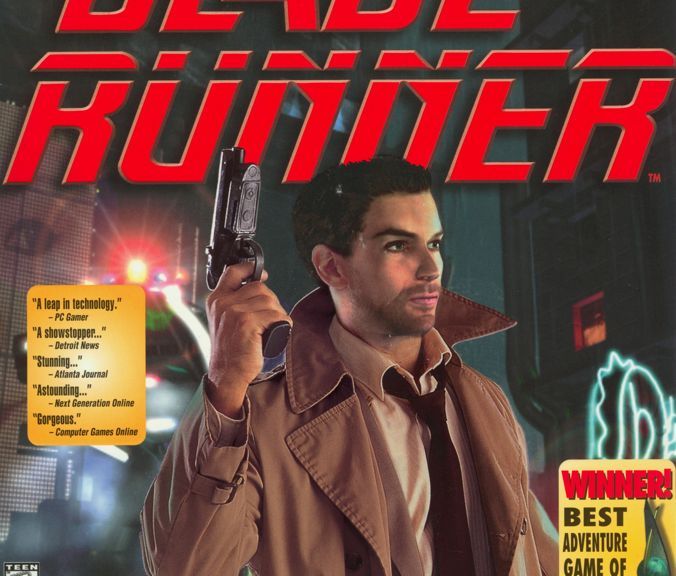
Based on the cult-classic movie of the same name–starring Harrison Ford–this cyberpunk adventure is one licensed title that doesn’t disappoint.  I unabashedly feel this is better than the source material. Being as that the movie is currently ranked #123 at IMDb, I am sure to be in the minority.  Good news is if you liked the movie it is doubtful you’d be disappointed by the game.

In the future, where buildings rise above the city, crime is rampant, and man has colonized the moon, a mega corporation has developed replicants, super-humans with a predetermined lifespan. Naturally, some of the more advanced replicants have begun to become self-aware and are pissed that they have been essentially subjected to slavery for moon colonists. And some of them have come back to Earth in order to meet their maker with the intention of reversing their fate. Blade runners have been employed by the city to terminate all replicants before the bloodshed spreads. However, it’s not so simple, as determining who is and who isn’t a replicant is not a foolproof process and there is considerable sympathy for the replicants. It’s even possible some of the blade runners are replicants and don’t know it!

This premise is the same for the movie and the game. The designers of the game were smart in creating a new storyline, sharing only a few characters from the movie made fifteen years earlier (of which Sean Young and William Sanderson reprise their roles!). Not only does this keep the game from becoming stale, I felt the movie’s story was plodding with poor dialogue. To be fair, the plot of the game is no Oscar-winner, but I actually did enjoy the script significantly more, feeling the characters on my desktop were more sympathetic than the wooden personae on the silver screen.  They did, however, keep the Voight-Kampff testing, and you can whip that out whenever you feel it’s appropriate.

I keep discussing this game as if it’s a movie, which is only because that’s what it feels like. There are very few puzzles and it is incredibly difficult to become stuck. Atmosphere and exploration rule the game, with gorgeous sights and beautiful sounds lifted straight from the movie. There is certainly detective work to be done, but a significant portion is optional, shedding a light on the finer points of your case. What gives Blade Runner the feel of a game (and not just an interactive movie) is that there are multiple paths, stories, and endings dependent on several factors.  Every time you start a new game, character motivations change, which in turn changes some puzzles, dialogues, and eventually plot branches. In addition, whether or not you decide to terminate or sympathize with the replicants will also change the story.  If you like this sort of thing, you’re in for a treat. Personally, I did not have a desire to replay the game multiple times, but I did reach a few endings on my own before downloading some save files to see the others. Blade Runner has incredible production values and it is worth trying to find everything there is to see.

Oh, and you can use your gun. Good times.

Contemporary RatingMedium. Some modern timing issues in action-scenes.

Cruelty Rating:  Polite.  You can die, so saving is necessary.  If you “screw up” the worst that happens if you take an alternate path through the game.

Grim Fandango

Publisher: LucasArts
Developer: LucasArts
Year: 1998
Platform: Windows

Review: How does one review a game that is universally loved by everyone? And I mean everyone. I can’t find one negative review of Grim Fandango anywhere. Oh sure, there are criticisms out there, but this may be the only game that has nothing but choirs to preach to. So I guess the only thing to do is to keep this short.  And once again sing the praises of Tim Schafer.

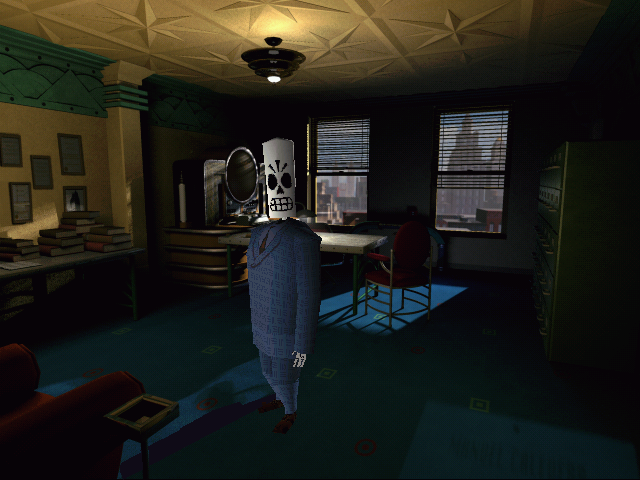
The last pure adventure game by LucasArts, Grim Fandango tells an epic tale of Manny Calavera, a travel agent in the Land of the Dead. Your job is to give clients their best means of reaching the underworld where their souls can move on. Problem is that your coworker seemingly is getting all the good clients now, while you’re getting all the bad ones. And if you can’t get some saints to give express tickets to, you can’t work off your time (for whatever unspeakable moral crimes Manny committed in his first life) and leave this place. The plot (unraveling over four years and many hours of gameplay) turns sinister as Manny reveals the mystery behind his problems at work.

The graphics are fabulous considering the designers were able to convincingly give pathos to skeletons (albeit well groomed skeletons). The atmosphere is film noir with heavy touches of Mexican mythology and Art Deco. The play control is all keyboard (or joystick), which while allowing for less artificiality to the atmosphere, is rather clunky and annoying at times (as you’ll discover after accidentally whipping out your scythe for the fiftieth time when you don’t want to use it). The puzzles are mostly fair and some are devilishly complex.

16812067-grim-fandango-windows-starting-location-our-hero-manny-calavera-

But what I believe truly makes this game for the fans is the incredible voice acting. Yes, the dialogue is good, but I’m not sure this game reaches the pantheon of adventuredom without the characterization and emotion that can only be provided with tone and inflection. Nearly every hero, villain  and bystander is marvelously portrayed without devolving into caricature or stereotype. If you’re not reeled in by the introduction, then you will be after speaking with your co-worker and your boss’s secretary.

While I became antsy at times while playing due to the controls and a few inane puzzles, I was never bored. I even forgave the multiple bugs and occasional game crash, which speaks volumes as my patience for such sloppiness is on a very short leash. It’s not one of my favorite games, but there’s not a gamer out there I would have reservations recommending Grim Fandango to, adventure fans or otherwise.

Contemporary RatingMedium. The controls suuuuuck.  Also, very buggy.  But everything else holds up today.

Cruelty Rating:  Merciful.  No way to die, though you still need to save regularly in case the game crashes.  And maybe save twice in case a save file gets corrupted.

Police Quest 3: The Kindred

Publisher: Sierra
Developer: Sierra
Year: 1991
Platform: DOS, Amiga

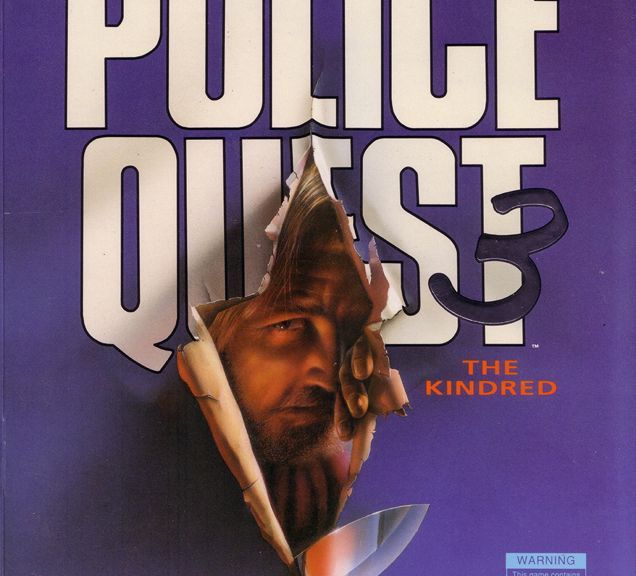
Review: Another game, another promotion, another hair-dye, another bad day for your significant other. Your wife is stabbed in a parking lot on her way home from work and has fallen into a coma. Though you are now a sergeant, Captain Hall has authorized you to work as a homicide detective in this case as there are other murder cases that may be related.

The production values are excellent once more. The graphics and sound have taken a giant leap, and the point-and-click interface does not detract from the gameplay.  Firing your weapon is as fun as ever and you’ll use it more than once. Driving is also back, though is less intuitive and less useful than in Police Quest 1. While you do chase some perps, driving becomes tedious fairly soon and damn near impossible on fast computers without a slowdown program.

The plot is developed over a six-day period, though it not as tightly wound as the previous two games. Still, Sonny meets many interesting characters, visits some beautiful (and some dreary) locations, and must once again use logical thinking and correct police procedure to track down the killer.

Though it saddens me to admit it, designer Jim Walls makes two significant mistakes here. First, you are assigned a partner that has zero personality other than “super obvious slimy bitch.” She has no sense of humor.  She obviously does not belong on the police force, especially in a department as high as homicide. From the very start, she is up to no good, and the player can figure out the hows and whys fairly quickly. What’s irritating is that Sonny can’t or won’t do anything about it until very late in the game. Meanwhile, the player has to watch the contrived charades for the duration.

case in point

Possibly even worse is that Sonny has lost all of his personality. Granted, he is in a serious position, and his wife is in the hospital, but there is nothing distinguishing about Sonny here for gamers to remember him by. Thus, it becomes hard to empathize with him.

The programmers also made a significant “We had to hurry to get this game out by Christmas” mistake. Day 6 is chocked full of some serious police work and intense situations. However, there is a bug that makes the entire day repeat if you do something trivial in the wrong order.

Thankfully, there are some new features that give the game some bonus points. There are several potential endings, which would give the game even more replay value than the forerunners if it weren’t for the subpar plot. Also, when you die (which will be quite often), Jim Walls will appear on the screen, mocking you.  He provides what little humor is left in the series.

57836-police-quest-3-the-kindred-dos-screenshot-trouble-at-the-recreation

Definitely play this game if you liked the previous two, as it nicely wraps up the Bonds saga. However, casual adventurers are probably wise to pass it up as it doesn’t really work as a stand-alone game.  I fully admit my love for this game is mostly nostalgia.

Contemporary RatingMedium. All the pointless driving is annoying, plus it’s tied in to your computer’s memory, so getting it to work today is a chore.

Cruelty Rating:  Polite. There is one walking dead situation, but it’s only for about two minutes, so as long as your only save file is at a ridiculous spot, you’ll be fine.  Considering you can die frequently, you’ll be saving plenty anyway.