Considered one of the most difficult games in the Infocom catalogue, Spellbreaker deploys an excellent plot that neatly and satisfyingly wraps up the Enchanter trilogy. Yet, as seems to be in the case in all of his games, Dave Lebling’s puzzle structure maddeningly gets in the way of most of the fun.
Steve Meretzky took over the reins from Marc Blank and Dave Lebling in his second adventure after the wildly popular Planetfall. His style is quite evident here. While telling perhaps a weaker story with a significantly less serious atmosphere than Enchanter, Sorcerer far exceeds it as a sequel thanks to a more user-friendly design and some truly excellent puzzles.
The first game of the second trilogy in the Zork universe, Enchanter tells a much more interesting tale with significantly more rewarding puzzles than it’s predecessors. Sadly, some poor design choices and inconsistency make it not terribly fun to play today.
Publisher: Infocom Developer: Infocom Year: 1983 Platform: DOS, Apple II, Mac, Amiga, Atari ST, Amstrad, Commodore 64, TRS-80
Rating: 4
Playing a tomb raider is a perfect setting for a text adventure, and there’s so many things about this game that Infocom got right. Unfortunately, I just didn’t have a lot of fun while playing.
An ambitious final entry into the original Zork trilogy that is a pleasure to read but a veritable nightmare to play, Zork III’s value now is mostly for posterity.
The second installment in this landmark text series is a definite improvement over the original, though still has some maddening features that would never be tolerated today.
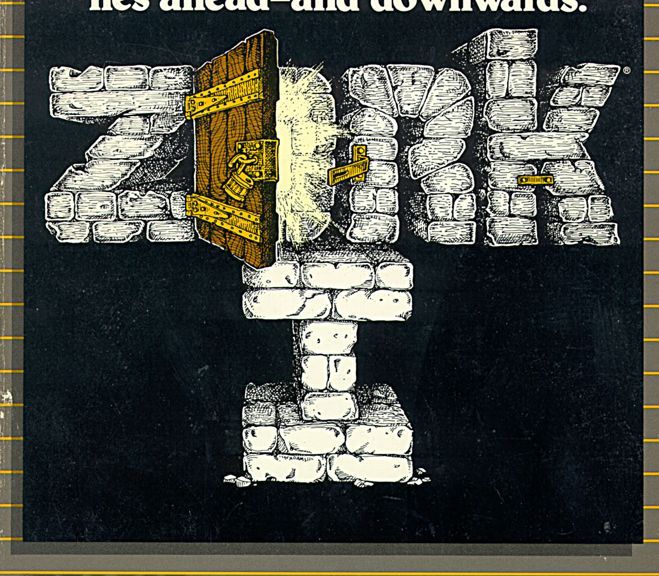
Yes, Zork was the most important computer game of the early 1980’s. Perhaps even more important than King’s Quest. You are standing in an open field, west of a white house, is quite possibly the most well-known line in adventure games. It laid the foundation for many wonderful things to come. And it was an incredibly impressive, engaging adventure when it was released. But other than nostalgia, it has little going for it after all these years.
Touted as an adventure game for beginners by Infocom, Wishbringer certainly fits the bill. I played this text adventure when I was fourteen and required no hints for the duration. But this romp is still enjoyable for people of all ages and abilities.
Publisher: Infocom Developer: Infocom Year: 1987 Platform: Every computer ever and now smartphones
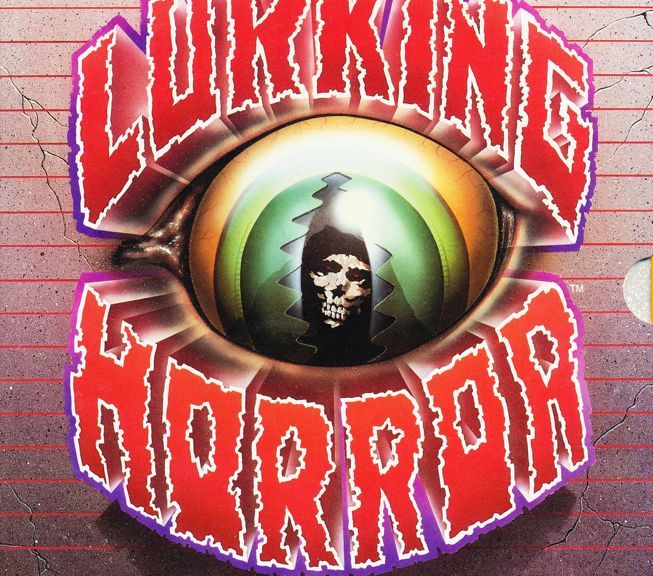
Review: One of Infocom’s most overrated titles, The Lurking Horror is essentially the company’s only foray into the horror genre. Unfortunately, it feels more like a Zorkian dungeon crawl then an atmospheric mystery (not surprising given it was written by Zork’s author). While there are some creepy parts to this college campus caper, it is mostly a disjointed puzzlefest with a smattering of Cthulhu mythos. But what really sent my annoyance through the stratosphere was a hunger daemon, illogical walking dead situations, and unrealistic inventory restrictions. Coupling that with NPCs that aren’t fleshed out and a rather abrupt and unsatisfying ending, I can’t really recommend this to those looking for a good fright.
Publisher: Infocom Developer: Infocom Year: 1987 Platform: DOS; Amiga; Apple II; Atari ST; Commodore 128; Macintosh
Score: 9
Normally, the descriptions on game boxes are horribly exaggerated and sometimes inaccurate. In this case, Infocom does a better job than I could. Here’s the plot in a nutshell.
Once upon a time, a man moved from one apartment in London to another. He dutifully notified everyone of his new address, including his bank; he went to the bank and filled out a change of address form himself. The man was very happy in his new apartment.
Then, one day, the man tried to use his credit card but couldn’t. He discovered that his bank had invalidated his credit card. Apparently, the bank had sent a new card to his old address.
For weeks, this man tried to get the bank to acknowledge his change of address form. He talked to many bank officials, and filled out new forms, and tried to get a new credit card issued, but nothing worked. The man had no credit, and the bank behaved like, well, a bank.
It’s a sad story, one that gets replayed every day for millions of people worldwide. Of course, sometimes it’s not a bank at fault: sometimes it’s the postal service, or an insurance company, or the telephone company, or an airline, or the Government. But all of us, at one time or another, feel persecuted by a bureaucracy.
You begin in your new house. As per the letter in your package, you will fly to Paris just as soon as you get some money to take you to the airport. That money should be in today’s mail, so you should be off soon… unless, of course, there’s been some problem with the mail.
Oh by the way: The man in our story about the bank was Douglas Adams, the principal author of this game. The bank did finally send him a letter, apologizing for the inconvenience – but they sent it to his old address.
What ensues is comic madness, and unless you are a very good puzzle-solver, it will lean towards madness. As your blood pressure rises while playing the game, so does the character’s! Yes, there’s a blood pressure gauge at the top of the screen that goes up for every mistake you make. Your blood pressure might rise for an understandable reason, like filling out a bank deposit slip incorrectly, but it can also happen if you make a typo in the parser. And yes, you can have a heart attack if it gets too high.
If you can somehow manage to survive the colorful but very paranoid neighbors in your new town, somehow get the money coming to you, and somehow manage to get an airplane ticket to Paris, your journey has only begun in your quest to just have a freakin’ vacation. While the plot turns a bit fantastical, it at least fits the vibe in this bureaucratic nightmare.
I did need a few hints to win this one, but even I was amazed at my persistence with some of the puzzles. My favorite was probably how to get the politically motivated macaw to give up its mail. And if that sentence confused you, then just know that’s one of the more normal situations in the game! And while most puzzle answers require some outside-the-box thinking (and some inside-the-box thinking by using the included game materials), the brazen humor kept me away from the hint book several times. While there are a couple of instances where the game seems unfair, including one walking-dead situation, it’s worth the battle just to experience the writing genius that was Douglas Adams.
For those who don’t know, Infocom games were famous for including “feelies,” sometimes for hints, sometimes for copyright protection, sometimes just for fun. Below is the best feelie they ever had. An application for a credit card, in triplicate. However, the yellow and salmon-colored sheets don’t exactly say the same things as the top page. Hilarious stuff. I miss Douglas Adams so much.





You must be logged in to post a comment.