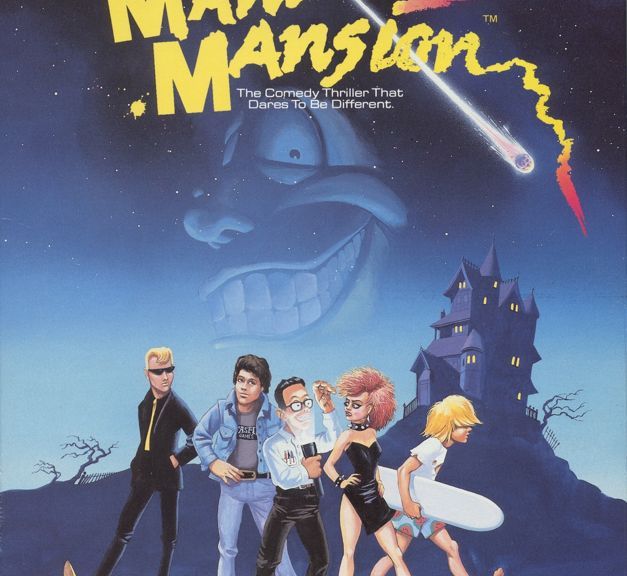
LucasArts’ first adventure game was an enormous success across several computer systems and the NES, helping to launch a successful empire in the industry. But while the creativity and ingenuity that would bolster the company is here in this offering, it more than makes up for it with questionable design choices and misguided puzzles.
Publisher: Sierra Developer: Evryware Year: 1988 Platform: DOS; Amiga; Apple II
The most original idea Sierra picked up, Manhunter unfortunately fails to capitalize on its uniqueness.
Aliens landed in New York, circa 2002. It took them less than three days to destroy the city, and less than a year to end the human resistance. Or so they thought. You have been assigned by the alien “orbs” to be a man hunter. Since some of the aliens’ technology is not as compatible with human beings as they thought it would be, you (along with many others) need to help them. You have no choice. You must investigate humans who are not obedient and report them to the aliens.
Publisher: Sierra Developer: Sierra Year: 1993 Platform: DOS; Mac; Windows 3.x
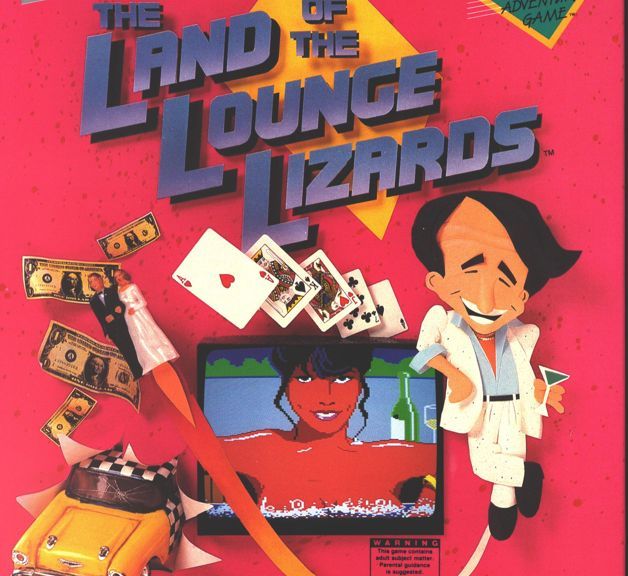
One can divide the six Larry games into two distinct eras. The first three were all released in the 1980’s and used a typing interface. The final three were all released in the point’n’click era with better graphics and sound available. The first games in each era had pretty shoddy game design and reeked of amateurish handling. Each game improved upon itself, with the final game being a masterpiece, representative of the era it was released in. The main difference is that while the first cycle advanced quickly with LSL2, the improvement was much more gradual with LSL6.
Like its more successful stepchild, Love For Sail, LSL6 is the first game in the series (except arguably the first) to ditch the complications of working with a plot and focuses entirely on the babes. Passionate Patti has left you for good. You win a trip to a resort, La Costa Lotta (puns abound in this game). There are many babes to be wooed (e.g. Char Donay, among other fine…um…spirits). And in sweet simplistic fashion, you must bring each of them the item, or items, necessary for them to feel obligated to return certain favors to you. While a lot of horrible games of an adult nature have the same premise, Larry is the perfect setting for these antics, as the nature of the beast is parody rather than titillation.
It’s hard to review this game and not compare it to the one before and the one after. Its predecessor was the worst commercial adventure of all-time, and its follower is great and considered by some to be the best commercial adventure of all-time. This one seems to fall exactly between the two extremes. The graphics have improved a little, but are still tacky and gaudy (and while the narrator points this out several times, it still hurts the eyes). The sound and music is slightly better, but usually painful to listen to. The puzzles are a little more clever, and usually fair, but do not impress. And the game engine is easier to use, but still contains many bugs that cause the game to crash.
But despite the sea of mediocrity, I enjoyed this adventure mainly due to the talkie version, which employs narrator Neal Ross to comment on Larry’s bumbles and successes. The fourth wall doesn’t even pretend to exist here, the narrator belittling Larry constantly, with Larry commenting back with regularity. I found this banter to be mostly amusing, and I even laughed out loud a few times. And despite using two different actors, this style was copied and perfected for the next and final game in the series. As for the rest of the voice acting, it is capable if not memorable.
Easy, quick, and relatively painless, Shape Up Or Slip Out! cannot be considered a black mark on the Larry series, but is not strong enough to warrant recommendation to casual fans. Those who do play should definitely find the talkie version, as it turns an otherwise lame adventure into a charming gambol.
Publisher: Legacy Interactive Developer: Legacy Interactive Year: 2004 Platform: Windows
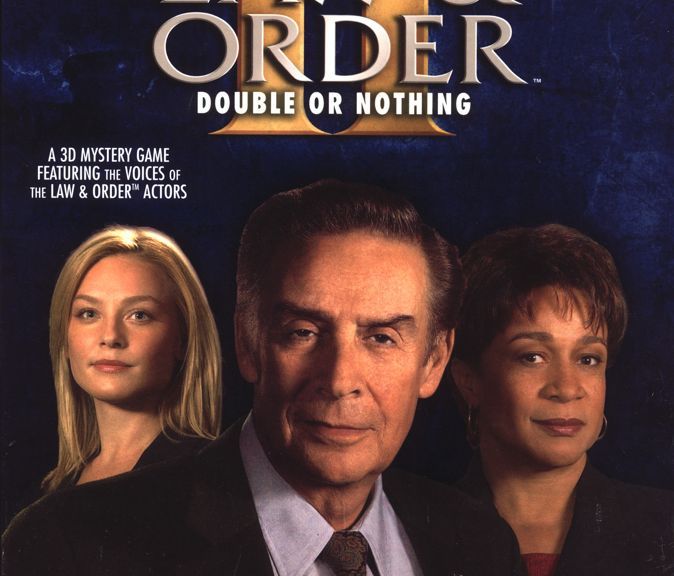
The final installment by Legacy using the original Law & Order series, they finally cleaned up all of the annoying little design problems present throughout the first two games in the series. Sadly, they failed to clean up all of the glaringly large design problems I outlined in my reviews of Dead On The Money and Double Or Nothing. In fact, they managed to get worse.
Only two things were essentially changed in the second episode. One, there is blissfully no longer a time limit, giving you ample time to search the environment without the nagging (and unrealistically fast) clock. And, of course, the plot has changed. We’re still dealing with a murder, but this time it’s over a scientist and his breakthrough research and various interest groups involved with him.
The story line is slightly more engaging than that in the prequel, but the remaining flaws are still present. There are still lock-and-key puzzles that shouldn’t exist in a cop’s world. And, if it’s possible, this adventure is even easier, giving the beginner only a few obstacles over what amounts to a couple of days of play.
If you like the show or the first game, you’ll likely enjoy Double Or Nothing as well. But don’t look for any breakthroughs. At least the money on the actors wasn’t wasted.
In the criminal justice system, the people are represented by two, yet equally important, groups: the police who investigate crime, and the district attorneys who prosecute the offenders. These are their stories.
This premise for a one-hour television show has produced countless episodes, many Emmy awards, and two spin-offs. It was only a matter of time before it was transported to the PC. The flow of each episode is fairly linear (i.e. almost never is there a subplot) and is divided into concise chunks of time with few locations, thus making a port fairly simple, as opposed to, say, L.A. Law.
Sierra spent a little more time creating the third installment in the Daventry series and it shows. The increase in difficulty is quite welcome as well as a larger map and complex characters. To top it off, there is a plot. A plot that develops.
Publisher: Sierra Developer: Sierra Year: 1984 Platform: DOS; Macintosh; Apple II; Amiga; Sega Master System
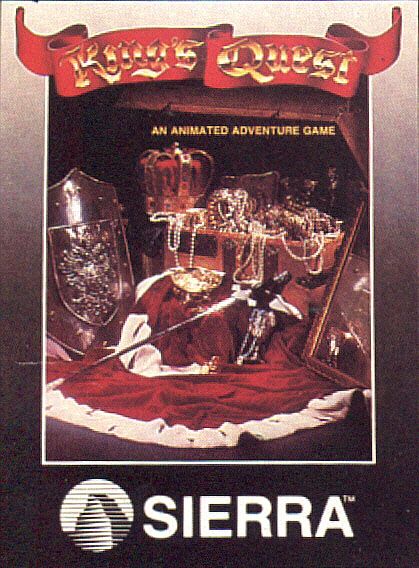
Sierra’s first colored adventure game in its most successful series ever, King’s Quest was a fascinating game when it came out. Unfortunately, it doesn’t hold up too much over time.







 Death By Troggles
You must be logged in to post a comment.