All posts by Beau

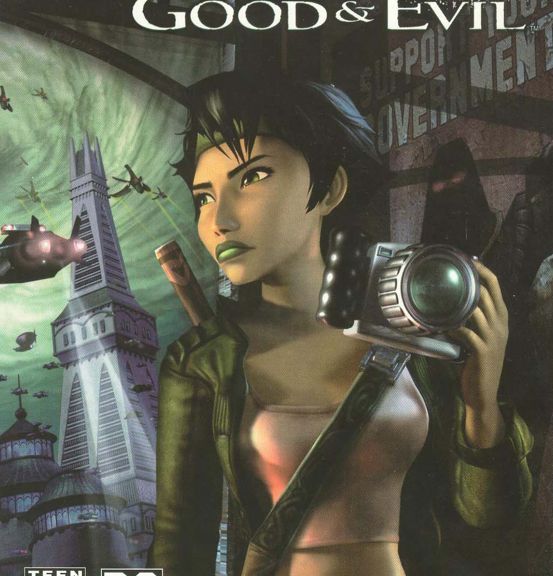
Beyond Good & Evil

Publisher: Ubisoft
Developer: Ubisoft
Year: 2003
Platform: Windows; Xbox, Xbox 360, GameCube, Playstation 2, Playstation 3

ReviewOne of the most engaging, charming games I have ever played, Beyond Good & Evil certainly earns a spot in my hall of fame. 

The labour of love from Michael Ancel, he takes you to a world where citizens are in a war with aliens and must rely on the powerful military to help defend them from brutal attacks. As a young woman named Jade, you are compelled to help in the war effort when your orphanage is attacked by the aliens. Naturally, however, you go it alone with the help of your “uncle” Pey’j (a pig mechanic, no less). While the plot itself is fairly straightforward (with only some minor twists), the story never slows down. And the characters, backed by some excellent voice acting, carry you the whole way through. It is tough not to care about the people you meet here, which goes a long way in providing an entertaining game.

While there are some adventure elements, this is more or less a strategic action game, accessible to adventure gamers. Enemies are rarely shot at and are mostly avoided by stealth, timing, and distraction. You’ll be doing a lot of crawling, side-stepping, and wall-hugging to avoid detection (and since you are often far outnumbered, it is essential to survival).  What makes this game unique is that most currency (to buy upgrades, health restoration, etc.) is acquired by taking photographs of different species (benign and otherwise) on the planet for archival.  You sometimes have to photograph your enemies before you attack them! 

For those who are comfortable with action games but don’t consider themselves to be experts, there is a reasonable learning curve. Moreover, if you die while on a mission, you will be restored to a predetermined checkpoint (often only one or two minutes back), so even if you are unable to save the game for a while, you don’t lose all of your hard work. My only complaint, and a fairly significant one, is that the PC version does not support game controllers, which is idiotic and unfortunate for those who are not keyboard inclined. I was able to become fairly adept at the controls, but it would have been significantly more comfortable to play with a gamepad.

The game is short, about ten to twelve hours for the average gamer to complete. And while there are secrets to be found, the only significant replay value comes in simply wanting to see the story again. A sequel is in the works (and has been for a decade), though sadly, not for the PC. For those who like the focus of their actions games to be more on story (without endless cut scenes), Beyond Good & Evil will not disappoint.

Contemporary RatingHigh.

Cruelty RatingMerciful. Only reason to save is if you’re a completionist.

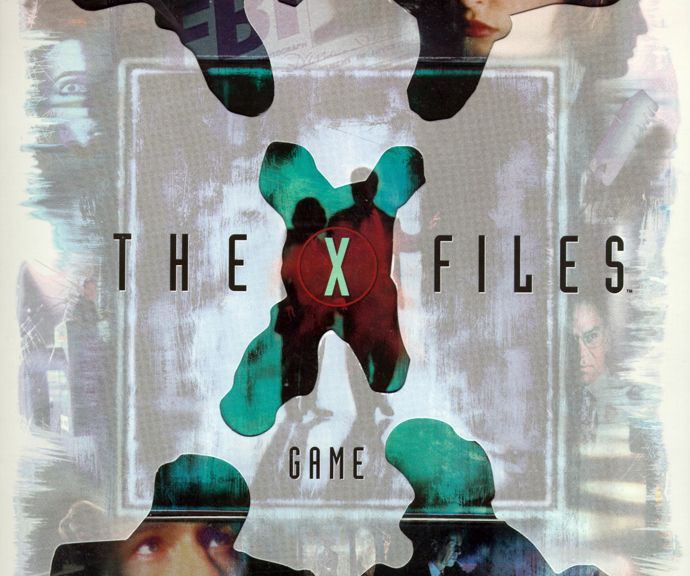
The X-Files Game

Publisher: Fox Interactive
Developer: Hyperbole Studios
Year: 1998
Platform: Windows; Playstation; Macintosgh

ReviewNow this is how a full-motion video game is done.

In fact, this is more or less an episode of The X-Files (taking place sometime during season three) that is ported to the adventure game medium. You play as Agent Willmore, whose job is to find Scully and Mulder, who have gone missing while investigating a case. Along the way, you work with your partner and team up with a local detective in order to crack the case. 

The production values are amazing, in line with that of any prime-time television show. The acting is exceptional for a video game, Duchovny notwithstanding. Mulder, Scully, Agent Skinner, The Smoking Man, and a couple others reprise their TV roles and do so with the same conviction as they would for television. But the new characters are also well-acted and well directed.  The story, by Chris Carter, feels no different in tone than his regular writing, and like any good story, the plot develops in layers as the story progresses, with intrigue and suspense along the way. 

The game mechanics are nearly flawless. Moving about is simple, and map shortcuts are a blessing. Puzzles are fairly straightforward and relevant to the case; there is no goose-chasing to be found. If you get stuck, your boss is there to provide suggestions. There are also multiple ways to approach most of the game’s major events and conversations, with various consequences as you progress. The overall story remains the same, but the choices you make affect your relationships with your boss, your ex-wife, and the female detective (nudge, nudge). There are also, thankfully, a few action sequences where you must either use your gun or think quickly in order to escape a deadly fate. They’re not particularly difficult, but they provide the tension necessary to make you feel like something is at stake. And even if you screw up, the game will gladly restore you to a point just before your fatal mistake.  Finally, the end-game is quite marvelously done, with multiple endings depending on how you tackle the last few decisions. 

Replay value exists, not so much from the multiple paths, but just from the sheer awe-inspiring production. The only reason the game didn’t make the top-ten is that I wasn’t exactly moved by the plot, which is uninspiring and has a couple of holes in it. But if you’re at all interested in playing a full-motion video adventure, make it this one. Whether or not you have seen the show, or even like it, this game should appeal to nearly all adventure gamers and possibly even casual gamers.

Contemporary RatingMedium. Disc swapping, and one obnoxious puzzle at the beginning are the only issues, but that could be enough to turn off some.

Cruelty RatingMerciful. As I mentioned, even if you die, the game restores for you.  You’ll still want to keep save files, though, if you want to explore alternate paths.

A Mind Forever Voyaging

Publisher: Infocom
Developer: Infocom
Year: 1985
Platform: DOS; Macintosh; Amiga

Review: Lauded by critics and ignored by the public, A Mind Forever Voyaging is more of a story than a game, being essentially puzzleless. But man, what a story. Taking place in the year 2031, America is doing poorly and some crackpot scientists have developed a sentient computer named PRISM. It’s purpose: to enter a simulation of the future to see if popular conservative Senator Richard Ryder’s plan for renewed national purpose will lead to prosperity. You are PRISM.

If you can set aside the ridiculous notion that a simulation of the future would ever come close to being accurate (hell, we can’t even predict next weekend’s weather with certainty), then you should enjoy this entertaining look into Steve Meretzky’s political vision of a possible future. While your goal is to record evidence of what’s going down in the years to come (from banal activities like eating a meal in a restaurant to more charged activities like meeting with government officials), the real purpose and joy of the game is to simply explore. The town of Rockvil, South Dakota is vividly imagined and detailed, and one could complete the game without visiting 90% of what the town has to offer. And while the story’s progression is fairly predictable, it consistently remains a poignant and touching story of self-exploration throughout and boasts one of the best endings out there.

My only criticisms are that things can be a little repetitive at times and the NPCs are not as developed as I prefer (especially your simulated wife). But in the grand scheme these are mere trifle. More of an experience to be enjoyed than completed, A Mind Forever Voyaging should be at the top of any gamer’s list of classics to try.

Contemporary RatingHigh. If you can get past the whole all-text, no graphics thing.  The parser is perfect and the game should never be frustrating.

Cruelty RatingMerciful.  No way to die, which makes it hard to believe this game is from 1985.

Beneath a Steel Sky

Publisher: Virgin Interactive
Developer: Revolution Software
Year: 1994
Platform: DOS; Windows; Amiga; Macintosh; iPhone

Review: Considered by many to be the best computer game of 1994, Revolution Software’s second game is a highly atmospheric, campy steampunk adventure that would appeal to fans of just about any genre. You take control over Robert Foster in a future Australia, where the cities reach to the heavens and corruption is the norm. Robert has lived his entire life in the Outback among the poor tribes that eschew the city life. One day, big guns from the big city come to take Robert away, for reasons unclear. However, before they can land, their copter crashes and Robert escapes into the buildings and walkways that dominate the steel sky. With his pet robot Joey (that he programmed himself), Robert must figure out who’s behind his kidnapping and get the hell outta Dodge.

Gameplay consists of standard point’n’click solutions with some added variety. Some NPCs move about on their own volition (though, they too have patterns), and you must use Joey in a few cases to solve certain puzzles. Joey’s circuit board can be placed in several different machines throughout the game, his skill level and voice changing based on the confines of his shell. Unfortunately, only one shell is available at any given time, but it’s fun to relearn Joey every time you need to transport him.

The game is none too difficult, and I finished it in a mere seven hours (but called in “sick” to work to do it!). However, it is highly enjoyable for all the reasons that adventure games are played.  The characters are likeable and often funny. With the Hitchhiker references throughout the game, it is likely Joey is modeled after Marvin. While Joey is not quite as depressed as that robot, he is very cynical and condescending, responsible for most of the laughs throughout. He’s even prone to cursing, a daring move for a game released in 1994. The plot develops at a steady and realistic pace, eliciting feelings of tension and excitement along the way. And the ending is solid, if a little predictable. With above average sound, graphics, and voice acting, there is very little not to like about this game.

The best part about Beneath A Steel Sky is that it’s freeware! In 2003, Revolution allowed the designers of ScummVM to have the source code and release the game (including the CD-ROM version) free to the public. If you’d rather play the remastered version (with more cut-scenes!) on your iPhone, it’s only $2.99.  Highly recommended to everyone.

Contemporary RatingHigh.

Cruelty RatingPolite.  Several ways to die, so keep that save button handy.

Update and Poll

I have now added to the “Video Games” tab an ongoing list for the current countdown, making it easier to look back for ones you may have missed.

This current list should end in about a month.  Anything in particular you would like to see?  I’m working on my favorite 50 music albums list, and while music is not something I keep up with, or have particularly good taste in, I thought it might be fun to discuss.

I also have about 70 more reviews of PC Adventure games sitting on my desktop ready to go.  One way to post most of them would be to do a worst of list, as a lot of the remaining ones I cannot recommend.  For adventure fans, it could be a good tool to know what to avoid.  For others, it could be fun to read as my reviews get a little more surly as the games get worse.

I also have not done anything on this site regarding movies.  A top 100 movie list could certainly be done, though most of my reviews would be shorter than what you’re used to.  Many movies I’ve seen only once (and sometimes several years ago) so I wouldn’t feel comfortable with in-depth discussion.  I could also do a worst list, but something less unwieldy, like a bottom 20.  I could also discuss favorite scenes, lines, directors, actors.  I’m open to suggestions.

So, if it suits you, take a vote in the poll and comment below if you have any thoughts.

The Longest Journey

Publisher: Funcom
Developer: Funcom
Year: 2000
Platform: Windows

Review: When I played The Longest Journey in 2003 I had not experienced an adventure game since the advent of 3-D rendered graphics, a little turned off by the early efforts. Since I could not find a single person who said they disliked this game, I was giddy diving in. And I remained for the most part dazzled throughout the month or so it took me to finish (a long time by today’s standards). After some time to reflect, I came to realize many of the game’s flaws. But I still love it.

You play April Ryan, an art student in the 23rd century, who is more or less drifting through life, unsure of herself. It will come to no surprise to any seasoned adventurer that some really bizarre things happen and April will get involved in the middle, eventually realizing her important place in the world after solving many a puzzle. What makes the plot compelling is that the learning curve is steady and slow, while April receives only bits of information at a time. At no time during the game does the player know more or less than April.

What holds the plot together are the characters. Near every primary character is thoroughly developed with extensive conversation topics, mannerisms, and diverse personalities. The voice acting is solid, the only problem being the use of the same actors for multiple characters. The primary humans you meet curse, talk about sex and their personal lives, and may go on forever about their own eccentricites. Sometimes they will even bore you, irritate you, or both. In other words, they act like real unenlightened people.

The puzzles cover nearly every conceivable kind, though most are inventory-based. Many are heavily contrived, but nearly as many are fun and intuitive. Regardless, I rarely became stuck for a significant amount of time.

But for a game of this magnitude that seemed to attempt being all things to all things, there are a few glaring faults. For starters, you cannot die, erasing all tension from what are supposed to be some tense moments. There is more than one scene where the music becomes frantic and eerie while April tries to escape her ominous predicament.  However, with no time limit and no threat, the intense situation simply dissolves into an infantile annoyance.

Secondly, the linearity is sickeningly tight. Though I may be wrong, I cannot remember a single puzzle that can be solved in more than one way. April also cannot make her life easier or more difficult by how she interacts with people. Characters will treat you the same no matter how you treat them, and everyone will talk and talk and talk until you’ve exhausted every possible conversation topic. The Longest Journey cannot even create the facade of playing in a real-time environment.

Despite these faults, the stunning production values, combined with the fairly compelling story and characters, created a mesmerizing escape that is at the core of the adventure genre.

Contemporary Rating: Medium. A few obnoxious puzzles (hello, rubber ducky!) and some endless talking would annoy some modern gamers.

Cruelty RatingMerciful. If there was a higher rating, this game would get it.

The Secret of Monkey Island

Publisher: LucasArts
Developer: LucasArts
Year: 1990
Platform: DOS; Windows; Macintosh; Amiga; Atari ST; Sega CD; FM Towns

Review: Knowing that this game is widely considered to be the pinnacle of adventure gamedom, I was worried when I finally played it fourteen years after its release I would be disappointed. I wasn’t.

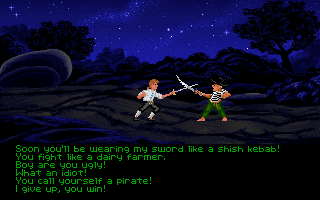
The concept itself is funny enough. You, as Guybrush Threepwood, want to be a pirate. After venturing to a remote island in the Caribbean, you seek the advice of the locals. The plot thickens (and becomes more sinister) as you progress, and rarely slows down as you battle each puzzle.

Two features make this quest so revered. The writing is ridiculously good (Ron Gilbert, David Grossman, and naturally, Tim Schafer); I laughed out loud dozens of times at the puns, fourth-wall breaking, anachronisms, in-jokes, and graphical wackiness. The second feature is the gameplay innovation introduced by LucasArts in Maniac Mansion and perfected here. Interacting with characters and using inventory is very intuitive, and pixel-hunting is quite rare. The game can’t be made unwinnable and there is little to frustrate the average (or even the novice) gamer.

As a bonus, some of the puzzles are devilishly clever, and most of the ones that are easy are also entertaining by virtue of their wackiness. Learning how to swordfight is one of my favorite puzzles of all-time. I was turned off a bit during the last third of the game, as the puzzles become more arcane, and a lot of back-and-forth fetching is required. Still, this section is better than most games, as it is often saved by the brazen humour right up to the zany end.

While there may be the occasional adventurer that won’t share the writers’ sense of humour, I encourage anyone to play The Secret of Monkey Island. If you’re not laughing within the first ten minutes you can safely skip it, but that scenario is unlikely.  Best part is, you don’t even have to tangle with DOS or SCUMM.  TellTale games has released a modern port of the game, available for download at a low price.

Contemporary RatingHigh. Everything still holds up today.

Cruelty RatingPolite.  There is one way to die, but you’re given several warnings and essentially would have to be unconscious to let it happen.

King’s Quest IV: The Perils of Rosella

Publisher: Sierra
Developer: Sierra
Year: 1988
Platform: DOS; Amiga; Apple II; Atari ST

Review: 1988 and 1989 were Sierra’s truly great years, and it all began with The Perils of Rosella. With the series’ fourth installment, Sierra revolutionized the gaming industry with professionally composed music, their new SCI game engine, the best parser they ever created, and an adventure worthy of the moniker.

King Graham is planning on passing his adventurer’s hat to the next of kin, but before Alexander and Rosella can fight over the rights to star in the next sequel, Graham lets everyone down and has a heart attack. While Graham is on his deathbed, Rosella runs out of the room in emotional anguish, only to have the magic mirror come to the rescue once more. Genessa, a good fairy from a faraway land, informs the hopeful Rosella that a magical fruit within her realm can save her father much like drinking water from the Holy Grail. Rosella says “Okay.” Genessa informs Rosella that because the producers needed to flesh out the game, she has been struck ill and does not have enough magic power remaining for a round trip; rather, there’s just enough left for a one stop shop. Rosella says, “Screw that!” Genessa informs Rosella that the evil fairy Lollotte has stolen her talisman, and if Rosella would be so kind enough to destroy the evil Lollotte and bring back her talisman, she just may continue to live, and would thus be able to send Rosella back home. Rosella says nothing. Genessa reminds Rosella of the incredible guilt she’d feel if she didn’t at least try. Rosella says, “Bloody hell!  I’m in!”

Okay, so maybe the introduction isn’t quite like that. I make light of it because Roberta Williams must let the player know the entire plot before the first chapter even begins, as she did in nearly every game she ever made.  At least it’s the only significant mistake she made here. In fact, the plot does veer slightly at various junctures. Rosella ends up needing to complete more quests than the one already outlined during the introduction. While the various plot lines are not connected very well, they do stand up on their own merits, and because the ride is fun you can forgive everything else. The characters (human and otherwise) you meet have good development considering you rarely interact with any of them for more than a couple minutes. The game has humor; I fondly remember reading all of the epitaphs in the cemetery. There are multiple endings, and creative ways you can die. To top it off, halfway through the game day turns into night, fleshing out more characters and allowing for more exploration, not to mention adding a few spooks.

Like the last game, time is a factor, as you must retrieve the talisman within 24 game hours. While that may seem like a short time, the game can be won much quicker than that if you know what to do. There’s a chance you may have to restart if you do enough aimless wandering, but if you make good use of the “save” and “restore” commands you shouldn’t have to worry too much. Some puzzles are difficult without being unfair. Mythology is used quite heavily but knowledge of the stories is neither required nor all that useful. There is one terrifyingly awful puzzle involving a whale’s tongue(!). Thankfully, it is not terribly difficult, although it’s a mite frustrating. At least Sierra was able to poke fun at this very puzzle in Leisure Suit Larry 3.

If you only play one game in the King’s Quest series, and you are not allergic to typing, make it The Perils of Rosella.

Contemporary RatingLow. The pointless time limit and some cheap falling deaths were annoying twenty years ago.

Cruelty RatingCruel. Not as cruel as other Sierra titles, but there is one way to lock yourself out of the good ending without realizing it. You might realize you did something wrong, but the game gives little indication.

Leisure Suit Larry 7: Love For Sail!

Publisher: Sierra
Developer: Sierra
Year: 1996
Platform: DOS; Windows; Macintosh

Review: Al Lowe redeemed himself with his final installment in the series, taking everything good about previous two games in the series (see: not much), and extrapolated it into a massive game that manages to score in several areas.

The premise behind the game is familiar. Larry is left by the girl he wooed in the previous game (count that five times out of six) but manages to get tickets to a cruise, where there are quite a few luscious babes to be had. Of course, Larry can get every girl he desires just like any normal person would do–bring them an obscure item. All of this practice will allow him to bring the super item to the ship’s captain who will ensure Larry has the ride of his life.

Victorian Principles

I jest a bit.  There are quite a few puzzles in this game and they are not all of the lock-and-key variety. Some are fun and logical, some are fun and stupid, and some are just stupid. But since the last couple of games did not list “brain” under the requirements section, all puzzles are welcome.

The cartoon graphics actually work well, in that they don’t completely clash with the game environment. Gameplay is fairly intuitive and there were few times I felt myself annoyed at the production values.

On a positive note, there are a few features that were unique to the adventure game world. Before starting the game, the player can read lines for a character that will show up during play, save them in the directory, and hear your horrible acting in one scene. Also, as you score with each girl, your desktop wallpaper changes to the image of your latest conquest. Not groundbreaking, just unique.

One of the best features is the reintroduction of the keyboard into a Sierra game. Several puzzles require you type in the verb you want to use after you point-and-click the screen to death. Some of them are a little unfair, but it’s refreshing all the same.

Most importantly, I found Love For Sail genuinely funny.  “Where’s Dildo!” is a giant help, as you search the ship for 32 red and white dildos. The easter eggs are some of the best in PC history, and they are numerous. The narrator is hilarious. And the game goes a long way for stupid, elaborate puns. Despite the plot and a few nagging faults, I thoroughly enjoy playing this adventure every time.

Contemporary RatingHigh. Only a couple of pixel-hunting issues, and this is the type of game one feels okay going to a walkthrough if necessary.

Cruelty RatingNasty.  Oh, Al.  There is one way to make the game unwinnable. Most people will probably figure they screwed up, though it’s unclear how badly at the time, as you can still complete most of the game if you ignore the gaffe.

Black Dahlia

Publisher: Interplay
Developer: Take-Two Interactive
Year: 1998
Platform: Windows

Review: In the mid 1930’s, the Torso Murderer ravaged Cleveland, Ohio by slicing up seven people and leaving Eliot Ness a puzzling case that even he could not solve. In 1947, Elizabeth Short (nicknamed the Black Dahlia), an aspiring Hollywood actress, was brutally murdered in much the same fashion of those in Cleveland a decade earlier. That case wasn’t solved either.

Take 2 Interactive takes their shot at solving the case, creating a mystical black gem (sought by the Nazis, naturally), known by the name of Black Dahlia. The gem gives its owner power to rule the world, quite typical for Nazi relics. The crusade for this gem by various groups is masked by all of the aforementioned murders, and one agent of the CIS is bound and determined to solve the case and stop the world takeover. You play Jim Pearson, a fictional agent of the non-fictional CIS (later the OSS, and still later the CIA). You must interview agents, criminals, and face the murderer himself in order to solve the case, while dealing with interference from the local police, Eliot Ness and the FBI, as well as, of course, Nazis.

Take 2 does so many things right with this adventure that it’s hard to know where to begin. One of the last games (until the rise of indie adventure games in the 2010s) to use extensive FMV sequences, it avoids the pitfalls present in most games of this nature. For starters, the game plays in first-person perspective. You never see Jim unless you’re watching a movie, so the continuity of his clothing and emotional state never come into play. And while some of the script is hokey, there are no noticeably horrible acting performances. The worst performance, surprisingly, is given by Dennis Hopper as an ex-CIS agent who’s been committed to a psych ward. Complementing the movies is the soundtrack, which is nearly flawless. Tense moments are subtly treated as such, without cheapening the mood with overblown scare tactics.

The plot, which is perhaps the most ambitious and well-crafted in adventure game history, spans many locations, including Cleveland, Germany, and Los Angeles, and about ten years of history as Jim Pearson attempts to track down the Black Dahlia and the killer. The story borrows plenty of historical facts to increase the feeling of realism.  As it is fairly easy to determine what is fact, fiction, and pure mysticism, the player never feels insulted by the storyteller. The game never pretends that it knows the truth behind the killings; it simply takes a fascinating historical account and creates an even more fascinating story around it, much like James Cameron did with Titanic.

What either makes or breaks the game for most players are the puzzles. They are hard. While there are a few inventory puzzles, most are symbolical or mathematical and require extensive note-taking. If you’ve ever done Mensa puzzles, think of the hardest of those. I would encourage all players to have a walkthrough handy, as unless you are a literal genius, you will break your keyboard from pounding your head against it. The designers cannot be faulted for the puzzles themselves, as none of them are contrived and all fit seamlessly with the plot. However, there are far too many of them, especially midway through the game, and at times it feels more like a homework assignment than a game. To be fair, some of them I found to be fascinating and I solved approximately a third of the puzzles without any help to much personal satisfaction.

If you like FMV games and don’t mind using a walkthrough to get through the tough parts, there is little doubt that you will be as enthralled with this adventure as I am and will no doubt follow up your experience by hitting Wikipedia for a history lesson.

Contemporary RatingMedium. It takes a little bit to get used to movement.  Also, swapping eight discs during gameplay is a pain, though there’s not much back-and-forth.

Cruelty RatingPolite.  Death (or a premature game over) is a rare outcome but can happen.  The occasional save is needed.