Gabriel Knight: Sins of the Fathers

Publisher:Sierra
Developer: Sierra
Year: 1993
Platform: DOS; Windows; Macintosh

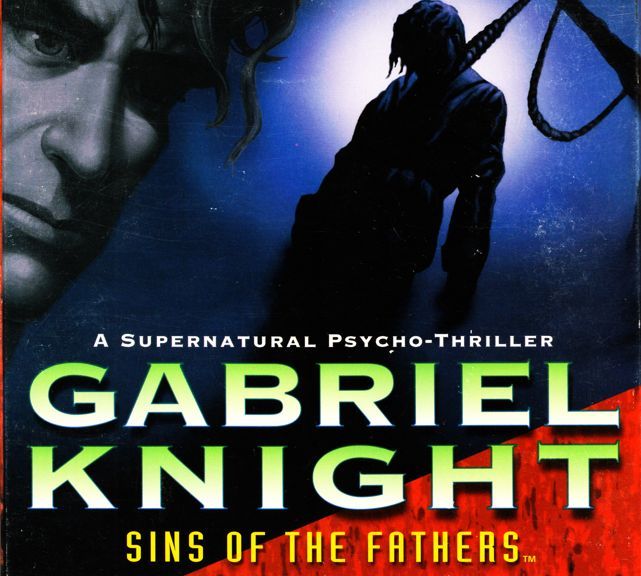
Review: Near the height of Sierra’s peak in the gaming industry they were releasing copious amounts of sequels to the games that made them famous. But in 1993, Jane Jensen began a new series, and in this author’s opinion, created the best game Sierra developed.

You play Gabriel Knight, a New Orleans writer and owner of a failing bookstore. “Employing” a young post-grad, Grace Nakamura, to run the shop while you grimace with writer’s block, there is little to look forward to in life except philandering. The headlines are barraged with stories regarding the “Voodoo Murders,” a series of mutilations that appear to be a part of a ritualistic cult. Your friend Detective Mosely lets you in on parts of the case to help you write your new book about Voodoo, and even reluctantly turns a blind eye to your own personal investigation of the murders the NOPD cannot solve.

While the game includes a comic book prelude to the plot, it gives away very little of the gaming experience. The pacing is brilliant, with a believable timeline and healthy doses of tension and humor. Gabriel’s relationships with his family and friends are genuine and deep, even though he has difficulty coping with his emotions. The story itself is fascinating, with several plot twists (mostly acceptable), and rich in detail and culture. I practically wanted to visit New Orleans after completing the game.

Sins Of The Fathers executes Sierra’s best implementation of the point’n’click system. Rather than four icons at Gabriel’s disposal, you now have eight, all with distinct and purposeful functions. The game differentiates between merely talking to a person and interrogating them about certain topics. Thankfully, you don’t have to take notes as the game saves all conversations for you. Unfortunately, the interrogation process can be painful; you are given a list of topics you can speak to each character about, and as you learn more in the game, more topics become available.  What this leads to is revisiting the same places dozens of times to see if a topic subject has appeared on the approved list.

What makes this whole process tolerable is the excellent voice acting by the game’s many characters. Tim Curry plays Gabriel. At first, I was turned off by his cocky drawl, but the longer I played the game, the more I became addicted to the personality Curry gives Gabriel. Michael Dorn also does a fine job as a Voodoo store clerk, and Mark Hamill gives a believable performance as Detective Mosely.

The game’s puzzles can be contrived at times, but usually fit seamlessly into the plot anyway. A few are also pointlessly difficult. What, if anything, holds this game back is the precise order you must complete all of your tasks in.  While the game employs Sierra’s time advance system, cutting things nicely into several days of action, it rarely allows the player to differentiate from the predetermined path. This creates stagnancy when the player is stuck on one minor puzzle, which a game should never do if the focus is on story and atmosphere.

To wrap up, the graphics and sound are brilliant, and the series of events that lead to the end of the game are superbly written and pack a wallop of intensity. Any serious fan of adventure games must play Sins Of The Fathers.

Contemporary RatingMedium. The constant revisiting of the same places annoyed me, so I’m sure it would annoy modern gamers.

Cruelty RatingPolite. Yeah, a Sierra game that isn’t cruel!  The few times you can die, it should be pretty obvious to save before hand.

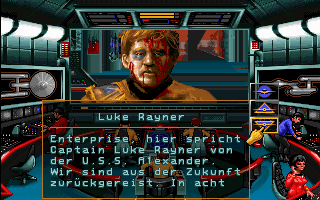
Star Trek: Judgment Rites

Publisher: Interplay
Developer: Interplay
Year: 1993
Platform: DOS

Review: If it ain’t broke, don’t fix it.

Interplay obviously took this to heart when creating the sequel to 25th Anniversary. They changed virtually nothing about the setup, and once again were able to get all of the actors from the show to reprise their roles.

However, Judgment Rites elevates to legendary status with a few key additions. First, while the fighting interface remains difficult, it is now optional, a sigh of relief for those who dislike action or mediocre controls. Second, while the story begins a little slow, the plot has been tightened and leads to one truly satisfying end game. It is difficult to find a flaw in this adventure.

Sidebar: Doesn’t Majel Barrett have space’s most beautiful voice? She provides the voice of the Enterprise computer and I searched extensively for every computer entry just to hear her. As a bonus, the computer references plot points from the prequel and from the original television show.

Contemporary RatingHigh. While the battle system would annoy modern gamers, it’s entirely skippable, and there’s nothing in the rest of the game that isn’t awesome.

Cruelty RatingPolite.

Indiana Jones and the Fate of Atlantis

Publisher: LucasArts
Developer: LucasArts
Year: 1992
Platform: DOS; Windows; Amiga; FMTowns; Macintosh

Review: One of the first adventure games to utilize the concept of plot branches, this Indy title presents an intriguing story while staying true to the canon’s charm and style. With the help of professor Sophia Hapgood, you take Indiana Jones on an adventure through Africa and Europe to locate the mythical sub-aquatic city.

The introduction is absolutely stunning, as you guide Indy through some silly hijinx at the university while opening credits roll.  You really do feel like this could be a movie were it on the big screen. But what really grabbed me was the voice acting (on the CD version, which is a must have). Doug Lee, who plays Indy, does a marvelous job at capturing his quiet, yet cocky bravado. He doesn’t quite sound like Harrison Ford, but one couldn’t ask for a better job here. And Jane Jacobs, who plays Sophia, is also fabulous, eliciting a sexy and smart personality from her pixelated heroine.

Gameplay is fairly standard for a LucasArts game, intuitive with moderate difficulty. What raises the bar is the branch at the halfway mark, where you can decide upon three different paths to reach the ending (with two of them having Indy ditch Sophia!). And like the Last Crusade, aggression is an option for those truly wanting the game to match the intensity of the movies. The separate paths cross often, though puzzles are modified to fit the circumstances, and the endgame is the same no matter what. Still, when the gameplay is this engrossing, it takes few excuses to get me play it again, which I have done once already and hope to do so again.

While a couple sections drag on for a spell, I can really find nothing negative to say about Indiana Jones and the Fate of Atlantis. Sadly, it appears to be the last true adventure for this beloved character. But what a way to go.

Contemporary Rating: High. None of the frustrations of the prequel.

Cruelty RatingPolite.

Police Quest: In Pursuit of the Death Angel

Publisher: Sierra
Developer: Sierra
Year: 1987
Platform: DOS; Amiga; Apple II; Atari ST; Macintosh

Review: My passion for adventure games began with an AGI figure named Sonny Bonds. A Lytton, California traffic cop, Sonny has aspirations of moving up in the police force, a goal roughly equal to his pursuit of beautiful women. Your job is to help him succeed in both areas.

I love games that take place on Earth with real-world situations. This is likely the case because I can relate to the characters better and put myself in their shoes. Created by police officer Jim Walls while on leave (related to an on-the-job injury), Sierra helped him start another career as a game designer. Though the reaches of his success are debatable, his involvement in the Police Quest series was a boon for the company. This game was also supposedly used as a training tool for real police officers, though likely as a recommendation rather than a requirement.

Sonny begins the story performing his regular duties: briefings, pulling over unlawful drivers, and taking coffee breaks at Carol’s Caffeine Castle. Eventually he may join the narcotics division to pursue the “Death Angel” mentioned in the title. The emphasis on correct police procedure is ridiculously high considering the medium; thankfully, failure to do things correctly will often result in merely losing points rather than becoming stuck. Though, at times it can become mundane, driving Sonny around town and looking for suspicious vehicles gives the game a suspenseful, realistic feel. That is until you run a red light or crash into a curb and hope you’ve saved your game recently.

Go ahead, lose some points!

The typing parser is excellent for its time, and the graphics and sound are also brilliant when you compare them to other games out during the same year. Driving is fairly intuitive as is the process for loading, aiming, and shooting your firearm. Even the copyright protections in the manual aren’t too annoying as they are simply things that your average cop may need to look at a manual for anyway.

While I have played this game many times, I can find few faults. There is one ridiculous way to lock yourself out of a part of the game, but it only prevents you from completing that optional section. And if you choose to restore it will only set you back about ten minutes or so. One annoying part is a poker game you must join.  If you lose, you have to restore the game, and considering how much luck is involved, it can become irritating.  There are also a few times where figuring out what to do next becomes guesswork, visiting locations you’ve been, hoping it will advance the game.

Though I am partial towards this game, it really does have everything the average gamer is looking for. Every character has their own personality even if they get little screen time. Subtle and not-so-subtle jokes abound. The puzzles are mostly fair and many are optional, though the more you complete the easier the game will be near the end. And the plot (with a couple of sub-plots) is developed well throughout the game, with a good deal of suspense and action.

Sierra remade the game with their SCI engine, giving it the look of Police Quest 3.  While the game is a little less random and perhaps less frustrating to a novice gamer, several of the cool puzzles are eliminated, and key characters to the plot are completely missing!  If you plan on playing the other games in the series, you definitely should play the original.

Contemporary RatingLow. The parser is decent but not great. Random event triggers would also annoy modern gamers, as would checking your car every time you get in it for flat tires.

Cruelty RatingTough. One could make the game unwinnable if your only save file is during the poker game and you’re about to lose.  There are a couple of other situations like this but they’re all pretty obvious.

Death Gate

Publisher: Legend
Developer: Legend
Year: 1994
Platform: DOS

Review: The first Legend game to eschew typing and implement strictly the point’n’click interface, Death Gate succeeds admirably in creating a captivating and moderately difficult fantasy adventure that almost anyone can enjoy. Based on the Death Gate Cycle short stories by Margaret Weis and Tracy Hickman, the game designers managed to take many elements from those stories and use them to create a foundation for their adventure. Never does the game feel like a translation, and you certainly do not need to read the stories to enjoy the game. Following is the summary from Moby Games:

Two thousand years ago, the Sartan split the world into five realms. The mensch races – the humans, dwarves, and elves – were split between four of those worlds named for the four elements, and your race, the Patryn, was banished to the deadly Labrynth. After those two thousand years, some of the Patryn have found their way through the Labrynth’s exit. It is your job to sail through the Death Gate into each of the other worlds to find each world’s seal piece, so that your race may reconstruct the planet and have revenge on the Sartan.

The story is one of revenge and reunification and there are many plot twists (though mostly obvious) along the way. Magic is used extensively and often in very clever fashions never seen before in adventure gaming. Most puzzles range from easy to fairly challenging, though none are unfair and are usually interesting in their own right, and fit within the context. Rarely do puzzles feel contrived or pointless. While no puzzles have multiple solutions, you are often given appropriate feedback as to why your solution is not the correct one, with a pat on the back from the designers for your thoughtful try. I never felt insulted by the game’s interface, which is very easy to use but often requires critical thinking. One puzzle near the end of the game that involves conquering your own double had me absolutely giddy when I solved it, and is one of my favorites of all-time.

The graphics are mostly well-drawn still frames, though there are some decent movies. The voice acting is superb; however, the dialogue gets stale in many places and sometimes goes on forever. Despite the simple writing, the story behind it is consistently engaging, more than making up for its faults. The ending is a little weak, but on the spectrum of adventure game endings, is not all that bad.

You do not need to be a fan of fantasy novels to enjoy Death Gate, and any adventure game connoisseur should have this one in their library.

You get to play as a dog, too!

Contemporary RatingHigh. The game tries really hard to be accommodating to all players.  It was obviously beta-tested really well.

Cruelty RatingPolite.

Bureaucracy

Publisher: Infocom
Developer: Infocom
Year: 1987
Platform: DOS; Amiga; Apple II; Atari ST; Commodore 128; Macintosh

Review: Normally, descriptions written by the company on their boxes are horribly exaggerated and sometimes not accurate. In this case, Infocom does a better job than I could.  Here’s the plot, in a nutshell.

Once upon a time, a man moved from one apartment in London to another. He dutifully notified everyone of his new address, including his bank; he went to the bank and filled out a change of address form himself. The man was very happy in his new apartment.

Then, one day, the man tried to use his credit card but couldn’t. He discovered that his bank had invalidated his credit card. Apparently, the bank had sent a new card to his old address.

For weeks, this man tried to get the bank to acknowledge his change of address form. He talked to many bank officials, and filled out new forms, and tried to get a new credit card issued, but nothing worked. The man had no credit, and the bank behaved like, well, a bank.

It’s a sad story, one that gets replayed every day for millions of people worldwide. Of course, sometimes it’s not a bank at fault: sometimes it’s the postal service, or an insurance company, or the telephone company, or an airline, or the Government. But all of us, at one time or another, feel persecuted by a bureaucracy.

You begin in your new house. As per the letter in your package, you will fly to Paris just as soon as you get some money to take you to the airport. That money should be in today’s mail, so you should be off soon… unless, of course, there’s been some problem with the mail.

Oh by the way: The man in our story about the bank was Douglas Adams, the principal author of this game. The bank did finally send him a letter, apologizing for the inconvenience – but they sent it to his old address.

What ensues is comic madness, and unless you are a very good puzzle-solver, it will lean towards madness. As your blood pressure rises while playing the game, so does the character’s.  Yes, there’s a blood pressure gauge at the top of the screen that goes up for every mistake you make. And yes, you can have a heart attack if it gets too high.

I did need a few hints to win this one, but even I was amazed at my persistence with some of the puzzles. The game’s tightly developed plot and brazen humour kept me away from the hint book several times. While there are a couple of instances where the game seems unfair, with one walking dead situation, you will be duly rewarded with the genius that was Douglas Adams.

Contemporary RatingMedium. The parser is great, but the game is so frustratingly difficult that unless you’re a lover of text games, you won’t have the patience.

Cruelty RatingCruel. Not as cruel as most Infocom games (or Douglas Adams’ Hitchhiker game), but cruel nonetheless.

For those who don’t know, all Infocom games came with “feelies,” sometimes for hints, sometimes for copyright protection, sometimes just for fun.  Below is the best one they ever had.  An application for a credit card, in triplicate.  However, the yellow and salmon colored sheets don’t exactly say the same things as do the top page.  Hilarious stuff.  I miss Douglas Adams so much.

Beyond Good & Evil

Publisher: Ubisoft
Developer: Ubisoft
Year: 2003
Platform: Windows; Xbox, Xbox 360, GameCube, Playstation 2, Playstation 3

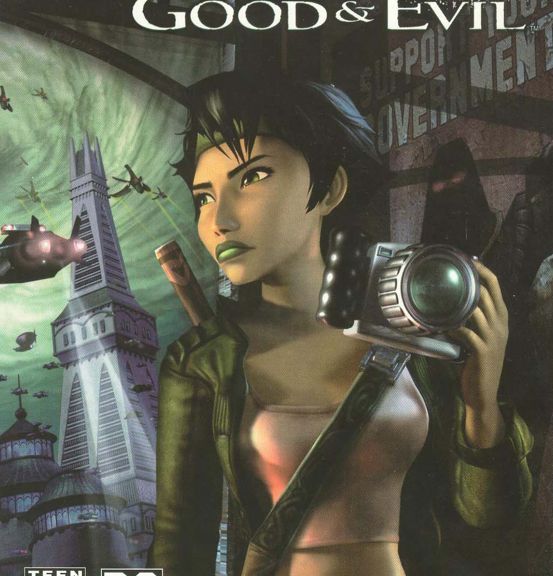
ReviewOne of the most engaging, charming games I have ever played, Beyond Good & Evil certainly earns a spot in my hall of fame. 

The labour of love from Michael Ancel, he takes you to a world where citizens are in a war with aliens and must rely on the powerful military to help defend them from brutal attacks. As a young woman named Jade, you are compelled to help in the war effort when your orphanage is attacked by the aliens. Naturally, however, you go it alone with the help of your “uncle” Pey’j (a pig mechanic, no less). While the plot itself is fairly straightforward (with only some minor twists), the story never slows down. And the characters, backed by some excellent voice acting, carry you the whole way through. It is tough not to care about the people you meet here, which goes a long way in providing an entertaining game.

While there are some adventure elements, this is more or less a strategic action game, accessible to adventure gamers. Enemies are rarely shot at and are mostly avoided by stealth, timing, and distraction. You’ll be doing a lot of crawling, side-stepping, and wall-hugging to avoid detection (and since you are often far outnumbered, it is essential to survival).  What makes this game unique is that most currency (to buy upgrades, health restoration, etc.) is acquired by taking photographs of different species (benign and otherwise) on the planet for archival.  You sometimes have to photograph your enemies before you attack them! 

For those who are comfortable with action games but don’t consider themselves to be experts, there is a reasonable learning curve. Moreover, if you die while on a mission, you will be restored to a predetermined checkpoint (often only one or two minutes back), so even if you are unable to save the game for a while, you don’t lose all of your hard work. My only complaint, and a fairly significant one, is that the PC version does not support game controllers, which is idiotic and unfortunate for those who are not keyboard inclined. I was able to become fairly adept at the controls, but it would have been significantly more comfortable to play with a gamepad.

The game is short, about ten to twelve hours for the average gamer to complete. And while there are secrets to be found, the only significant replay value comes in simply wanting to see the story again. A sequel is in the works (and has been for a decade), though sadly, not for the PC. For those who like the focus of their actions games to be more on story (without endless cut scenes), Beyond Good & Evil will not disappoint.

Contemporary RatingHigh.

Cruelty RatingMerciful. Only reason to save is if you’re a completionist.

The X-Files Game

Publisher: Fox Interactive
Developer: Hyperbole Studios
Year: 1998
Platform: Windows; Playstation; Macintosgh

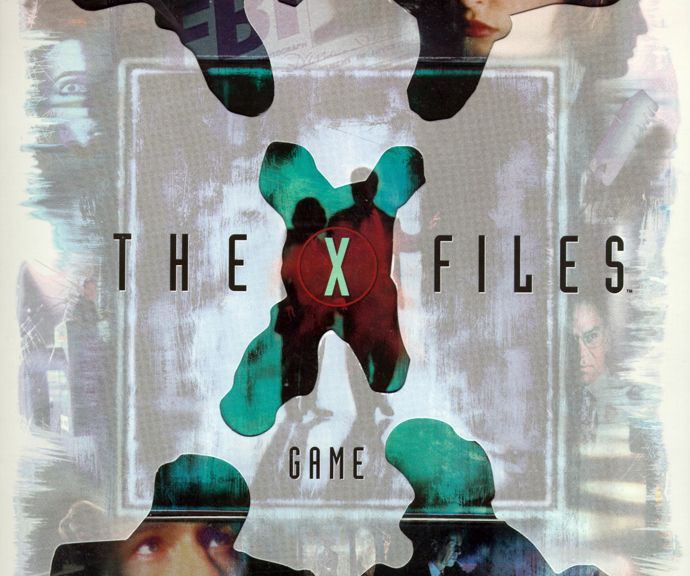
ReviewNow this is how a full-motion video game is done.

In fact, this is more or less an episode of The X-Files (taking place sometime during season three) that is ported to the adventure game medium. You play as Agent Willmore, whose job is to find Scully and Mulder, who have gone missing while investigating a case. Along the way, you work with your partner and team up with a local detective in order to crack the case. 

The production values are amazing, in line with that of any prime-time television show. The acting is exceptional for a video game, Duchovny notwithstanding. Mulder, Scully, Agent Skinner, The Smoking Man, and a couple others reprise their TV roles and do so with the same conviction as they would for television. But the new characters are also well-acted and well directed.  The story, by Chris Carter, feels no different in tone than his regular writing, and like any good story, the plot develops in layers as the story progresses, with intrigue and suspense along the way. 

The game mechanics are nearly flawless. Moving about is simple, and map shortcuts are a blessing. Puzzles are fairly straightforward and relevant to the case; there is no goose-chasing to be found. If you get stuck, your boss is there to provide suggestions. There are also multiple ways to approach most of the game’s major events and conversations, with various consequences as you progress. The overall story remains the same, but the choices you make affect your relationships with your boss, your ex-wife, and the female detective (nudge, nudge). There are also, thankfully, a few action sequences where you must either use your gun or think quickly in order to escape a deadly fate. They’re not particularly difficult, but they provide the tension necessary to make you feel like something is at stake. And even if you screw up, the game will gladly restore you to a point just before your fatal mistake.  Finally, the end-game is quite marvelously done, with multiple endings depending on how you tackle the last few decisions. 

Replay value exists, not so much from the multiple paths, but just from the sheer awe-inspiring production. The only reason the game didn’t make the top-ten is that I wasn’t exactly moved by the plot, which is uninspiring and has a couple of holes in it. But if you’re at all interested in playing a full-motion video adventure, make it this one. Whether or not you have seen the show, or even like it, this game should appeal to nearly all adventure gamers and possibly even casual gamers.

Contemporary RatingMedium. Disc swapping, and one obnoxious puzzle at the beginning are the only issues, but that could be enough to turn off some.

Cruelty RatingMerciful. As I mentioned, even if you die, the game restores for you.  You’ll still want to keep save files, though, if you want to explore alternate paths.

A Mind Forever Voyaging

Publisher: Infocom
Developer: Infocom
Year: 1985
Platform: DOS; Macintosh; Amiga

Review: Lauded by critics and ignored by the public, A Mind Forever Voyaging is more of a story than a game, being essentially puzzleless. But man, what a story. Taking place in the year 2031, America is doing poorly and some crackpot scientists have developed a sentient computer named PRISM. It’s purpose: to enter a simulation of the future to see if popular conservative Senator Richard Ryder’s plan for renewed national purpose will lead to prosperity. You are PRISM.

If you can set aside the ridiculous notion that a simulation of the future would ever come close to being accurate (hell, we can’t even predict next weekend’s weather with certainty), then you should enjoy this entertaining look into Steve Meretzky’s political vision of a possible future. While your goal is to record evidence of what’s going down in the years to come (from banal activities like eating a meal in a restaurant to more charged activities like meeting with government officials), the real purpose and joy of the game is to simply explore. The town of Rockvil, South Dakota is vividly imagined and detailed, and one could complete the game without visiting 90% of what the town has to offer. And while the story’s progression is fairly predictable, it consistently remains a poignant and touching story of self-exploration throughout and boasts one of the best endings out there.

My only criticisms are that things can be a little repetitive at times and the NPCs are not as developed as I prefer (especially your simulated wife). But in the grand scheme these are mere trifle. More of an experience to be enjoyed than completed, A Mind Forever Voyaging should be at the top of any gamer’s list of classics to try.

Contemporary RatingHigh. If you can get past the whole all-text, no graphics thing.  The parser is perfect and the game should never be frustrating.

Cruelty RatingMerciful.  No way to die, which makes it hard to believe this game is from 1985.

Beneath a Steel Sky

Publisher: Virgin Interactive
Developer: Revolution Software
Year: 1994
Platform: DOS; Windows; Amiga; Macintosh; iPhone

Review: Considered by many to be the best computer game of 1994, Revolution Software’s second game is a highly atmospheric, campy steampunk adventure that would appeal to fans of just about any genre. You take control over Robert Foster in a future Australia, where the cities reach to the heavens and corruption is the norm. Robert has lived his entire life in the Outback among the poor tribes that eschew the city life. One day, big guns from the big city come to take Robert away, for reasons unclear. However, before they can land, their copter crashes and Robert escapes into the buildings and walkways that dominate the steel sky. With his pet robot Joey (that he programmed himself), Robert must figure out who’s behind his kidnapping and get the hell outta Dodge.

Gameplay consists of standard point’n’click solutions with some added variety. Some NPCs move about on their own volition (though, they too have patterns), and you must use Joey in a few cases to solve certain puzzles. Joey’s circuit board can be placed in several different machines throughout the game, his skill level and voice changing based on the confines of his shell. Unfortunately, only one shell is available at any given time, but it’s fun to relearn Joey every time you need to transport him.

The game is none too difficult, and I finished it in a mere seven hours (but called in “sick” to work to do it!). However, it is highly enjoyable for all the reasons that adventure games are played.  The characters are likeable and often funny. With the Hitchhiker references throughout the game, it is likely Joey is modeled after Marvin. While Joey is not quite as depressed as that robot, he is very cynical and condescending, responsible for most of the laughs throughout. He’s even prone to cursing, a daring move for a game released in 1994. The plot develops at a steady and realistic pace, eliciting feelings of tension and excitement along the way. And the ending is solid, if a little predictable. With above average sound, graphics, and voice acting, there is very little not to like about this game.

The best part about Beneath A Steel Sky is that it’s freeware! In 2003, Revolution allowed the designers of ScummVM to have the source code and release the game (including the CD-ROM version) free to the public. If you’d rather play the remastered version (with more cut-scenes!) on your iPhone, it’s only $2.99.  Highly recommended to everyone.

Contemporary RatingHigh.

Cruelty RatingPolite.  Several ways to die, so keep that save button handy.